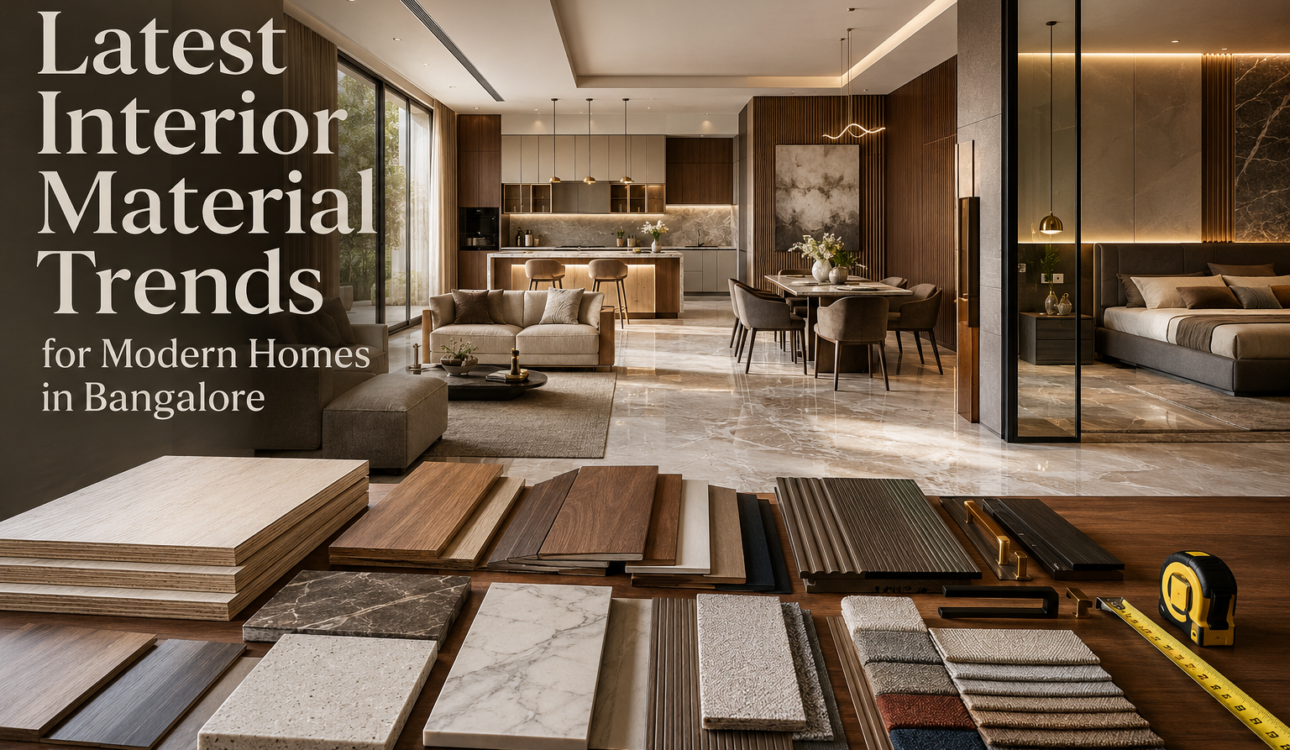
If you’re tracking interior material trends in Bangalore, here’s a confession from the materials business: most “trend” articles are written to sell you this year’s catalogue. New year, new finish, new reason to feel your home is suddenly dated. We’d rather tell you something more useful — why 2026’s trends look the way they do, because once you see the logic, you can tell a lasting shift from a passing costume.
And 2026 is a genuine shift. After a decade of cool greys, mirror gloss and showroom-perfection, Indian homes are swinging decisively toward warmth, texture and imperfection — clay palettes, tactile walls, matte everything, real craft. Designers call it “quiet luxury” growing up. We call it homes that finally look like people live in them.
So here are the seven material trends that matter this year for Bangalore homes — each with a price tag, a lifespan, and an honest verdict. Pick the ones that fit your home; skip the rest guilt-free.
Table of Contents
Interior Material Trends in Bangalore: The 7 That Matter for 2026
1. Textured Walls: Limewash, Clay & Microcement
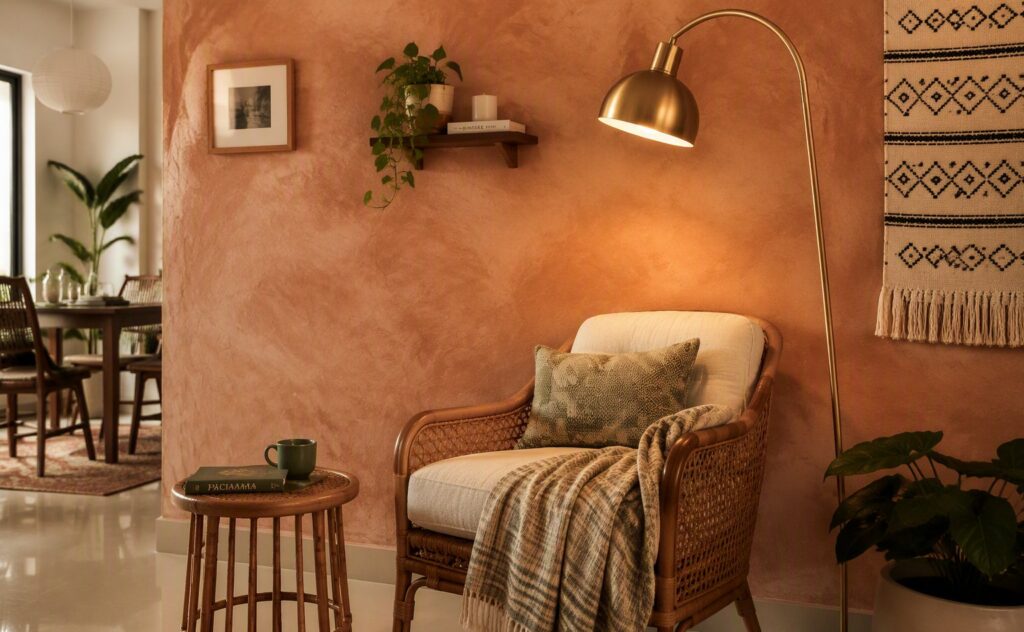
The single biggest shift of 2026 is walls you can feel. Limewash — crushed limestone and natural pigment — dries into a soft, cloudy finish with visible movement, like suede made of stone. Clay plasters go further, adding body and an earthy matte depth. Microcement gives you seamless, concrete-look walls and counters without the demolition.
Why it lasts: texture hides the scuffs, patches and hairline cracks that flat paint broadcasts. A limewashed wall in 2036 will look more characterful, not less.
- Cost in Bangalore: Limewash ₹120–250/sq ft · Microcement ₹250–450/sq ft (material + skilled application)
- Staying power: High — plaster finishes predate paint by millennia
2. Super-Matte & Anti-Fingerprint Laminates
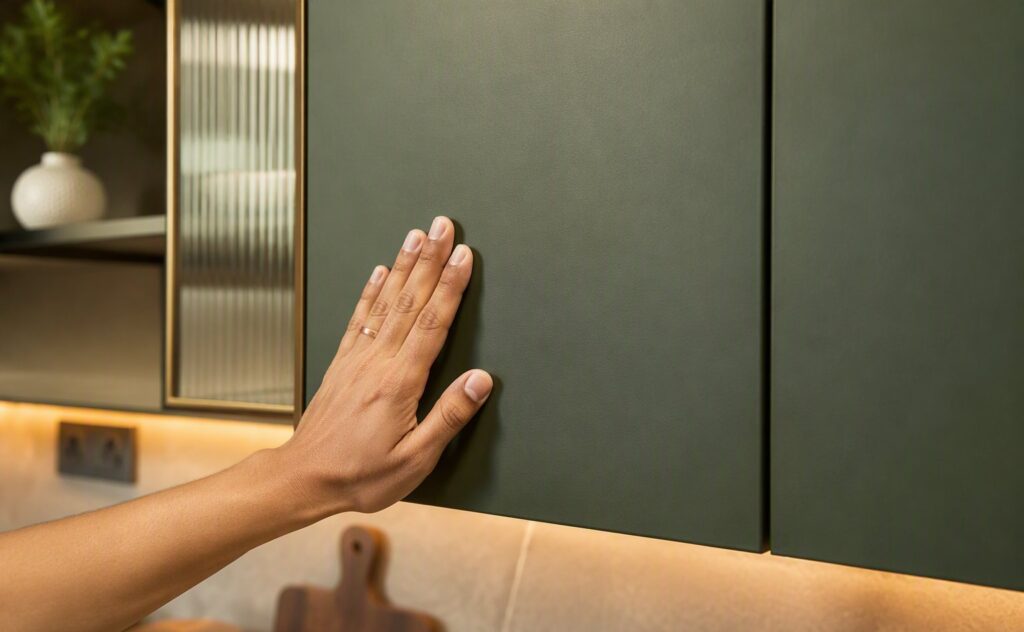
Among interior material trends in Bangalore, one product defines 2026 kitchens and wardrobes: ultra-matte, soft-touch laminates that shrug off fingerprints, smudges and micro-scratches. Deep greens, warm taupes and ink blues — colours that would have been a maintenance nightmare in gloss — now behave impeccably in super-matte. It’s the fastest-growing finish category in the Indian laminate market, and one touch explains why.
Why it lasts: it’s not a look, it’s a solution. Dark, dramatic cabinetry finally became practical for real Indian kitchens with real oil and real children.
- Cost in Bangalore: ₹2,000–3,000 per 8×4 sheet (vs ₹1,000–2,200 for standard matte)
- Staying power: Very high — function-led trends don’t fade
3. Fluted & Reeded Panels — Grown Up
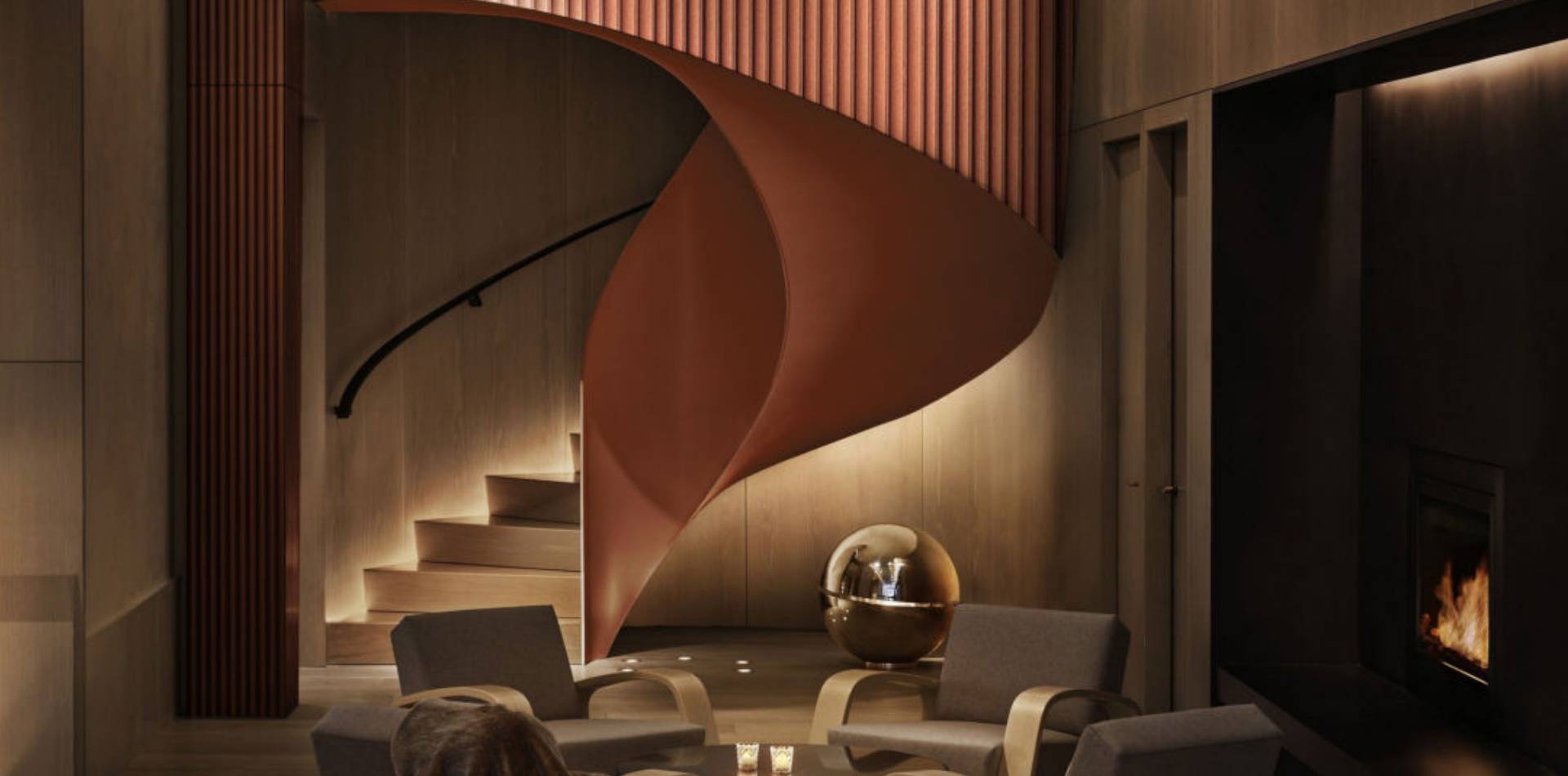
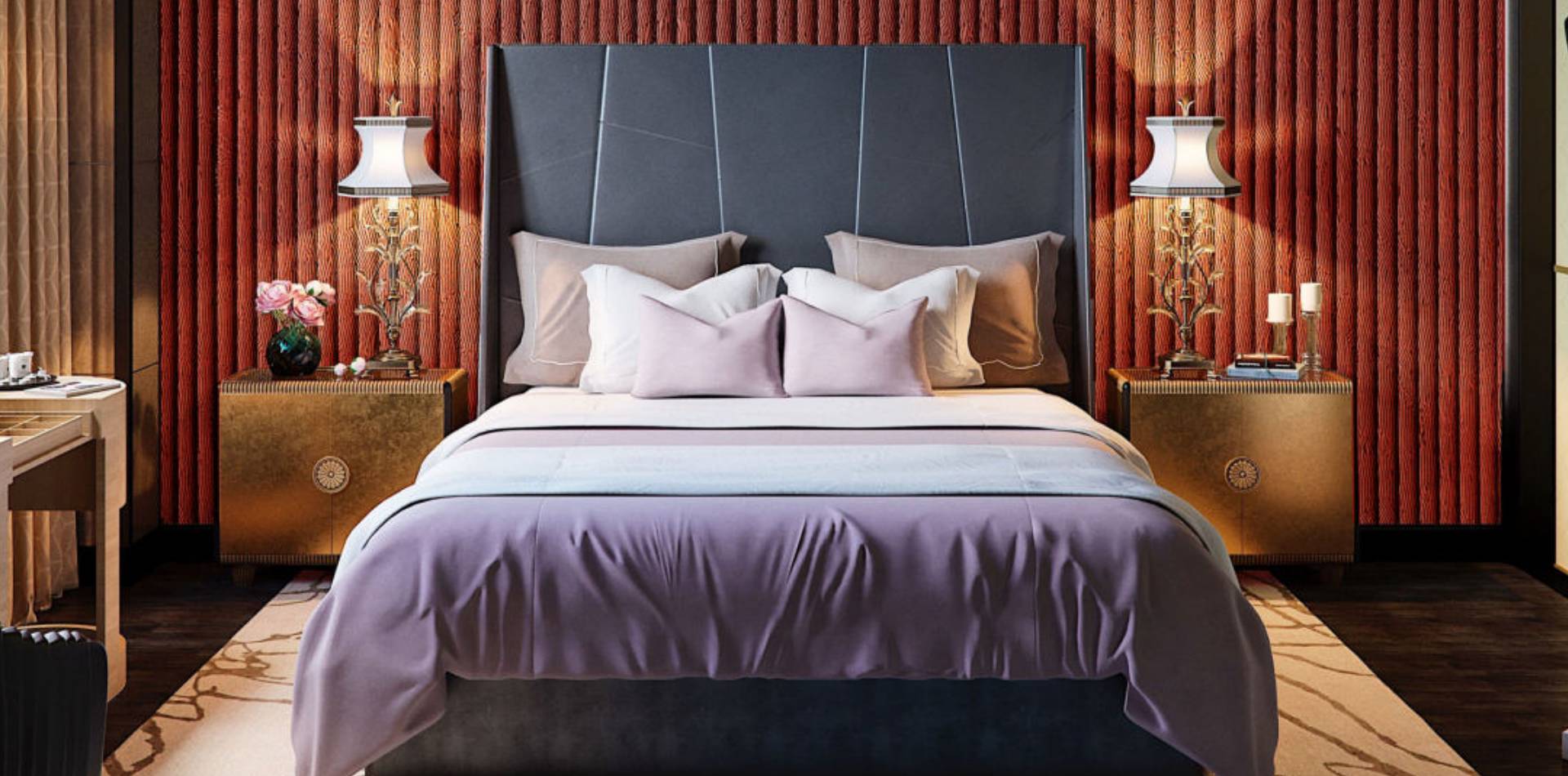
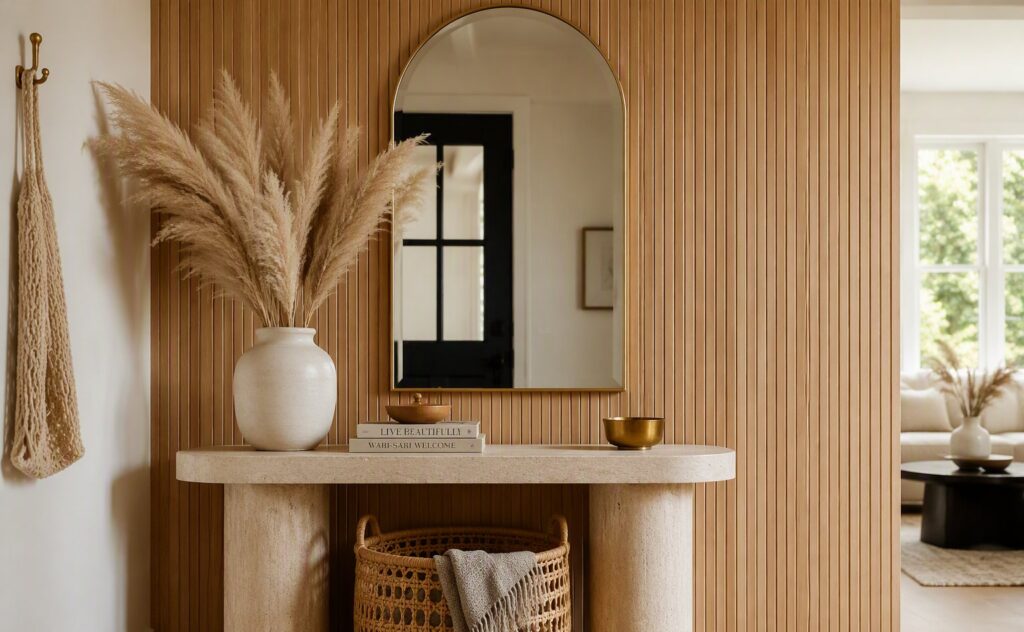
Among interior material trends in Bangalore, fluted panels have had the most dramatic reversal: declared “over” in 2024, they instead matured: wider spacing, deeper grooves, quieter colours. 2026’s fluting runs in light oak and honey walnut, matte rather than glossy, on TV walls, headboards, kitchen islands and wardrobe shutters. The trick the market learned is restraint — one fluted surface per room is architecture; five is a sauna.
Why it lasts: ribbed woodwork has cycled through design since the Greeks fluted their columns. The finish will date before the form does — so choose tones you’d pick anyway.
- Cost in Bangalore: WPC/PVC fluted panels ₹230–280/sq ft; fluted-look laminates from ₹3,000/sheet
- Staying power: Medium-high — keep it to accents
4. Warm Woods & Mixed Tones
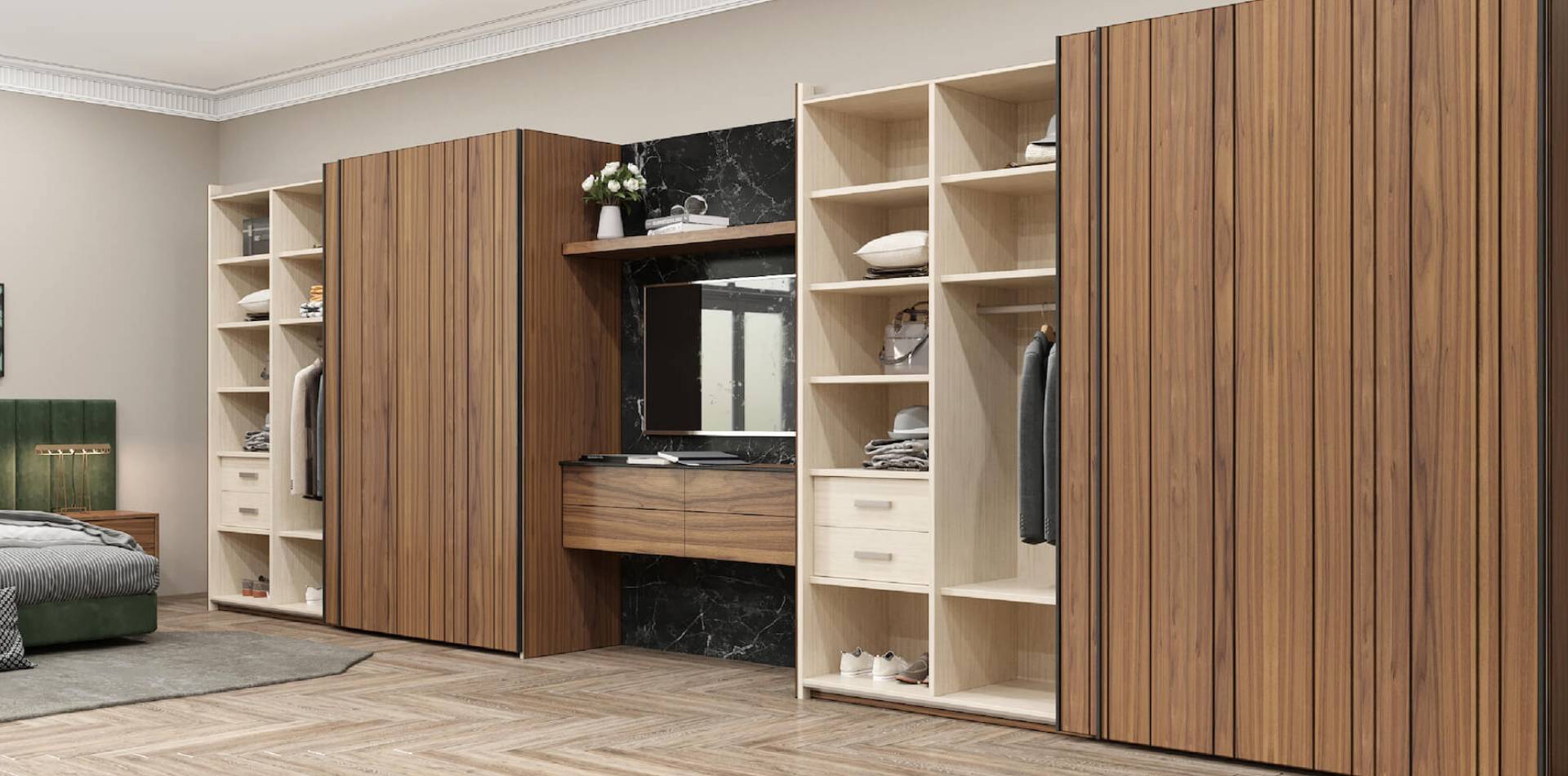
Wood is one of the most enduring interior material trends in Bangalore — panelling, ceilings, shelving — and the old rule that every wood in a home must match has been retired. 2026 pairs white oak floors with walnut cabinetry and a teak accent, letting mid-tone grains play against each other. Veneers in warm, minimally-treated species are the showroom favourite; woodgrain laminates follow close behind for the budget-conscious.
Why it lasts: wood is the one material that has never gone out of style in five thousand years of interiors. The only question is the tone — and warm mid-tones are as safe as it gets.
- Cost in Bangalore: Natural veneer ₹100–250+/sq ft + polish · woodgrain laminate ₹1,000–2,200/sheet
- Staying power: Permanent — it’s wood
5. Brushed, Aged Metals
Among interior material trends in Bangalore, hardware is the easiest to change: mirror-polished gold and chrome, the loudest finishes of the last decade, are being replaced by brushed brass, aged bronze and matte black. The new metals have a soft, satiny depth that pairs naturally with clay walls and warm woods. It shows up in handles, lamp arms, mirror frames and the trim of fluted panels.
Why it lasts: brushed metal hides fingerprints and water spots, which is precisely why polished metal was always a bad idea for hardware. Function, again.
- Cost in Bangalore: The cheapest trend on this list — good brushed-brass handles run ₹150–600 apiece
- Staying power: High — classic profiles, quieter finish
6. Sustainable by Default
The most meaningful of these interior material trends in Bangalore isn’t visible at all. Low-VOC finishes, E0/E1 low-emission boards, FSC-certified timber and bamboo composites have moved from eco-luxury to standard ask — especially for bedrooms and kids’ rooms, where families now routinely request emission class on quotes. The conversation has shifted from “is it green?” to “what will my family breathe?”
Why it lasts: regulations and awareness only move one direction. Low-emission boards will soon be as unremarkable — and as expected — as seatbelts.
- Cost in Bangalore: E1/E0 boards and low-VOC finishes carry a modest premium of roughly 5–15%
- Staying power: Permanent — this one is a standard, not a style
7. Material Mixing, Deliberately
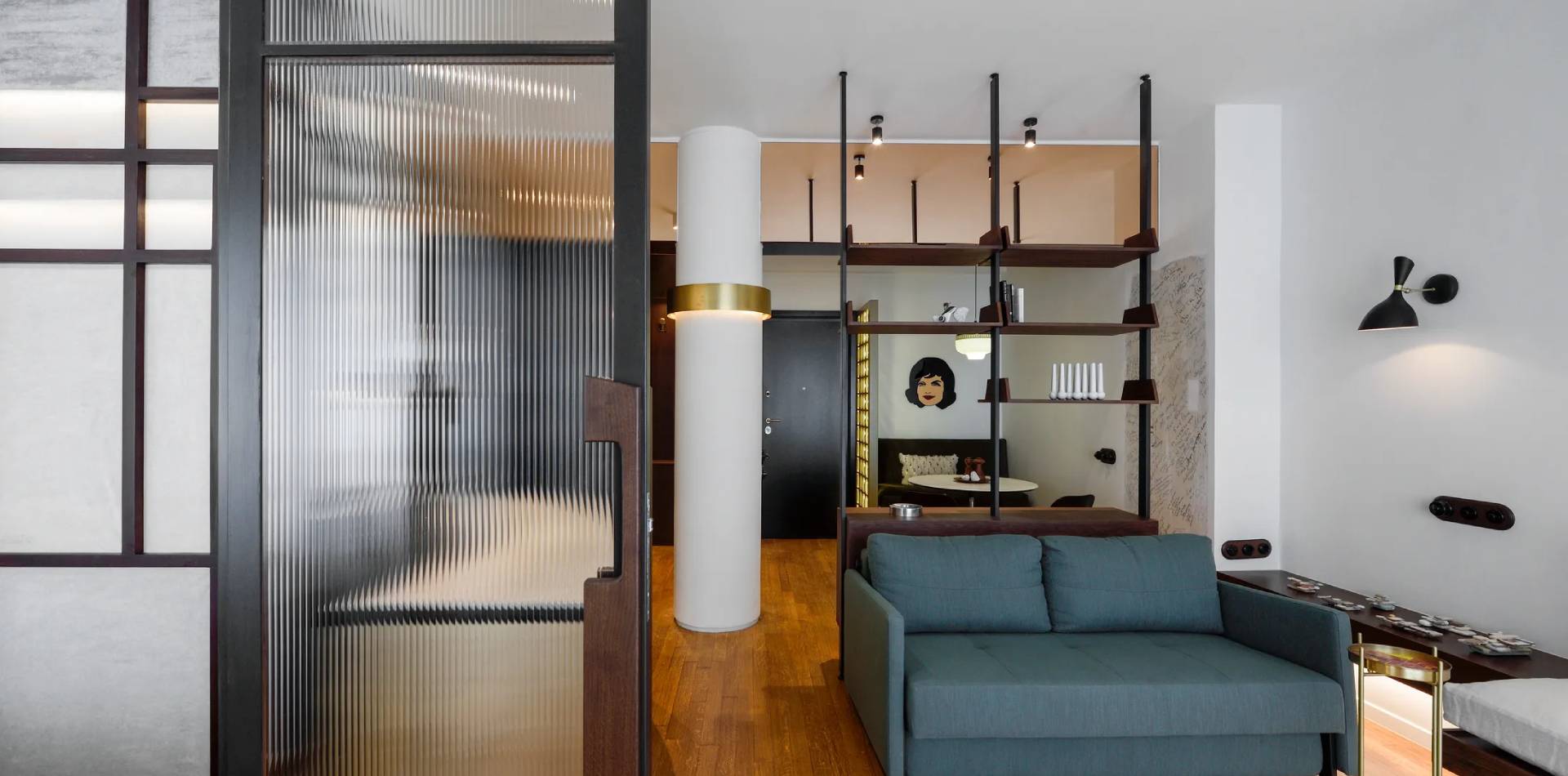
The most advanced of all interior material trends in Bangalore is deliberate mixing — the layered home: fluted oak against travertine, cane webbing in wardrobe shutters, brass inlay in a veneer console, matte laminate next to raw clay. Mixing materials is how a flat-pack world gets its soul back — contrast in texture reads as richness even when every individual element is affordable. The discipline: two or three materials per room, repeated, never a different combination in every corner.
Why it lasts: “collected, not matched” is less a trend than a philosophy — and it forgives future additions instead of fighting them.
- Cost in Bangalore: Free, mostly — it’s a design decision, not a purchase
- Staying power: High — eclectic homes age the best
The 2026 Palette: Earth, Warmed Up
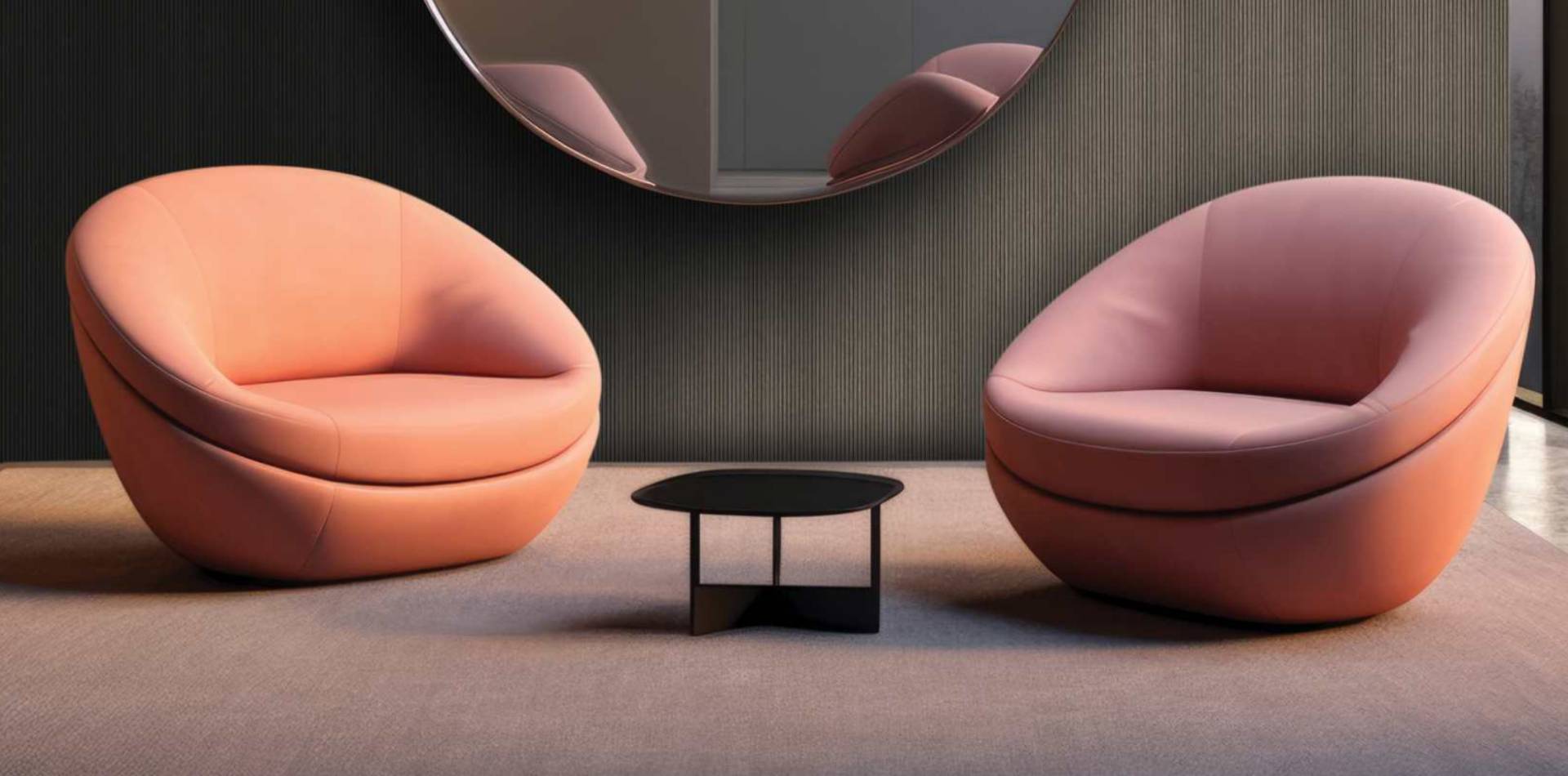
Every one of these interior material trends in Bangalore shares one colour family — grounded, mineral, sun-baked. The greys that dominated the 2010s have given way to tones that feel like they came out of Indian soil, which, of course, they did. Terracotta, clay and sand are having a full renaissance, with sage and olive as the cooling counterpoints:
- Terracotta — feature walls, tiles, accents
- Clay — limewash, upholstery
- Sand / mineral beige — the new base neutral
- Sage — kitchens, wardrobes
- Deep olive — bedrooms, studies
- Warm walnut — woods, veneers, floors
Notice what these all have in common: they’re desaturated. Nothing shouts. A 2026 room is built from colours that could sit next to each other in a riverbed — which is exactly why they’re so easy to live with, and so hard to tire of.
What It All Costs — Honestly
Trend articles love to show you a ₹40-lakh living room and call it “achievable.” Here’s the achievable version — what these interior material trends in Bangalore actually cost, and the smartest way to buy into each one (indicative dealer and installer ranges, Aug 2026; 18% GST extra on materials):
| Trend | Entry point | Typical spend | Smart way in |
|---|---|---|---|
| Limewash / clay walls | ₹120/sq ft | ₹15,000–35,000 for one feature wall | One wall per room — texture works best as an accent |
| Super-matte laminate | ₹2,000/sheet | +₹10,000–20,000 over standard on a kitchen | Shutters only; keep carcasses in standard matte |
| Fluted panels | ₹230/sq ft | ₹12,000–25,000 per accent wall | WPC for value; veneer-wrapped fluting for luxury |
| Warm wood (veneer) | ₹100/sq ft | ₹25,000+ for a statement wardrobe | One hero piece — bed, dining table, TV console |
| Brushed metals | ₹150/handle | ₹3,000–8,000 whole-home hardware swap | The cheapest transformation on this list |
| Low-emission boards | +5–15% | ₹8,000–25,000 premium on a 3BHK board order | Prioritise bedrooms and kids’ rooms |
| Material mixing | ₹0 | Free | A design decision — plan it before buying anything |
Limewash and microcement pricing is heavily skill-dependent — the applicator matters more than the brand.
The pattern worth noticing across these interior material trends in Bangalore: none of 2026’s big looks require a premium budget — they require a premium decision. A ₹15,000 limewash wall outperforms a ₹1.5-lakh imported wallpaper in warmth, repairability and longevity. Super-matte laminate costs barely 30% more than standard and delivers a kitchen that looks designer-shot every single day. This is the rare year where the tasteful choice and the sensible one are the same thing.
The 2026 rule: spend on texture and touch, save on shine and show. The first ages beautifully; the second just ages.
Evospace shop-floor wisdom
What’s Fading Out (Specify With Care)
Trends are a two-way street. If you’re building or renovating in 2026, these are the interior material trends in Bangalore that are quietly fading from favour — none of them “wrong,” all of them worth a second thought before a ten-year commitment:
- All-grey interiors. The decade of grey-on-grey is officially over; warm neutrals have taken the baseboard. Grey still works as an accent — just not as a personality.
- High-gloss everything. Mirror-gloss kitchens and gold-polished hardware are giving way to super-matte and brushed finishes that hide real life instead of displaying it.
- Showroom-perfect minimalism. Homes staged like furniture catalogues are out; “lived-in and collected” is in.
- Heavy baroque moulding everywhere. Ornate trim on every wall reads as costume. Slim picture-frame profiles on one or two walls is the 2026 grammar.
- Cool white LED lighting. 4000K+ tube-white light flattens every warm material on this list. The trends assume warm 2700–3000K layered lighting — budget for it.
- Fast furniture. Disposable particle-board pieces are losing to fewer, better, repairable items.
Choosing Trends That Last
Here’s the filter we run every one of these interior material trends in Bangalore through before recommending it to a customer. A trend is worth your money if it passes three tests:
- The function test. Does it solve a problem, or just pose for photos? Super-matte laminates (hides fingerprints) and limewash (hides scuffs) pass instantly. Waterfall-edge everything, less so.
- The history test. Has some version of it existed for decades? Wood, plaster walls, ribbed millwork and brass have centuries of track record. Whatever is simultaneously on fifty Instagram reels this month usually hasn’t.
- The reversibility test. Can you change your mind cheaply? Paint, hardware and lighting: yes, always. A full-height book-matched marble TV wall: you’d better love it.
Apply those three and 2026 becomes very simple: textured walls, matte touchable surfaces, warm wood, brushed metal, honest materials — trends that behave less like fashion and more like the house settling into itself.
Quick-Fire FAQ
Will these trends look dated by 2030?
These interior material trends in Bangalore won’t look dated on the materials side — wood, plaster and matte finishes are perennial. What might date is specific styling: very wide fluting, very saturated terracotta everywhere, ultra-arched furniture. Keep the bones classic and the accents current, and you can refresh the accents whenever you like.
Is limewash practical for Indian homes with kids and dust?
More practical than flat paint, honestly. Its cloudy variation hides scuffs and patches that a flat emulsion highlights, and touch-ups blend invisibly. It dislikes direct water, so keep it out of splash zones — but for living rooms and bedrooms it’s one of the most forgiving finishes money buys.
Are fluted panels over?
The 2022 version — glossy, narrow-grooved, on every wall — yes, deservedly. The 2026 version — matte, wide-spaced, single accent surfaces in light oak or walnut — is simply millwork, and millwork never left. Choose the finish like you’ll live with it a decade, and you will.
Can I get the 2026 look on a tight budget?
These are some of the most budget-friendly interior material trends in Bangalore in years. The priorities in order: warm white or clay paint (₹30–45/sq ft), a brushed hardware swap, warm 2700K lighting, and one textured or panelled accent wall. That sequence transforms a flat for less than the cost of a premium sofa.
What’s the one trend to skip?
When it comes to interior material trends in Bangalore, skip anything bought purely because it’s trending — especially permanent, expensive versions of fleeting looks. If a material wouldn’t be your choice with zero Instagram influence, it shouldn’t be your choice with it. The best 2026 homes are personal first, current second.
How do I mix materials without the room looking chaotic?
For these interior material trends in Bangalore, cap it at three materials per room, repeat each at least twice, and keep them inside one warm palette. Fluted oak + travertine + brass works because the tones agree even though the textures contrast. Chaos is usually a colour problem wearing a material costume.
Find the Right Materials for Your Project
Trends are theories; samples are truth. Keeping up with interior material trends in Bangalore is easier when you can see materials in person — touch the limewash, feel the super-matte laminate, compare fluting widths side by side.
If you’re designing or renovating a home, visiting a Top Interior Design Material Store in Bangalore gives you access to a wide selection of modern interior materials along with expert advice for choosing products that suit your style and budget.
Final Thought
Modern interior design is about creating spaces that are beautiful, practical, and built to last. From textured limewash walls and super-matte laminates to fluted panelling, warm woods and honest, low-emission materials, these interior material trends in Bangalore offer endless possibilities for designing elegant homes — without requiring a premium budget, only a premium decision. Selecting the right materials is the first step toward creating interiors that remain stylish for years to come.