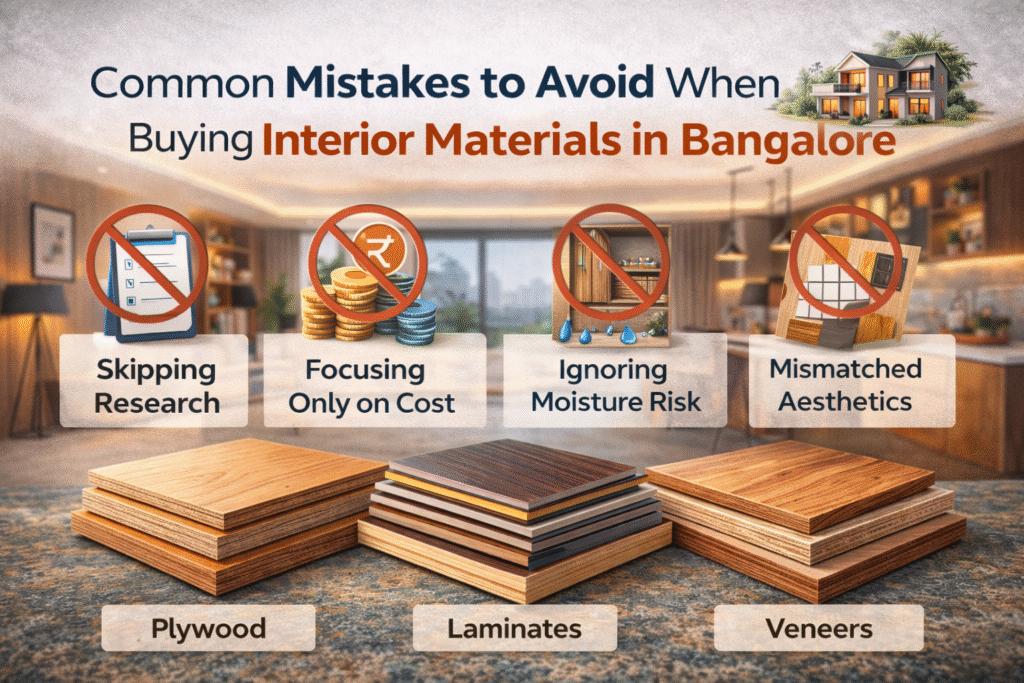
Buying interior materials may seem straightforward, but many homeowners realise their mistakes only after installation. From swollen cabinets to peeling laminates, most issues can be traced back to poor material choices.
If you’re planning interiors in Bangalore, avoiding these common mistakes can save you time, money, and frustration.
1. Choosing Materials Based Only on Price
One of the biggest mistakes is selecting the cheapest option available. While budget is important, extremely low prices often mean compromises in quality, bonding strength, or durability.
Interior materials form the backbone of your home. Saving a small amount initially may result in higher repair costs later.
2. Ignoring Moisture-Prone Areas
Kitchens, utility spaces, and bathroom storage units require materials that can handle moisture. Using standard plywood or low-grade boards in these areas often leads to swelling or weakening over time.
Understanding where materials will be installed is essential before making a purchase decision.
3. Not Checking Core Strength
Many buyers focus only on surface finishes like laminates or veneers. However, the real strength lies inside. Weak core materials can cause bending, cracking, or loose fittings even if the outer finish looks good.
Always inspect the base material before finalising your purchase.
4. Overlooking Compatibility Between Materials
Not all finishes work well with all base materials. For example, certain laminates require stable and smooth plywood underneath to achieve a clean finish.
Poor compatibility may result in uneven surfaces or bubbling.
5. Skipping Professional Advice
Interior materials are not one-size-fits-all. Every home layout and design requirement is different. Consulting experienced suppliers helps you avoid costly errors and choose materials suited to your specific needs.
Many homeowners prefer visiting the Top interior design material store in Bangalore to explore options in person, compare quality levels, and receive guidance tailored to their project.
6. Not Planning for Long-Term Maintenance
Some materials require regular polishing or special care. Others are low-maintenance and easier to clean. Choosing materials without considering long-term upkeep can become inconvenient later.
Think beyond installation and consider how the material will perform after years of use.
Final Thought
Interior material selection is not just about appearance — it’s about performance, durability, and smart decision-making. By avoiding these common mistakes and seeking proper guidance, you can build interiors that remain strong and visually appealing for years.