When purchasing plywood for home interiors, one of the first things homeowners notice is that prices can vary significantly from one product to another. Two plywood sheets may appear similar on the surface but have very different price points. This often leads buyers to wonder what exactly influences plywood pricing.
Understanding the factors that affect plywood prices helps homeowners make informed decisions and choose products that offer the best value for their investment.
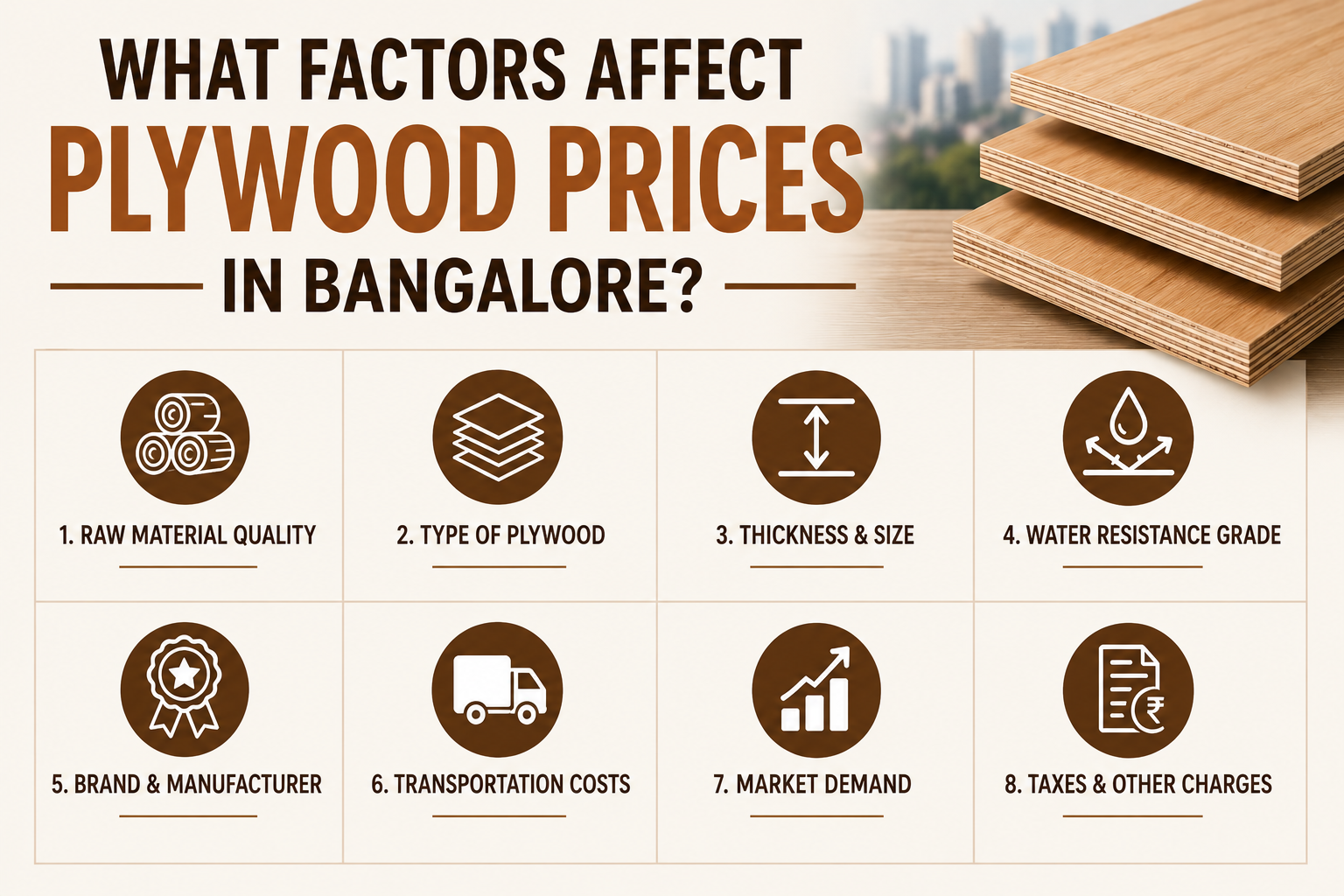
Type of Plywood
One of the biggest factors affecting price is the type of plywood being purchased.
Common plywood categories include:
- Commercial plywood
- BWR plywood
- BWP plywood
- Marine plywood
- Decorative plywood
As moisture resistance and durability increase, the price generally rises as well. Premium-grade plywood is manufactured using higher-quality materials and stronger adhesives, which contributes to the cost.
Quality of Raw Materials
The quality of wood veneers used during manufacturing plays a major role in determining plywood prices.
High-quality veneers provide:
- Better strength
- Improved durability
- Consistent performance
- Longer lifespan
Plywood made with superior raw materials usually costs more but often delivers better long-term value.
Thickness of the Plywood
Thicker plywood sheets require more raw material and are typically priced higher than thinner alternatives.
Different furniture applications require different thicknesses, including:
- Wardrobes
- Kitchen cabinets
- Shelves
- Beds
- Storage units
Selecting the appropriate thickness helps balance cost and performance.
Moisture Resistance and Manufacturing Standards
Plywood designed to resist moisture or water exposure often undergoes additional manufacturing processes and uses specialised adhesives.
This increases production costs but also improves:
- Durability
- Water resistance
- Structural stability
As a result, moisture-resistant plywood grades usually carry a higher price than standard options.
Brand Reputation
Established manufacturers often invest heavily in quality control, testing, and product consistency. Well-known brands may charge a premium because of their reputation for reliability and performance.
Many homeowners prefer trusted brands because they offer greater confidence in long-term durability.
Market Demand and Supply
Like many construction and interior materials, plywood prices can also be influenced by market conditions.
Factors such as:
- Availability of raw materials
- Transportation costs
- Seasonal demand
- Economic conditions
can affect pricing in Bangalore and other markets.
Why Comparing Products Matters
Looking at price alone can sometimes be misleading. Two plywood sheets with different prices may differ significantly in quality, durability, and performance.
That is why many homeowners visit the Best Plywood Suppliers in Bangalore to compare plywood grades, understand product specifications, and choose materials that provide the best value for their specific project.
Final Thought
Plywood prices are influenced by several factors, including quality, thickness, moisture resistance, manufacturing standards, and market conditions. By understanding these factors, homeowners can make better purchasing decisions and invest in plywood that meets both their budget and long-term interior requirements.