
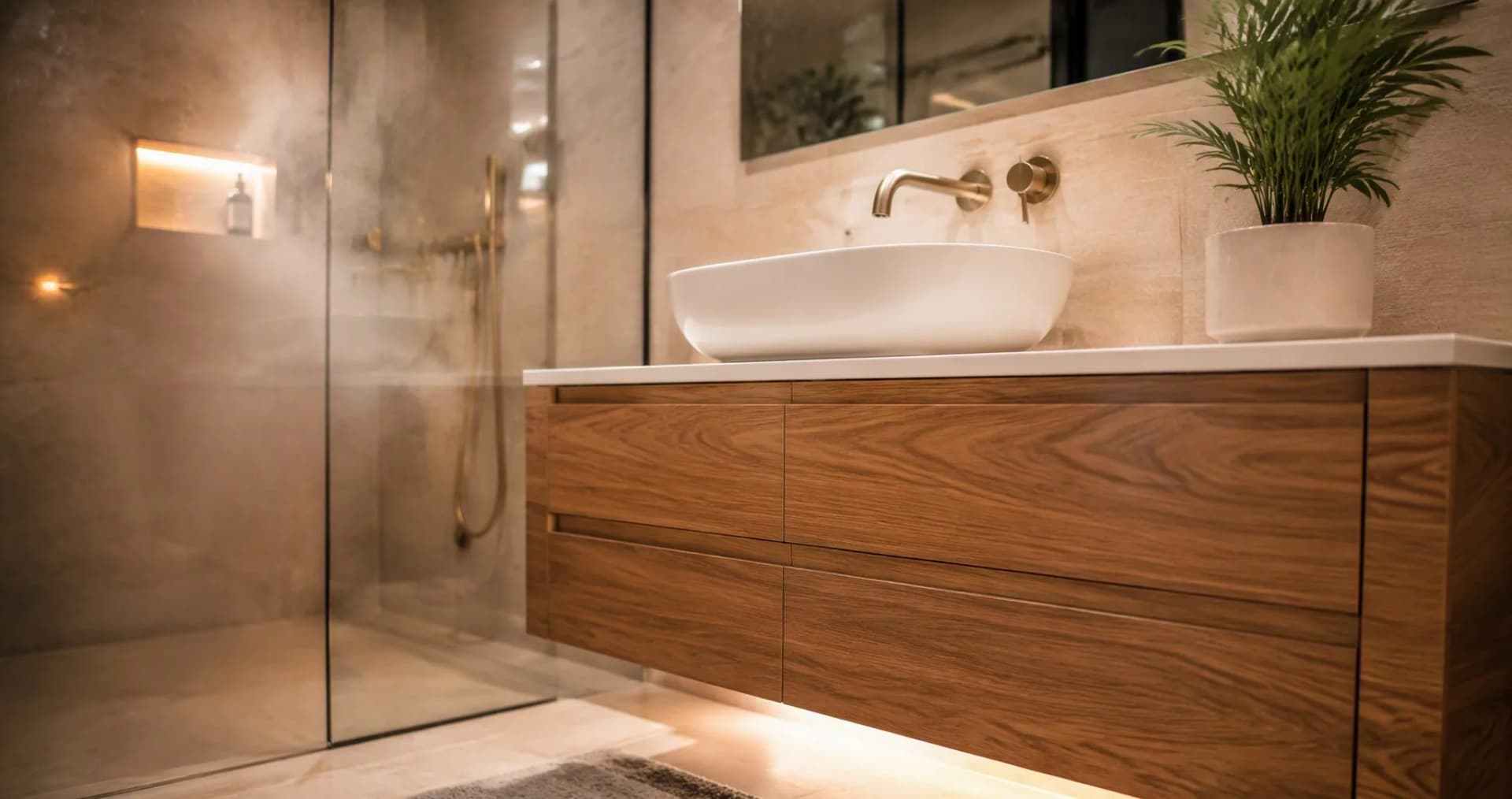
Why Waterproof Plywood Is Essential for Modern Indian Homes
Your kitchen steams, your bathroom sweats, your balcony gets rained on, and the monsoon soaks the air for four months a year. Ordinary plywood was never built for this — BWP was. Here's the science, the zones that need it, and how to make sure you're buying the real thing.
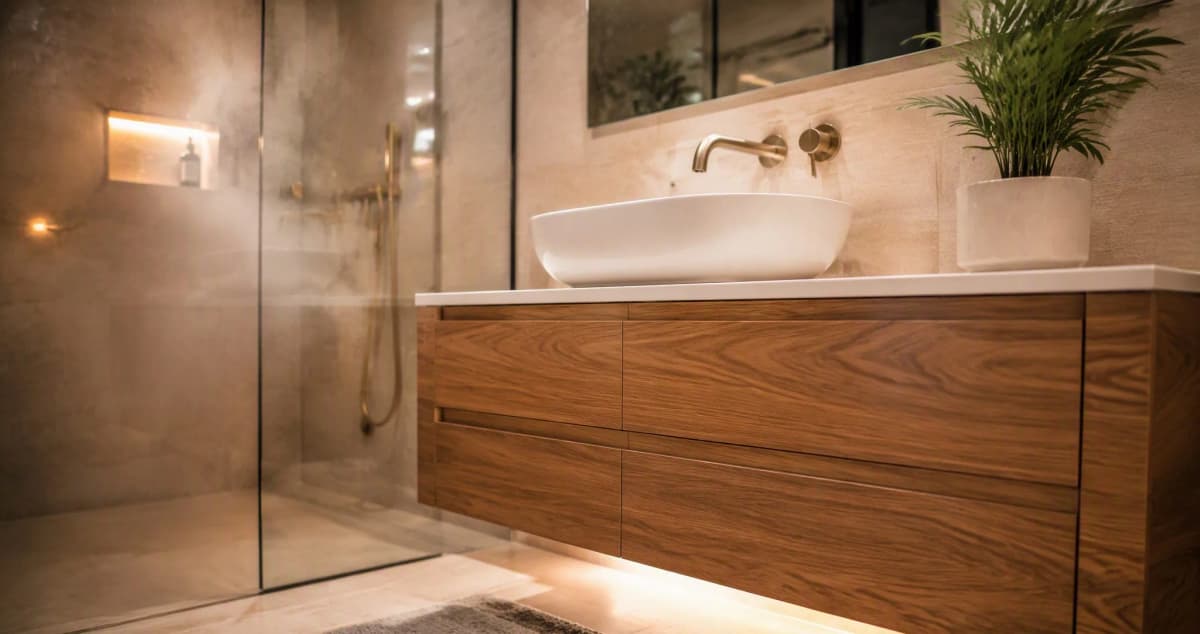
Waterproof plywood — BWP (Boiling Water Proof), certified under IS 710 — is essential in Indian homes because our conditions destroy ordinary boards: 70–95% monsoon humidity, daily mopping, kitchen steam, and under-sink leaks fail MR plywood in 2–3 years and degrade BWR in 5–8. BWP's phenol-formaldehyde bonds survive 72+ hours of boiling water without delaminating, so BWP kitchens and vanities last 15–25 years. It's non-negotiable for under-sink cabinets, bathroom vanities, hob-adjacent base cabinets, utility areas, balconies and coastal homes — and overkill (BWR suffices) for dry bedrooms. price: ₹90–160/sq ft for 18–19mm.
The Four Enemies: How Water Actually Kills Plywood
Plywood doesn't fail because of one dramatic flood. It fails slowly, from four directions at once — and an Indian home supplies all four generously:
- Steam and ambient humidity. Cooking steam condenses inside kitchen cabinets; bathrooms run at 90%+ humidity after every hot shower; monsoon air holds 70–95% humidity for months. Ordinary urea-formaldehyde glue softens in sustained humidity — the layers begin to separate long before anything looks wrong.
- Direct water contact. Wet mops against cabinet legs, splashes around sinks, drips from wet umbrellas on shoe racks, overflowing buckets in utility areas. Water enters through cut edges and screw holes — never through the laminated face.
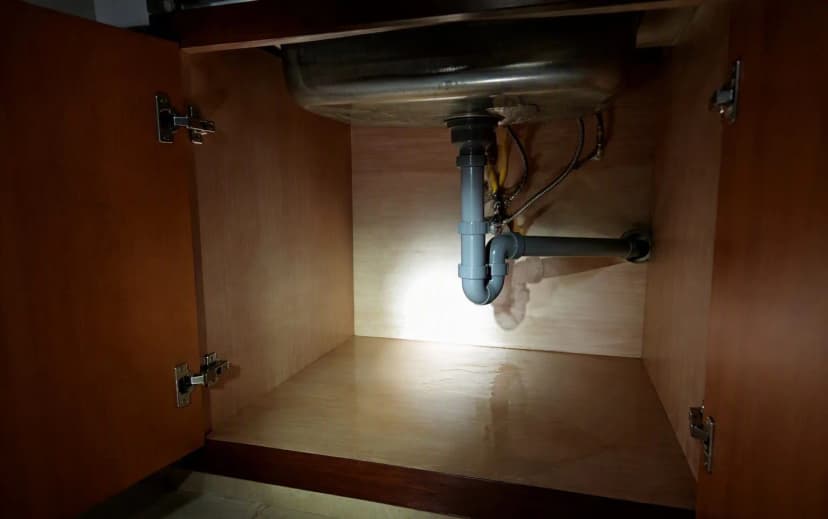
- Plumbing leaks. The under-sink trap drips for months before anyone notices. By then, an MR cabinet floor is a spongy, black-stained loss. This is the single most common cabinet failure in Indian kitchens.
- Swelling cycles. Boards absorb moisture, swell, dry, and swell again. Each cycle widens the damage — doors stop closing, edge banding lifts, shelves bow. And swelling is permanent: dried-out damaged board never returns to size.
Waterproof plywood exists because of one insight: the failure point is always the glue line between veneers. Fix the glue, and the board survives everything else.
The Science: What Makes BWP Waterproof
BWP plywood bonds its hardwood veneers with phenol-formaldehyde (PF) resin — a thermoset adhesive that, once cured under heat and pressure, is chemically inert to water. It doesn't soften at 100°C, doesn't hydrolyse in steam, and doesn't weaken across thousands of wet-dry cycles. Compare that to MR's urea-formaldehyde, which is water-soluble in slow motion, or BWR's melamine-fortified blend, which resists for hours but not forever.
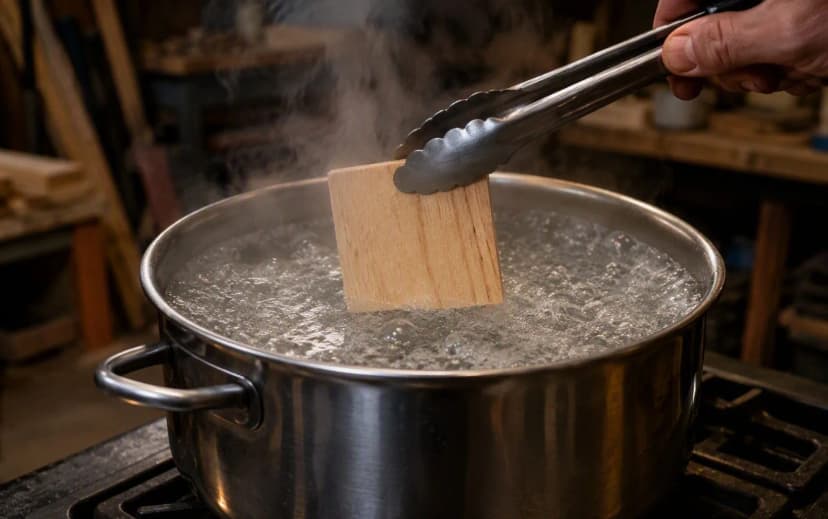
The Bureau of Indian Standards certifies this with a brutal test: IS 710 samples must survive 72 continuous hours submerged in boiling water, then retain their glue-shear strength. Three days of boiling. MR-grade samples fail this test in 2–3 hours; BWR manages roughly 8; BWP passes 72+ and comes out intact.
IS 710 also demands more of the wood itself: dense tropical hardwood veneers, gap-free core layers, and low moisture content (8–12%). That's why genuine marine ply feels noticeably heavy — and why its screws never pull out of a waterlogged edge, because the edge never waterlogs.
One honest caveat: the waterproofing lives in the glue lines, not the wood. Raw BWP veneers can still absorb surface moisture — which is why the finished product needs sealed edges and a laminate or polish skin. BWP + edge banding + finish = effectively waterproof. BWP alone = only 90% of the protection you paid for.
BWP vs BWR vs MR: The Grade Ladder
Every plywood quote in India is a choice between three rungs of water resistance. Here's the full ladder — including what each survives and what each costs.
| MR (IS 303) | BWR (IS 303) | BWP / Marine (IS 710) | |
|---|---|---|---|
| Adhesive | Urea-formaldehyde | Melamine-fortified UF | Phenol-formaldehyde |
| Boiling-water survival | 2–3 hours | ~8 hours | 72+ hours |
| Handles | Humidity of dry rooms only | Steam, splashes, humid rooms | Direct water, leaks, immersion |
| Core wood | Mixed/poplar common | Mixed hardwood | Dense hardwood, gap-free |
| Life in a wet zone | 2–3 years | 5–8 years | 15–25 years |
| price (18–19mm) | ₹45–70/sq ft | ₹65–95/sq ft | ₹90–160/sq ft |
| Right zones | Dry bedrooms, AC rooms | Kitchen wall units, humid rooms | Under-sink, bathrooms, balconies, coastal |
BIS amendment worth knowing: BWP for interior use is now also certifiable under IS 303, which created two "BWP" tiers in the market. IS 303 BWP is fine for interior wet zones; IS 710 marine remains the gold standard (hardwood-only cores, stricter strength tests). For under-sink and bathroom work, insist on IS 710.
Zone by Zone: Where BWP Is Non-Negotiable
Map your home by water exposure, and the specification writes itself. These are the five zones where waterproof plywood pays for itself every time:
Under-sink kitchen cabinets
The trap joint, the garbage-disposal drip, the wet dustbin — this cabinet sees slow leaks for months before discovery. MR here fails in 2–3 years; BWR in 5–6. BWP shrugs off the drip indefinitely.
Specify: 18–19mm BWP (IS 710), double-sealed edges, raised on 100mm legs off the floor
Bathroom vanities & cabinets
Bathrooms hit 95%+ humidity after every hot shower, and vanities near showers take direct spray. Add soap and cleaning chemicals, and only PF-bonded board survives long-term. Vanities away from the shower can live on BWR; anything adjacent to the wet area gets BWP.
Specify: 18mm BWP for the cabinet, 12mm BWP shutters · wall-hung or on 150mm legs · silicone-sealed wall junctions
Kitchen base cabinets near the hob & sink run
Steam rises into cabinets around the cooktop; the sink run sees splashes and wet vessels daily. In kitchens without a chimney, this moisture load doubles. BWP for all base units is the professional default; wall units can step down to BWR.
Specify: 18–19mm BWP base carcasses · BWR wall units · 16mm calibrated shutters
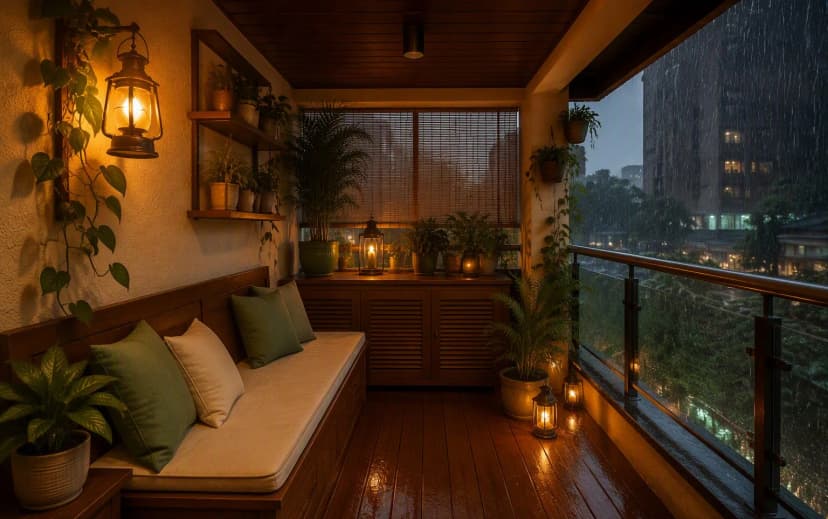
Utility areas, washing-machine enclosures & balconies
Utility rooms combine splashing, detergent chemicals and floor washing; covered balconies take wind-driven monsoon rain. Both are BWP territory with exterior-grade sealing — raised off floor contact, all edges sealed.
Specify: 18mm BWP + laminate/PU finish + exterior sealer on every cut edge · never ground contact
Coastal homes (Mumbai, Chennai, Kochi, Goa, Mangalore)
Where ambient humidity stays above 80% for most of the year and salt air accelerates corrosion and glue failure, coastal practice is BWP throughout the kitchen and bathrooms — and BWR even for "dry" rooms. The sea doesn't care what the brochure said.
Specify: BWP for all wet zones, BWR minimum elsewhere · stainless steel hardware · extra ventilation design
Where BWP Is Overkill — Save the Money
Waterproof plywood costs 30–50% more than BWR and roughly double MR. Spending it everywhere is waste, not wisdom:
- Dry bedrooms & AC rooms: wardrobes, study tables and TV units in air-conditioned or genuinely dry rooms live happily on MR for 10–15 years. BWP here buys nothing.
- Kitchen wall units: away from the hob steam line, BWR is sufficient. Reserve BWP for base cabinets and the sink run.
- Wall paneling & false-ceiling backing: vertical surfaces in dry rooms see no standing water — MR or BWR per the room's humidity.
The 80/20 rule: a typical 2BHK needs BWP for only 15–25% of its plywood — the kitchen base, under-sink unit, vanities and utility. That's roughly ₹15,000–25,000 of premium over all-BWR, and it protects the exact panels whose failure would cost ₹60,000+ to replace. Targeted waterproofing beats blanket waterproofing.
Prices & the Cost-per-Year Math
Waterproof plywood in India currently runs ₹90–160/sq ft for the workhorse 18–19mm size — about ₹4,500–7,500 per 8×4 sheet from established brands, with economy lines from ₹48–60/sq ft and premium hardwood-core lines crossing ₹190/sq ft.
| Thickness | Price per sq ft | Per sheet (32 sq ft) | Typical use |
|---|---|---|---|
| 6 mm | ₹60–75 | ₹1,900–2,400 | Backs, drawer bottoms in wet zones |
| 9 mm | ₹70–90 | ₹2,200–2,900 | Light paneling, partitions |
| 12 mm | ₹85–120 | ₹2,700–3,800 | Vanity shutters, drawer sides |
| 16 mm | ₹110–150 | ₹3,500–4,800 | Calibrated shutters |
| 18–19 mm | ₹90–160 | ₹4,500–7,500 | Carcasses: kitchen base, vanities, benches |
| 25 mm | ₹210–300 | ₹6,700–9,600 | Countertops, heavy wet-zone tops |
Now the math that matters. An under-sink cabinet in MR ply (₹50/sq ft) fails in ~3 years; replaced three times over 20 years with labour and demolition each time. The same cabinet in BWP (₹130/sq ft) is built once and still solid at year 20. The plywood premium is a few thousand rupees; the repeated rebuilds are lakhs and weeks of disruption. In wet zones, waterproof plywood isn't a luxury — it's the cheap option with a longer horizon.
How to Buy Genuine IS 710 Plywood
The waterproof plywood market has a counterfeit problem: ordinary MR sheets stamped "710" or stickered "waterproof." Five checks protect you:
- Read the edge stamp: genuine IS 710 ply carries the ISI mark, "IS 710", the manufacturer name and a licence number in CM/L-XXXXXXX format — stamped on every sheet, not just the packaging.
- Verify the licence: enter the CM/L number on the BIS database (bis.gov.in). If it doesn't resolve to that manufacturer, walk away.
- Weigh it: dense hardwood-core marine ply is noticeably heavier than poplar-core boards of the same size. Light "marine" ply isn't marine.
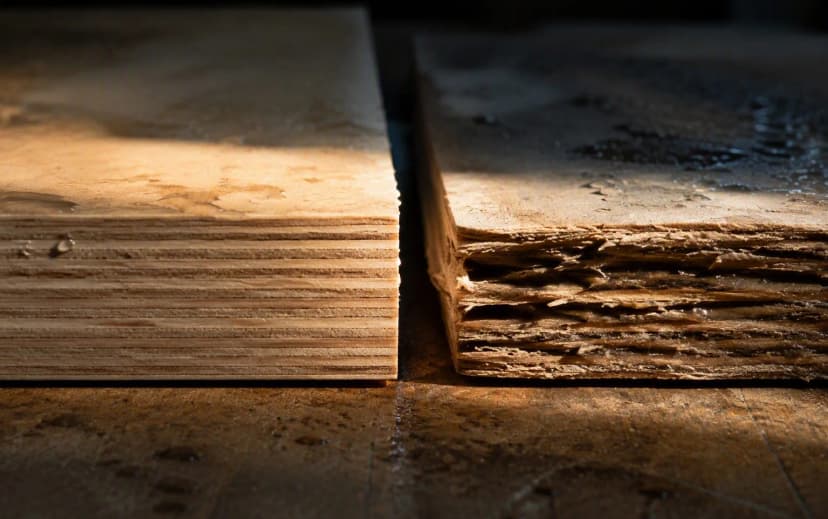
- Inspect the core: look at the cut edge — layers should be uniform, gap-free and tightly bonded. Voids and overlaps mean reject stock.
- The overnight boil test: serious buyers boil an offcut scrap overnight. Genuine BWP emerges intact; fake "710" delaminates within hours.
5 Installation Rules That Decide Everything
Even genuine IS 710 plywood fails early if installed carelessly. These five rules matter as much as the grade:
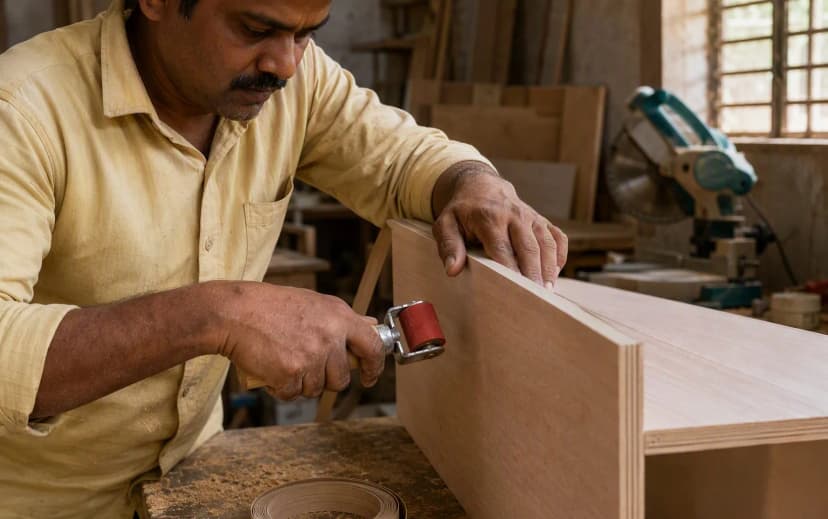
- Seal every cut edge. Edge banding on exposed edges, PU/PVA sealant on hidden cuts. The laminate face is already protected; the raw edge is the doorway for water.
- Raise cabinets off the floor. 100–150mm legs or wall-hung construction keeps plywood out of mop water and minor flooding. Floor-touching cabinet bases wick water upward.
- Seal the wall junctions. Silicone or caulk where cabinets meet walls — especially behind sinks — stops water from running into the cabinet back.
- Acclimatise before cutting. Let sheets rest on site 48 hours. A sheet cut the day it arrives from a humid godown can shift dimensionally and open joints later.
- Ventilate the wet zones. An exhaust fan in the bathroom and a chimney in the kitchen reduce the moisture load on every material — BWP included — and can add years to the whole installation.
The complete system: BWP grade + sealed edges + raised base + finished surface + ventilation. Each layer covers another's weakness — that's what "waterproof" actually looks like in a working home.
Frequently Asked Questions
What is waterproof plywood?
BWP (Boiling Water Proof) plywood, certified under IS 710. Hardwood veneers bonded with phenol-formaldehyde resin survive 72+ hours of boiling water without delaminating. It's used for kitchens, bathrooms, under-sink units, balconies and coastal homes — anywhere with sustained water exposure.
Why is waterproof plywood essential for Indian homes?
Indian conditions — 70–95% monsoon humidity, daily mopping, kitchen steam, under-sink leaks, coastal salt air — fail MR plywood in 2–3 years and degrade BWR in 5–8. BWP's phenolic bonds never delaminate, so BWP kitchens and vanities last 15–25 years where alternatives fail early.
What is the difference between BWP and BWR plywood?
BWR (IS 303) uses melamine-fortified resin and survives ~8 hours of boiling water — good for kitchen wall units and humid rooms. BWP (IS 710) uses phenol-formaldehyde and survives 72+ hours — required for under-sink cabinets, bathroom vanities, balconies and coastal homes. BWP costs 30–50% more and lasts 2–3x longer in wet zones.
Which rooms in a home need waterproof plywood?
Under-sink kitchen cabinets, base cabinets near the hob, bathroom vanities near showers, utility/washing-machine areas, and covered-balcony or coastal-home furniture. BWR suffices for kitchen wall units and humid bedrooms; MR is fine only for dry, air-conditioned rooms.
What is the price of waterproof plywood in India?
₹90–160/sq ft for 18–19mm (₹4,500–7,500 per 8×4 sheet from established brands). 6mm runs ₹60–75/sq ft, 12mm ₹85–120/sq ft, 25mm ₹210–300/sq ft. The 30–50% premium over BWR pays back quickly in wet zones where BWR would need replacing at year 6–8.
Is waterproof plywood completely waterproof?
The glue bonds are — phenol-formaldehyde never delaminates in water. But veneers can absorb surface moisture if unfinished, so edges must be banded or sealed and surfaces laminated, polished or painted. BWP + sealed edges + finished surface is effectively waterproof; raw BWP alone is not.
How can I identify genuine IS 710 marine plywood?
Check the sheet edge for the ISI mark with "IS 710" and a CM/L-XXXXXXX licence number, then verify it on bis.gov.in. Genuine marine ply is heavy (dense hardwood), gap-free at the core, and survives an overnight boil of a scrap sample. Unstamped "waterproof" boards are usually MR with a sticker.
Can waterproof plywood be used for outdoor furniture?
Yes for covered outdoor furniture — balcony benches, terrace cabinets — with all surfaces and edges sealed with exterior sealer or marine varnish and raised off ground contact. For fully exposed furniture in direct monsoon rain, solid teak, WPC or metal may outlast even BWP.
Building a kitchen or bathroom this year?
Send us your plan and we'll map every wet zone — with the exact grade, thickness and edge-sealing specification — so nothing swells, sags or delaminates before its time.
Get a Free Wet-Zone Specification




