How Interior Materials Impact the Durability of Your Home
Two homes built in the same year can age a decade apart — and the difference is almost never the design. It is the plywood grade behind the laminate, the hinge behind the shutter, the stone under the kadai. Here is what actually determines how long Indian interiors last, with real lifespan numbers and the cost math most quotes never show you.
Durability is a chain with four links: the base board, the surface finish, the hardware, and the installation. The weakest link sets the lifespan of the whole unit. In Indian conditions, expect BWP marine plywood carcasses to last 15–20+ years, quality 1 mm laminate shutters 12–18 years, granite counters 50+ years, and branded soft-close hardware 15–25 years — while MDF in humid zones fails in 3–5 years and unbranded fittings in 2–4. The 15-year math is blunt: cheap materials typically cost 60–100% more once replacements and labour are counted. Spec each link for the room's actual stress — moisture, load cycles, termites, heat and UV — and seal every raw edge at installation.
1. The durability chain: four links, one lifespan
Every wardrobe, kitchen cabinet and TV unit is a layered system. Understanding the layers explains the most common homeowner confusion: "we used expensive laminate, so why did the cabinet still fail in four years?"
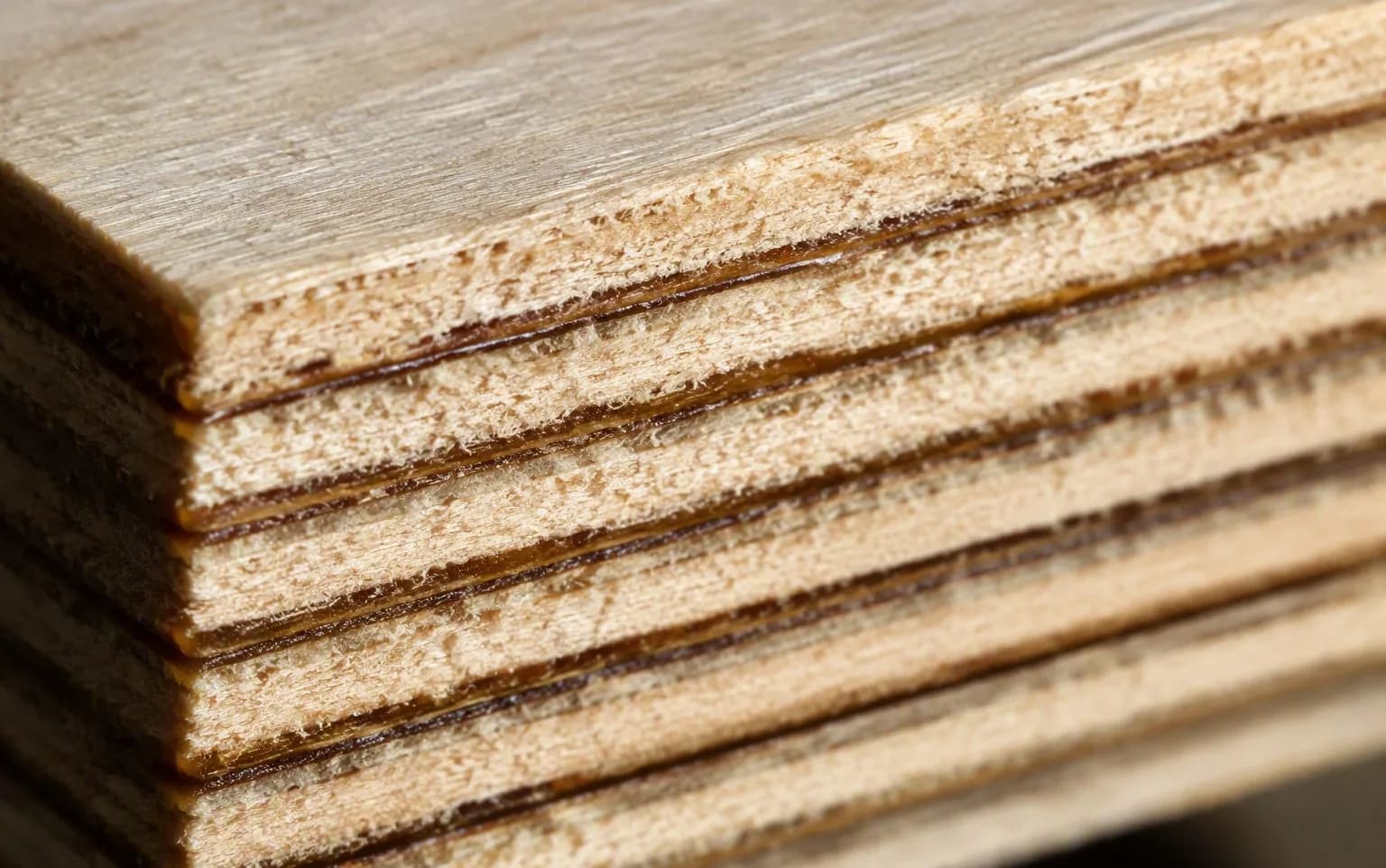
Link 1 — The base board. The plywood, HDHMR or MDF underneath everything. It carries load, holds screws, and decides how the unit responds to moisture. A weak board fails structurally — sagging shelves, drifting shutters, crumbling screw holes — no matter what is glued on top of it.
Link 2 — The surface finish. Laminate, veneer, acrylic, membrane foil or paint. This is the wear layer: it takes scratches, stains, oil films and cleaning chemicals every day, and it seals the board against ambient humidity. When the finish wears through or peels, the board underneath starts absorbing the room.
Link 3 — The hardware. Hinges, drawer channels, lift-ups, handles. The only parts that move — and movement is where mechanical life gets consumed. Hardware ratings are honest numbers: a hinge rated for 80,000 cycles at 15 openings a day has a mathematical life of about 14 years.
Link 4 — The installation. Edge banding, silicone sealing, skirting gaps, wall anchoring. Installation decides whether moisture and pests ever reach the material. The same BWP sheet lasts 20 years fully sealed — or 6 years with a raw sink cutout.
The chain rule: a premium finish on an MR board, or branded hinges on MDF, is money spent decorating a failure. Budget flows to the weakest link first — that is the entire logic of durable specification, and the theme of our guide on selecting durable materials for modern home interiors.
2. The 5 mechanisms that kill Indian interiors
Materials do not "get old." They fail to specific, predictable attacks. Name the attack and the defence usually names itself.
1. Moisture — the serial offender
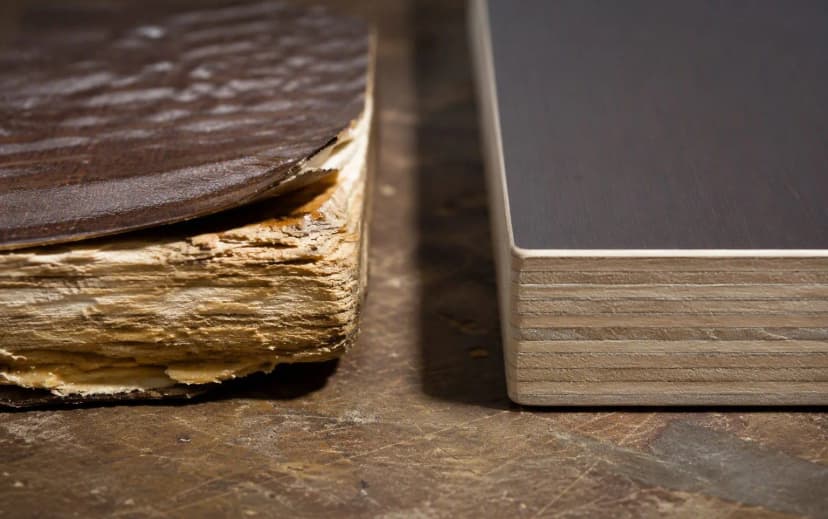
Kitchen steam, sink splashes, monsoon humidity above 75% RH, mopping water, bathroom vapour. Wood-based boards are hygroscopic: they absorb moisture, swell, and — critically — do not fully shrink back. Each wet-dry cycle opens glue lines a little more. Urea-formaldehyde boards (MR ply, standard MDF) soften fastest; phenolic boards (BWR, BWP) resist for years. This is why the grade ladder exists, and why BWR vs BWP is a durability question, not a luxury question.
2. Load cycles — the silent grind
A grain drawer carries 25–40 kg and cycles 10–15 times daily. A wardrobe shutter swings 4–6 times daily. Multiply by 365 and a decade: that is 50,000+ drawer cycles and 15,000+ shutter swings. Screws in weak cores wallow out, thin shelves sag permanently, cheap channel bearings shed ball bearings into the runner. Load-rated boards and cycle-rated hardware are the only defences.
3. Termites and borers — the invisible audit
Termites in Indian homes typically arrive through walls and flooring, not through the furniture itself. Untreated or poorly treated plywood is a food source; BIS-certified treated boards are not. The tell-tale — fine frass dust, hollow-sounding panels, musty smell — usually appears 18–36 months in, when the damage is structural. Anti-termite treatment at the material level plus pre-construction soil treatment is the belt-and-braces standard.
4. Heat and UV — the finish killers
Cabinets beside the hob see sustained radiant heat; finishes near west-facing windows see daily UV. Laminates fade and yellow, membrane foils shrink back from edges, PU finishes micro-crack. Material datasheets rate heat resistance (good HPL tolerates ~180°C contact briefly; membrane foil much less) — but placement decisions matter more than ratings: no foil shutters beside the hob, no dark gloss in direct afternoon sun.
5. Installation wounds — the self-inflicted cut
Every cut edge, hinge bore and sink cutout opens the board's core to the room. Unsealed edges are how moisture and termites enter a board whose face was perfectly protected. Edge banding on every cut, silicone on wet-zone cutouts, and skirting that keeps panels off the mop-water zone convert a vulnerable assembly into a sealed one.
3. Material lifespan table: what lasts how long
These are realistic ranges for Indian homes under normal use with basic maintenance — not showroom claims, and not neglect cases.
| Material | Typical lifespan | Fails first by | Verdict |
|---|---|---|---|
| MR / commercial plywood (IS 303, urea glue) | 5–8 years in dry rooms; 2–4 in kitchens | Moisture swelling at edges, glue-line softening | Dry rooms only — never kitchens or utility |
| BWR plywood (IS 303, phenolic) | 10–15 years | Prolonged standing water at sink zones | Default for most of the home |
| BWP marine plywood (IS 710) | 15–20+ years | Little, if edges stay sealed | Wet zones, sink cabinets, coastal homes |
| MDF (standard) | 3–5 years in humid zones | One wetting — permanent swelling, screw-hole crumble | Avoid in kitchens, wardrobes in humid cities |
| HDHMR | 8–12 years | Edge moisture ingress on long spans | Shutters and painted panels, dry-zone carcasses |
| 1 mm HPL laminate shutter | 12–18 years | Edge-band lifting, then moisture below | Best value finish for most homes |
| Membrane (PVC foil) shutter | 8–12 years | Foil shrink-back near heat sources | Wardrobes; keep away from hobs |
| Acrylic shutter | 15–20 years | Surface micro-scratches (cosmetic only) | Premium, longest-lived finish |
| Granite countertop | 50+ years | Practically nothing; re-polish refreshes it | Buy once, for the life of the home |
| Engineered quartz | 25–30 years | Resin scorch marks from direct hot vessels | Excellent, with trivet discipline |
| Branded soft-close hardware (80k–200k cycles) | 15–25 years | Eventually, spring fatigue | Non-negotiable for kitchens and wardrobes |
| Unbranded hardware | 2–4 years | Rust, sagging arms, seized bearings | False economy — replacement needs panel repair too |
Read the table by its extremes. The gap between the best and worst row in the same category is 3–6× in lifespan for typically 1.3–2× in material price. That asymmetry — small premium, multiple lifespan — is the entire economic case for durable materials.
4. The 15-year cost of "cheap" materials
Quotes compare day-one prices. Households live with 15-year costs. Run the numbers once and the cheap quote stops looking cheap.
Worked example — a mid-size kitchen. Building the carcass in MR plywood instead of a BWR+BWP mix saves roughly ₹25,000–40,000 on a ₹2.5–3.5 lakh kitchen. In year 5–8, moisture failures force a rebuild: new carcass ₹60,000–90,000, demolition and disposal ₹8,000–12,000, re-installation labour ₹20,000–30,000, refinishing adjacent work ₹15,000–25,000. Total replacement event: ₹1.5–3 lakh — plus two weeks without a working kitchen. The "saving" returns 4–7× as a cost.
The pattern repeats across categories:
- Hardware: unbranded hinges and channels save ₹8,000–15,000 on a full home, then fail in 2–4 years. Replacement involves new hardware plus repairing wallowed-out screw holes in panels — often meaning new shutters. Real cost: 3–4× the saving.
- Shutters: 0.7 mm economy laminate over 1 mm HPL saves ~₹150–250 per shutter. Edge lift and surface wear show in year 3–5; re-shuttering a kitchen runs ₹60,000–1,00,000.
- Counters: cheap marble-look tiles instead of granite save ₹15,000–25,000, then stain, crack at the sink cutout and demand replacement within a decade — with the plumbing disconnect and re-fit making it a ₹60,000+ job.
Total cost of ownership, 15 years: across a typical 2–3 BHK interior package, the durable-spec home costs about 15–25% more on day one — and about 40–50% less over the period, because the cheap-spec home funds one full replacement cycle plus repeated repairs. Durability is not a premium purchase. It is the discount, paid in advance.
Where buying right enters: these savings only materialise when the material delivered matches the material specced. Verification at purchase — stamps, invoices, authorised channels — is covered in our guide to selecting reliable interior material suppliers in Bangalore.
5. Room by room: where durability matters most
Not every room deserves the same budget. Durability money earns its return where stress concentrates — and is wasted where it does not.
Kitchen — maximum stress, maximum priority
The only room combining all five failure mechanisms daily: steam and splashes (moisture), grain drawers (load), ground-floor food zones (pests), hob-side cabinets (heat), cutouts everywhere (installation wounds). This is where BWP/BWR, 1 mm laminate, granite or quartz, and branded hardware are non-negotiable. The full material stack is detailed in our Bangalore modular kitchen materials guide and kitchen plywood selection guide.
Bathrooms and utility — moisture territory
Vanities and utility storage live with standing moisture and temperature swings. BWP or WPC boards, SS or stone counters, rust-rated hardware. Wood-look finishes here should be laminate on waterproof board, never veneer on MR ply.
Master wardrobe — the load-cycle champion
The hardest-working unit outside the kitchen: daily shutter cycles, heavy hanging loads, shelf stacks. BWR or HDHMR carcass, 18 mm shelves on spans over 60 cm, branded hinges and channels. In humid or termite-prone areas, this is also where treated plywood earns its premium.
Living and dining — the gentle zone
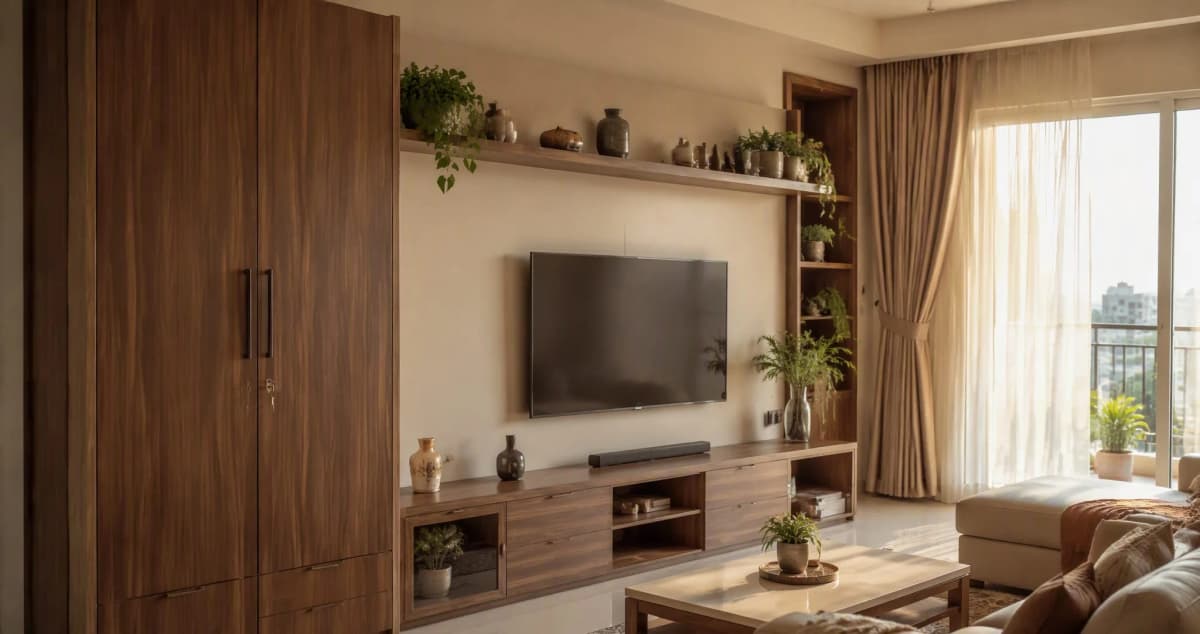
TV units, crockery cabinets, sideboards: low moisture, moderate loads, mostly visual wear. Mid-tier specs (BWR or good HDHMR, standard 1 mm laminate) deliver full durability here — this is where you can safely hold budget for the kitchen.
Bedrooms and study — easiest duty
Side tables, dressers, study desks face the gentlest conditions in the home. Even here, avoid the absolute bottom tier (thin MDF with paper foil) — but mid-range materials genuinely last decades in these rooms.
6. Maintenance that adds years (and what it can't fix)
Good habits extend material life by 20–30%. They are a multiplier on quality — never a substitute for it.
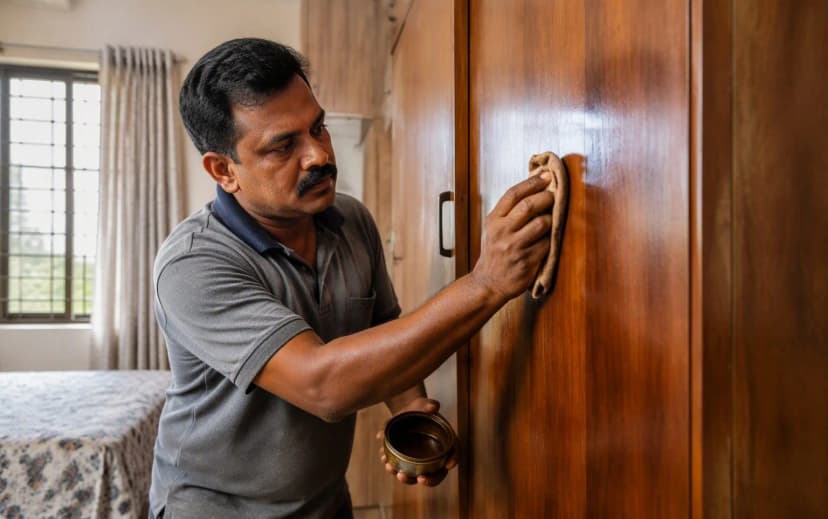
Wipe moisture immediately
Water standing on any seam, edge or counter joint is the enemy in liquid form. A wiped kitchen after cooking is the single highest-value habit on this list.
FREQUENCY: daily, after cooking
Reseal the sink zone yearly
Silicone beads around sink cutouts and counter-wall joints age and crack. A ₹150 tube and ten minutes once a year keeps the wettest panel in the house sealed.
FREQUENCY: annually, before monsoon
Tighten hinge and handle screws
Loose screws let shutters move off-axis, which loads hinges unevenly and wallows out screw holes. A screwdriver pass over the whole home takes half an hour.
FREQUENCY: yearly
Ventilate wardrobes and cabinets
Closed boxes in humid rooms grow mustiness and fungus. Leave shutters ajar occasionally, keep backs off damp walls, use moisture absorbers during monsoon.
FREQUENCY: weekly airing in monsoon
Trivets and chopping boards, always
Direct hot vessels scorch quartz resin and stress granite sealers; knives scar everything. The ₹500 accessories protecting a ₹60,000 counter.
FREQUENCY: every use
Clean finishes gently
Abrasive powders and rough scrubbers micro-scratch laminates and acrylic into dullness. Soft cloth, mild soap, done — finishes stay new-looking for years longer.
FREQUENCY: every clean
What maintenance cannot fix: a swelling MR board, a rusting unbranded hinge, MDF that drank a pipe leak, or foil shrinking off a hob-side shutter. Those are specification failures wearing a maintenance costume. If you are seeing them, the fix is replacement with the right spec — the inspection tests in our plywood quality signs guide will tell you exactly what failed.
7. The hardware multiplier
Hardware deserves its own look because it is the only component with a printed lifespan — and the only one whose failure damages other components.
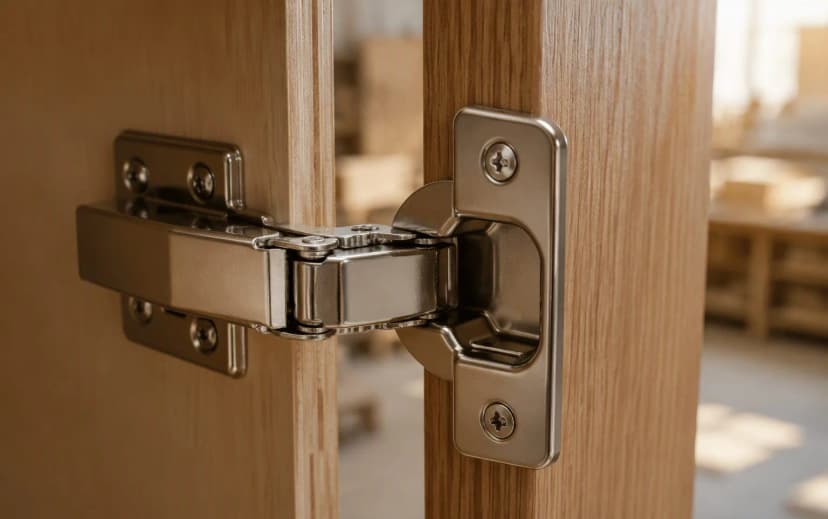
Cycle ratings turn hardware from opinion into arithmetic. A hinge rated at 80,000 cycles, on a shutter opened 15 times a day, reaches its rating in about 14 years. A 2,00,000-cycle hinge outlasts the renovation cycle of the home itself. Unbranded hardware carries no rating because it would not survive the test — typical field life runs 2–4 years before sagging, rust or bearing failure.
The compounding detail: failing hardware damages the furniture around it. A sagging shutter rakes its hinge screws through the carcass edge; a seized channel tears at drawer sides. Hardware replacement after failure therefore costs the hardware plus panel repair — often meaning new shutters altogether. Buying rated hardware once is cheaper than buying unrated hardware twice, before counting the panel damage.
Specify by standard and cycle count, not by brand name alone, and buy through authorised channels — counterfeit branded hardware is its own category of problem, covered in our supplier selection guide.
The 8-point durability specification checklist
- Base board named by grade and standard — BWR (IS 303) or BWP (IS 710) where moisture exists; "plywood" alone on a quote is not a spec.
- No MDF in humid zones — kitchens, bathrooms, utility, ground-floor wardrobes. Decorative dry-zone use only.
- Finish thickness stated — 1 mm HPL minimum on kitchen and wardrobe shutters; no 0.6–0.7 mm economy sheets on working surfaces.
- Hardware rated in cycles — hinges and channels with stated ratings (80,000+), from authorised channels with hologram verification.
- Wet zones get wet-zone materials — sink cabinet BWP, bathroom vanity BWP or WPC, regardless of what the rest of the home uses.
- Every cut edge sealed — edge banding on all cuts, silicone on sink and counter cutouts, skirting keeping panels off floors.
- Termite treatment confirmed — treated boards for ground-contact and ground-floor units; pre-construction treatment where relevant.
- Heat and UV placement checked — no membrane foil beside hobs, no vulnerable dark gloss finishes in direct western sun.
Frequently asked questions
Which interior materials last the longest in Indian homes?
Natural stone countertops (granite, 50+ years), BWP marine plywood carcasses (15–20+ years in kitchens), quality 1 mm laminate shutters (12–18 years) and branded soft-close hardware rated for 80,000–2,00,000 cycles. The weakest links are MDF in humid zones (3–5 years) and unbranded hardware (2–4 years).
How long do interior materials typically last in India?
Typical lifespans in Indian conditions: MR plywood 5–8 years in dry rooms, BWR 10–15 years, BWP marine 15–20+ years; MDF 3–5 years in humid areas; laminate shutters 12–18 years; membrane shutters 8–12 years; acrylic 15–20 years; granite 50+ years; quartz 25–30 years; quality hardware 15–25 years versus 2–4 years for unbranded fittings.
Why do cheap interior materials cost more in the long run?
Cheap materials fail early and force full replacement, not repair. A kitchen carcass built with MR plywood instead of BWR saves roughly ₹25,000–40,000 upfront but typically needs ₹1.5–3 lakh in replacement work within 5–8 years — plus a second round of labour, demolition and disruption. Over 15 years, the cheap build usually costs 60–100% more.
What causes interior materials to fail early in Indian homes?
Five mechanisms account for most failures: moisture (steam, splashes, monsoon humidity swelling boards), load cycles (drawers and hinges wearing out), termites and borers in untreated wood, UV and heat degrading finishes near windows and hobs, and poor installation leaving raw edges exposed. Material choice plus sealed installation addresses all five.
Is plywood or MDF more durable for furniture?
Plywood, decisively. Its cross-laminated veneers give superior screw-holding, load-bearing and moisture tolerance. MDF swells permanently after one wetting and loses screw grip after repeated re-fixing. MDF is acceptable only for dry, low-load, decorative applications — never for kitchen or wardrobe carcasses.
How does hardware affect furniture durability?
Hardware is the moving part that dies first. A kitchen shutter opens thousands of times a year; hinges and channels transfer every cycle into the carcass. Branded soft-close hardware rated 80,000–2,00,000 cycles lasts 15–25 years, while unbranded fittings sag, rust or seize within 2–4 years and take the panel edges down with them.
Can good maintenance extend the life of interior materials?
Yes — 20–30% longer in most cases. The high-impact habits: wipe moisture immediately, reseal sink-area silicone annually, tighten hinge screws yearly, keep wardrobes ventilated, use trivets on countertops, and avoid abrasive cleaners on laminates. Maintenance multiplies material quality; it cannot substitute for it.
Which rooms need the most durable materials?
Kitchen first (steam, water, oil, heavy daily cycles), then bathrooms and utility (standing moisture), then high-traffic storage like the master wardrobe (daily load cycles). Living room TV units and bedroom side tables face the gentlest conditions and tolerate mid-tier materials without durability loss.
Build it once. Build it right.
Evospace specs every Bangalore interior for its actual stresses — grades, finishes and hardware named line by line, matched to each room, documented on every invoice. Durability by design, not by luck.
Get a Free Material Consultation