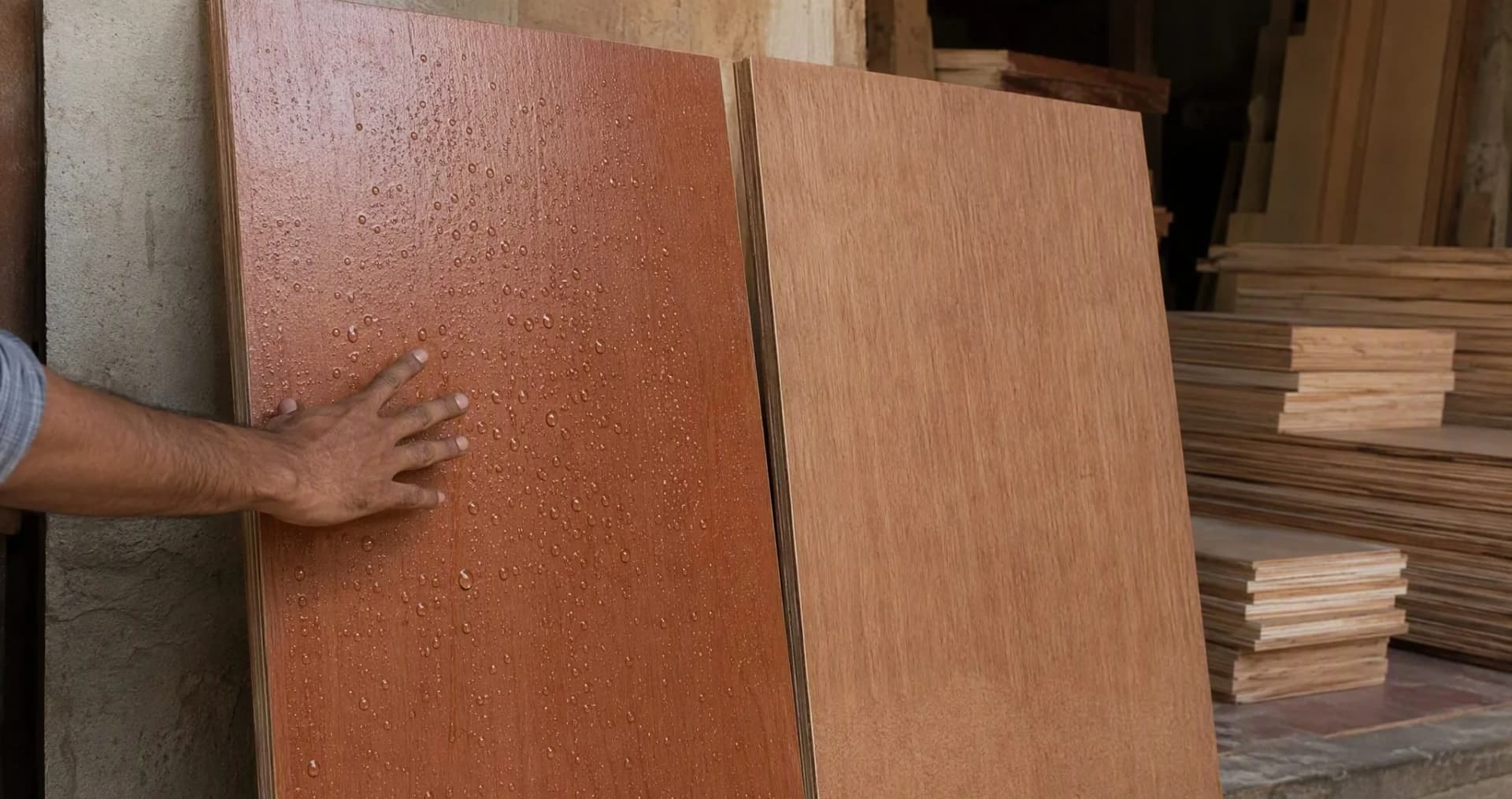
BWR vs BWP Plywood: Understanding the Key Differences
Both are 'waterproof plywood' at the dealer's counter. Only one survives 72 hours of boiling water. Here's the glue chemistry, the IS standards, the exact rooms where each grade belongs — and where paying extra for BWP is simply wasted money.
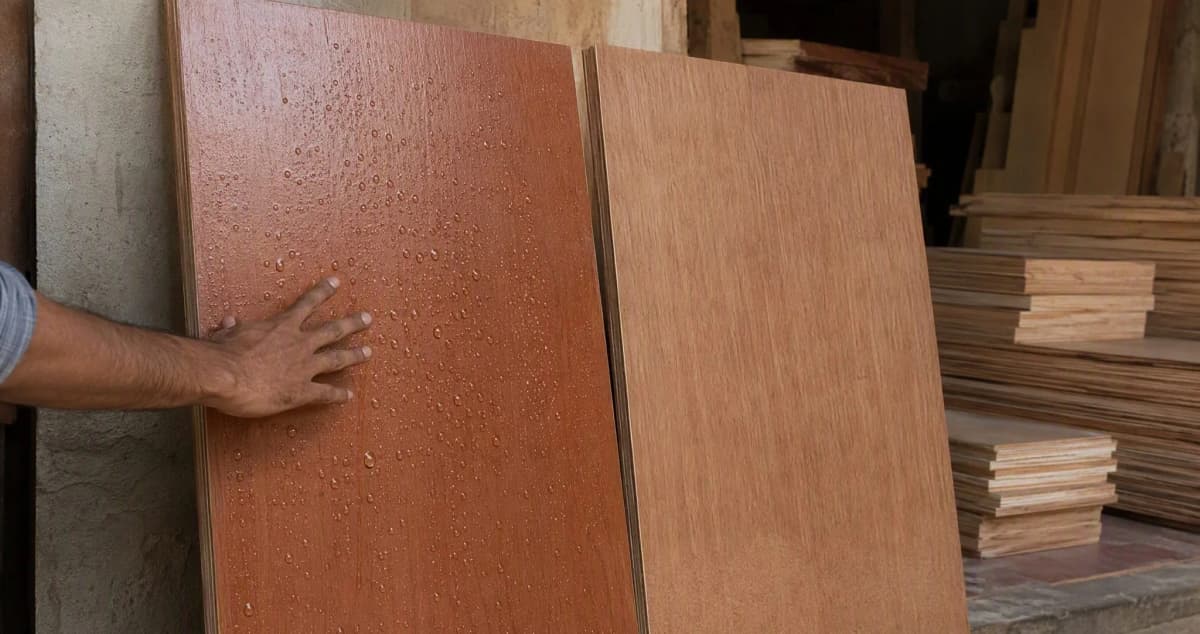
BWR (Boiling Water Resistant) is made to IS 303 with phenol or melamine-fortified glue that survives roughly 8 hours of boiling-water testing — it handles steam, splashes and humid air, and belongs in kitchens, wardrobes and utility units. BWP (Boiling Water Proof), sold as 'marine plywood', is made to IS 710 with undiluted phenol-formaldehyde glue that must survive 72+ hours of continuous boiling — it handles standing water, leaks, bathrooms, balconies and coastal climates. 18–19 mm BWR costs about ₹83–140 per sq ft and BWP about ₹116–250 per sq ft — a 30–50% premium. Rule of thumb: wet-adjacent furniture (sink units, bathroom vanities, balcony pieces) gets BWP; everything damp-but-not-wet gets BWR; and dry bedrooms get MR, not either of these.
What BWR and BWP actually mean
Neither term describes the wood. Both describe how long the glue line survives boiling water before the veneers separate. That single fact explains everything else in this guide.
BWR — Boiling Water Resistant. Made under IS 303 (the same Indian Standard that covers ordinary MR 'commercial' ply, but with a stricter adhesive requirement). BWR uses phenol or melamine-fortified resin. It shrugs off steam from cooking, condensation on monsoon mornings, wet hands on shutters and the odd splash — but it is not designed for water that stays.
BWP — Boiling Water Proof. Made under IS 710, the marine-plywood standard. BWP uses undiluted phenol-formaldehyde resin pressed at high temperature and pressure, with tighter veneer-quality rules than IS 303. The glue line is, for practical purposes, permanent: it does not hydrolyse, soften or creep even under continuous wetting. 'Marine ply' and 'BWP' are two names for the same product — and the '710' stamped on the sheet is simply the standard number.
BIS update worth knowing: BIS has also added a BWP grade inside IS 303 itself, tested to the same 72-hour boil. So you may now see 'IS 303 BWP' on sheets — legitimate, and a little cheaper than IS 710 marine. The difference: IS 710 additionally specifies premium hardwood veneers and tighter defect limits. For furniture, both work; for structural or genuinely marine use, insist on IS 710.
The real difference: glue chemistry and the boil test
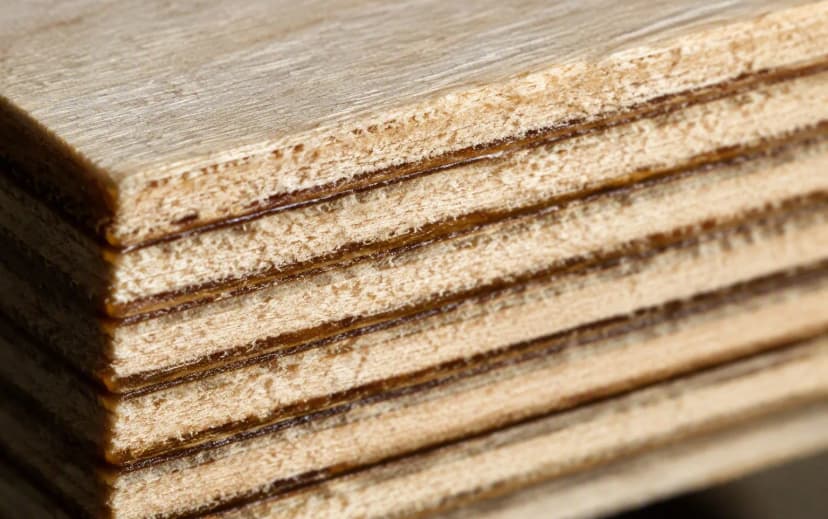
Plywood fails in water in one way: the glue lets go and the layers peel apart — delamination. The wood veneers themselves survive water fine (boats were made of solid timber for centuries). So BIS grades plywood by torturing the glue line:
- MR (IS 303): 3 hours immersed in water at 60 °C. Urea-formaldehyde glue. Dry rooms only.
- BWR (IS 303): 8 hours in boiling water, then tested wet for adhesive shear strength. Phenol/melamine-fortified glue. Kitchens and humid zones.
- BWP (IS 710): 72 hours of continuous boiling (or equivalent cycles with cold-water immersion between), then tested wet. Undiluted phenol-formaldehyde. Wet zones, outdoors, marine.
The chemistry matches the test. Urea-formaldehyde (MR) hydrolyses — water literally breaks the polymer down. Phenol-formaldehyde (BWP) cures into a cross-linked network that water cannot untangle; it will outlive the wood it holds together. BWR sits in between: fortified enough for intermittent wetting, not rated for immersion.
One more difference hides in the veneers. IS 710 demands better core stock — denser hardwood, tighter gap limits — which is why genuine marine ply is noticeably heavier and machines cleaner than BWR of the same thickness.
| Parameter | BWR (Boiling Water Resistant) | BWP / Marine (Boiling Water Proof) |
|---|---|---|
| Indian Standard | IS 303 | IS 710 (a BWP grade also exists under IS 303 since) |
| Adhesive | Phenol or melamine-fortified resin | Undiluted phenol-formaldehyde (PF) |
| Boil test | ~8 hours boiling, tested wet | 72+ hours continuous boiling, tested wet |
| Handles | Steam, condensation, splashes, humid air | Standing water, leaks, rain, constant damp |
| Fails when | Water pools or leaks sit on/inside it for weeks | Almost never at the glue line; edges still swell if unsealed |
| Veneer quality | Standard commercial hardwood cores | Stricter — denser hardwood, tighter gap limits |
| Weight (18 mm, 8×4) | Moderate | Noticeably heavier (denser core) |
| Typical price, 18–19 mm | ₹83–140 / sq ft | ₹116–250 / sq ft |
| Right home for it | Kitchens, wardrobes, utility, dining | Sink units, bathrooms, balconies, coastal homes, outdoors |
Room-by-room: which grade goes where
The honest answer is rarely 'all BWP' or 'all BWR' — it's a map of your house. Zone it like this and you'll spend the premium exactly where water actually lives.
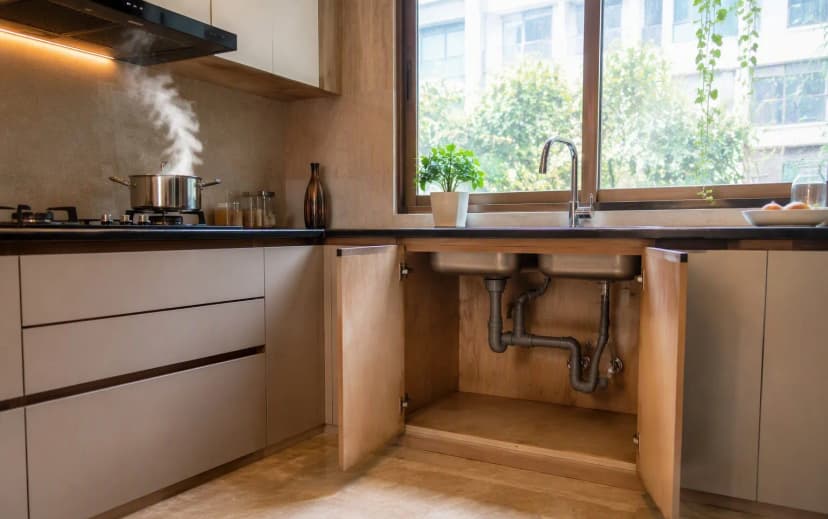
BWR for the kitchen, BWP for the sink unit
Cabinets and shutters see steam and splashes — BWR territory. But the sink unit sees standing water, slow plumbing leaks and daily wet-vessel storage — BWP territory. A hybrid spec (BWR carcass + shutters, BWP sink cabinet and cabinet floor) captures 90% of the benefit at roughly 60% of the full-BWP cost.
Verdict: BWR everywhere, BWP under the sink. Non-negotiable: edge-band every cut edge.
Upgrade the whole kitchen to BWP
In Mumbai, Chennai, Kochi, Goa or Mangalore, monsoon humidity keeps every surface damp for months, and salt-laden air accelerates glue fatigue. Kitchens here age like bathrooms elsewhere. The full-BWP upgrade pays for itself the first time a dry-city kitchen would have needed rebuilding.
Verdict: BWP throughout, including wall cabinets. Check termite treatment separately.
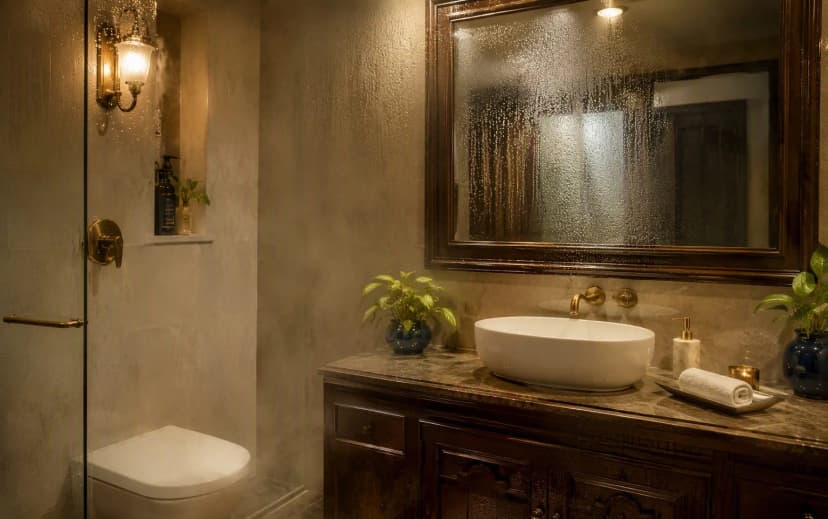
BWP, no debate
Bathroom vanities face the exact profile BWR is not rated for: steam twice a day, direct splashes, and — in most Indian homes — bucket baths that keep floors and lower cabinets wet for hours. BWR vanities routinely swell at the base within 3–4 years. BWP (IS 710) with sealed edges is the only sensible spec here.
Verdict: BWP IS 710 for the vanity carcass and shutters; raise the unit on legs or a granite/SS base so it never stands in water.
Neither — MR is enough (with one exception)
A bedroom wardrobe never meets water. Branded MR plywood does the job for ₹25–50/sq ft less than BWR. The exception: coastal cities, where wardrobes on external walls see monsoon condensation — there, BWR is cheap insurance for the carcass back panel at minimum.
Verdict: MR in dry-interior cities; BWR back panels (or full BWR) for external-wall wardrobes in coastal cities.
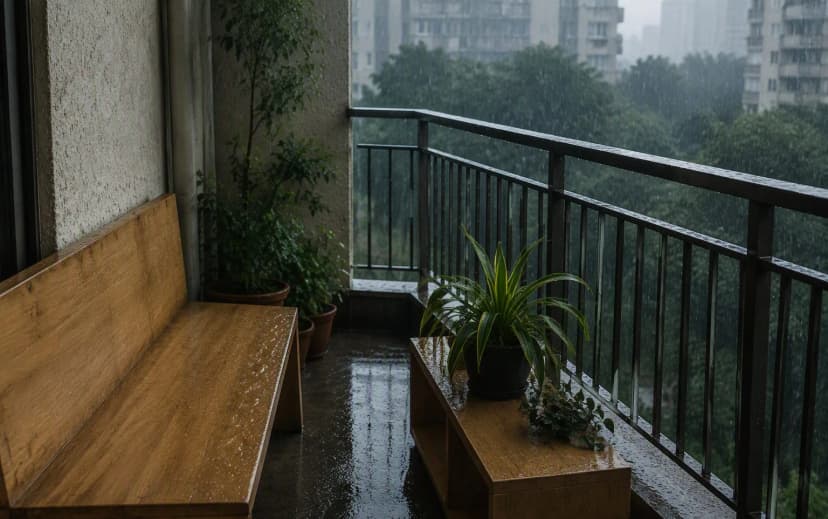
BWP or nothing
Balcony benches, planter tables and utility cabinets get rained on directly for four months a year. No BWR glue line is rated for that — and neither is BWP's face veneer, honestly: even marine ply here needs a PU or epoxy exterior coating and a design that sheds water. But BWR on a balcony is not a compromise, it's a countdown.
Verdict: BWP IS 710 + exterior-grade finish + a slight slope or drip edge so water never pools.
BWP for anything under the tap
The utility area combines the worst of kitchen and bathroom: a wet floor, a dripping tap, detergent splashes and a machine that occasionally floods. Any cabinet, loft or counter here should be BWP; shelving high on the wall can stay BWR.
Verdict: BWP below counter height; BWR acceptable for high, dry shelving.
prices: what the upgrade actually costs
Per-sheet quotes hide the comparison; per-sq-ft reveals it. Here's where branded plywood sits in most Indian cities this year:
| Thickness | MR (IS 303) | BWR (IS 303) | BWP / Marine (IS 710) |
|---|---|---|---|
| 6 mm | ₹38–70 | ₹55–90 | ₹80–120 |
| 12 mm | ₹55–80 | ₹65–110 | ₹81–180 |
| 18–19 mm | ₹73–100 | ₹83–140 | ₹116–250 |
| 25 mm | ₹100–130 | ₹140–180 | ₹176–350 |
Do the maths on a real project. A typical modular kitchen uses about 250–300 sq ft of 18 mm ply. All-BWR at ₹110 average: ~₹30,000. All-BWP at ₹160 average: ~₹44,000. The hybrid — BWR everywhere plus 60 sq ft of BWP for the sink zone: ~₹33,000. That's ₹3,000 over all-BWR for protection exactly where kitchens fail. On a ₹2.5–4 lakh kitchen, it's the easiest insurance decision in the whole project.
Price sanity check: If 'BWP marine' is quoted at ₹70–90/sq ft for 18 mm, you're not looking at a bargain — you're looking at BWR (or worse) with a marine stamp. Genuine IS 710 cannot be manufactured at that price. Verify before you celebrate.
When BWP is overkill — and when BWR is a gamble
BWP is wasted money in: bedroom wardrobes (dry cities), TV and display units, study tables, false-ceiling backing, partition panelling, and any fully laminated furniture in air-conditioned rooms. No water ever reaches these boards; you're paying for a 72-hour boil survival you'll never test. Spend the difference on better laminate, hardware or an extra drawer.
BWR is a gamble in: bathroom vanities, under-sink cabinets, balcony and terrace furniture, utility counters under taps, any furniture on a floor that gets washed daily (very common in Indian homes), and anything in a coastal city that touches an external wall. In these spots BWR usually survives a few years — long enough to be out of any warranty conversation, short enough that you'll pay for the same furniture twice.
The pattern is simple: if water sits, splashes daily, or the room steams up twice a day — BWP. If the room is merely humid or occasionally splashed — BWR. If the room is dry — save your money with MR.
How to verify you're getting the grade you paid for
Dealers sell up a grade so routinely that verification is part of the purchase, not an optional extra. Four checks:
- Read the stamp properly. BWP must show IS 710 (or 'IS 303 BWP') next to the ISI mark — not just IS 303, which could be MR or BWR. Then verify the 7-digit CM/L licence number on services.bis.gov.in or the BIS Care App; it must resolve to that manufacturer and standard.
- Scan the brand QR code with the brand's official app (CenturyPromise, Greenply's app, etc.). Genuine sheets pull up plant, grade and batch; fakes scan to nothing.
- Smell the fresh cut. Phenol-formaldehyde has a sharp, resinous smell. A harsh chemical stench suggests urea-based glue; no smell at all in a 'marine' board deserves suspicion.
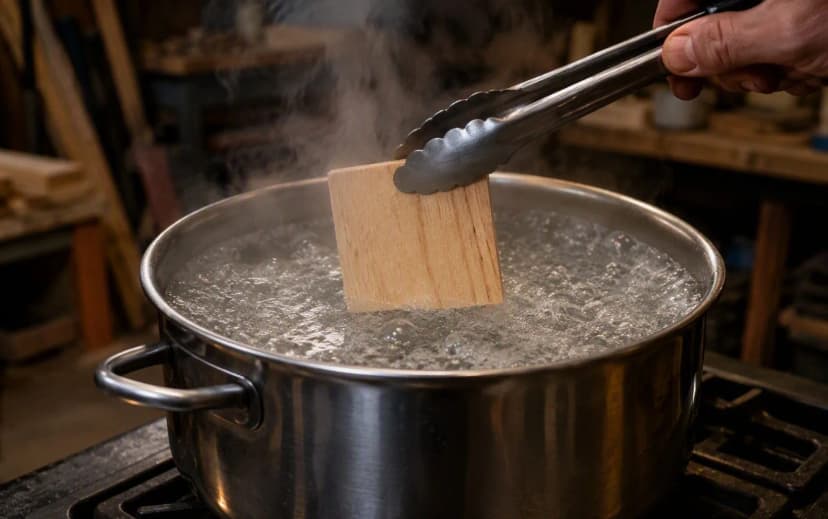
- Boil a sample. Take a 6-inch offcut from the actual lot, boil it. MR peels in 2–3 hours, BWR shows stress around 8, genuine BWP stays intact through 72. Even an 8-hour home test catches most fakes.
- 'BWR and BWP are the same thing.' Different standards (IS 303 vs IS 710), different glue, a 9× difference in boil-test survival.
- 'Waterproof plywood doesn't need edge sealing.' The glue is waterproof; the wood is not. Unsealed edges swell on any grade — edge-band everything.
- 'Marine ply is only for boats.' 'Marine' is just the highest waterproofing class. It's the correct spec for any Indian bathroom, sink unit or balcony.
- 'Anything stamped 710 is genuine marine ply.' Stamps are faked wholesale. Verify the CM/L number and scan the QR — or boil a sample.
- 'BWP is automatically termite-proof.' Waterproofing and termite treatment are separate processes. Many premium BWP lines have both — confirm and get it in writing.
5 myths dealers repeat — and the truth
The five claims above are the ones dealers repeat most often — and the facts that correct each one.
Frequently asked questions
What is the main difference between BWR and BWP plywood?
The glue and the standard. BWR (IS 303) uses phenol or melamine-fortified resin that survives about 8 hours of boiling-water testing; BWP (IS 710) uses undiluted phenol-formaldehyde rated for 72+ hours of continuous boiling. In practice, BWR handles steam and splashes; BWP handles standing water, leaks and rain.
Is BWP plywood the same as marine plywood?
Yes — BWP is the formal grade name, 'marine plywood' the market name; both mean IS 710 plywood with phenol-formaldehyde bonding and premium hardwood veneers. A genuine IS 710 stamp is BWP marine ply, whatever name is on the quote.
Which is better for a modular kitchen — BWR or BWP?
BWR is the sensible minimum for cabinets and shutters away from the sink; BWP for the sink unit, its cabinet floor, and dishwasher-adjacent cabinets. In coastal cities, upgrading the entire kitchen to BWP is worth it. With edge banding everywhere, the hybrid spec protects a kitchen for 15+ years at near-BWR cost.
How much more expensive is BWP than BWR?
Branded 18–19 mm BWR retails around ₹83–140 per sq ft; equivalent BWP marine runs ₹116–250 per sq ft — a 30–50% premium. On a full kitchen (250–300 sq ft of ply), all-BWP adds roughly ₹10,000–30,000 over all-BWR; a BWR-plus-BWP-sink-zone hybrid adds only about ₹3,000–5,000.
Can BWR plywood be used in a bathroom?
Not recommended. Indian bathrooms combine twice-daily steam, direct splashes and bucket baths that keep surfaces wet for hours — exactly the sustained wetting BWR's glue isn't rated for. BWR vanities typically swell at the base within 3–4 years. Specify BWP (IS 710) with sealed edges instead.
Does waterproof plywood still need edge sealing?
Yes. 'Waterproof' describes the glue line only — the wood veneers still absorb water through faces and especially cut edges. Even genuine BWP marine ply needs edge banding, laminate or a PU/epoxy coat on every exposed edge, or the edges will swell over time despite the waterproof glue.
How can I verify that a sheet sold as BWP is genuine?
Check for an IS 710 mark (not just IS 303) beside the ISI logo, verify the 7-digit CM/L licence number on services.bis.gov.in or the BIS Care App, and scan the sheet's QR code in the brand's official app. For certainty, boil a 6-inch sample: genuine BWP survives 72 hours; BWR shows stress around 8; MR peels within 2–3.
Is BWP plywood termite-proof as well?
Not automatically — water resistance comes from the glue, termite resistance from separate veneer treatment. Many premium BWP lines from major brands are both waterproof and termite-treated with long warranties, but confirm the treatment explicitly and get it on the invoice and warranty card.
Still torn between BWR and BWP?
Tell us your rooms, your city and your budget — we'll map the right grade to every cabinet and wardrobe, and connect you with verified dealers who stamp and bill honestly.
Get a free material consultation