
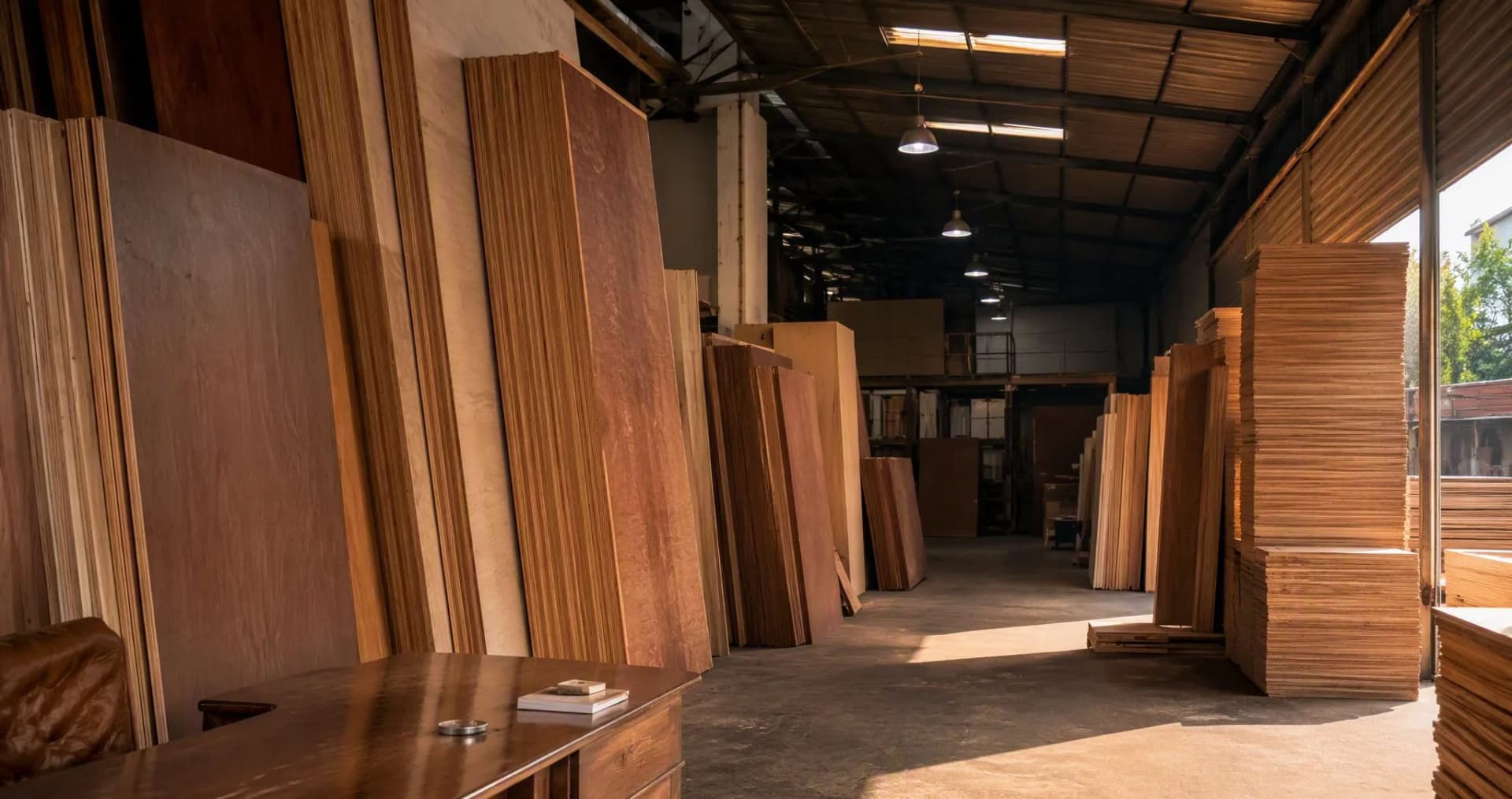
What Factors Affect Plywood Prices in Bangalore? The 12 Real Reasons Behind the Quote
One dealer quotes ₹95/sq ft for 18mm plywood, another quotes ₹165 — for sheets that look identical. Here's exactly what separates them: grade, thickness, core timber, calibration, brand, GST and six more factors, plus current Bangalore rates and how to pay less without buying worse.
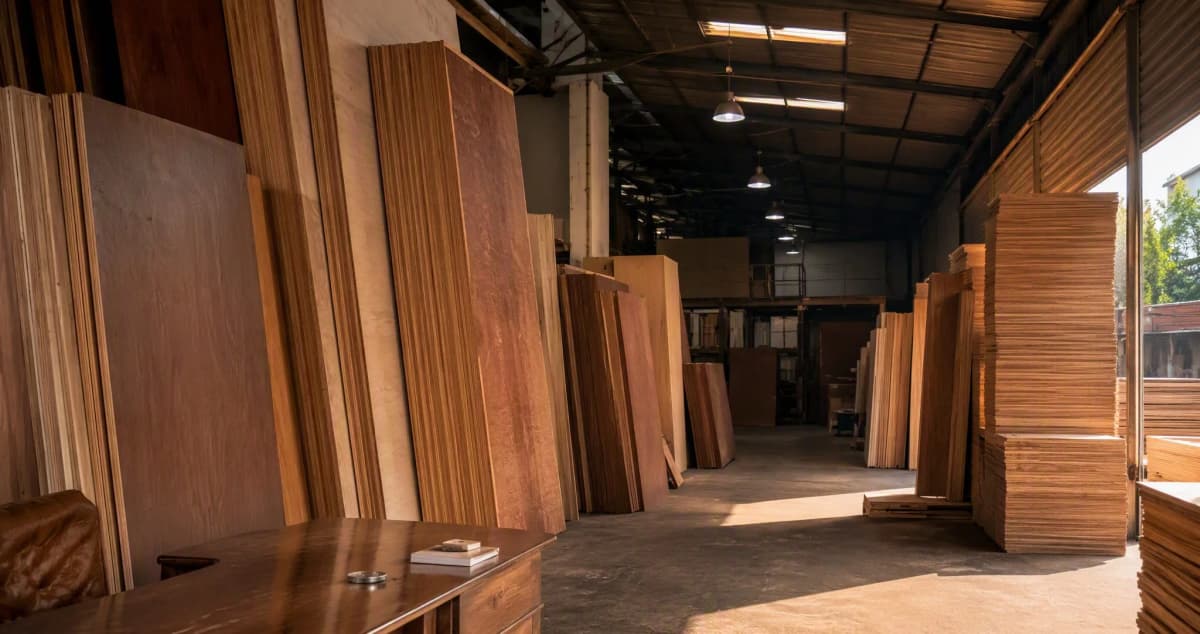
Plywood prices in Bangalore are set by 12 factors: grade (MR/BWR/BWP), thickness, core timber species, face veneer quality, calibration, treatments (termite/fire), brand premium, sheet size, GST, transport, dealer channel, and seasonal demand. Grade and thickness move price the most — an 18mm BWP sheet costs roughly 2–2.5x an 18mm MR sheet. Indicative rates: 18mm MR ₹90–135/sq ft, 18mm BWR ₹115–180/sq ft, 18mm marine (BWP) ₹160–265/sq ft, with GST (18%) and delivery often extra.
Bangalore Plywood Rate Table,
These are indicative retail ranges from Bangalore dealers and brand depots, mid-year, for standard 8×4 ft (32 sq ft) sheets. The same specification can vary 10–20% between JC Road wholesale yards, neighbourhood shops and online platforms — which is precisely why understanding the factors below matters.
| Grade (IS code) | 6 mm | 12 mm | 18–19 mm | 25 mm |
|---|---|---|---|---|
| MR / Commercial (IS 303) | ₹1,450–2,100 (₹45–65/sq ft) | ₹2,100–3,050 (₹65–95/sq ft) | ₹2,900–4,300 (₹90–135/sq ft) | ₹3,850–5,300 (₹120–165/sq ft) |
| BWR (IS 303) | ₹1,750–2,700 (₹55–85/sq ft) | ₹2,700–4,000 (₹85–125/sq ft) | ₹3,700–5,800 (₹115–180/sq ft) | ₹4,800–7,050 (₹150–220/sq ft) |
| BWP / Marine (IS 710) | ₹2,400–3,700 (₹75–115/sq ft) | ₹3,700–5,600 (₹115–175/sq ft) | ₹5,200–8,500 (₹160–265/sq ft) | ₹6,700–9,600 (₹210–300/sq ft) |
| Fire-retardant (IS 5509) | ₹3,200–4,700 (₹100–145/sq ft) | ₹4,500–6,400 (₹140–200/sq ft) | ₹6,200–9,200 (₹195–285/sq ft) | On request |
Unbranded local-mill MR sheets dip below these ranges (₹45–55/sq ft for 18mm at wholesale); premium national-brand marine lines exceed them (₹165+/sq ft for gurjan-core 18mm BWP). Rates move with timber and resin costs — treat this table as a negotiation benchmark, not a quotation.
The Material Factors: Grade, Thickness, Core, Face
Grade: MR vs BWR vs BWP
Grade is decided by the adhesive resin and testing standard. MR (moisture-resistant, IS 303) uses urea-formaldehyde glue — fine for dry bedrooms, dead against steam. BWR (boiling-water-resistant) upgrades to phenol/melamine-fortified resin. BWP/marine (IS 710) uses full phenol-formaldehyde and survives 72-hour boiling tests.
The resin is genuinely expensive: BWP's PF resin and tighter veneer selection mean the same 18mm sheet costs 60–100% more than MR. This is the single largest price jump in any quote — and the most commonly manipulated one ("waterproof" stickers on MR-grade sheets).
Price impact: MR → BWR +25–35% · BWR → BWP +30–50% · Fire-retardant +20–30% over BWP
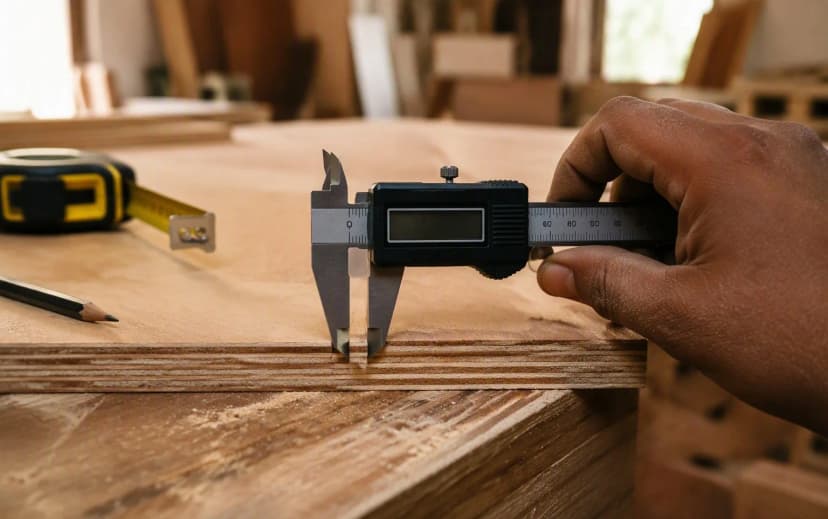
Thickness: every 3mm costs 15–25% more
Plywood is priced by material consumed, so thickness is a near-linear cost driver. A 6mm sheet costs roughly 40–50% of an 18mm sheet in the same grade. This is why professional quotes split specifications — 18mm for structure, 12mm for internals, 6mm for backs — instead of building everything from 18mm. A full-18mm wardrobe wastes ₹3,000–5,000 in material versus a correctly layered one.
Price impact: +15–25% per 3mm step · 25mm ≈ 1.3–1.4x the 18mm price
Core timber species: gurjan vs eucalyptus vs poplar
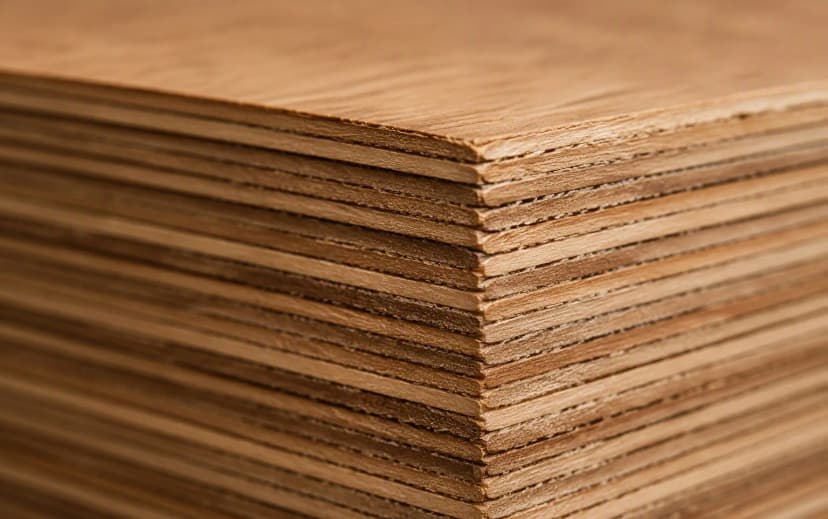
The invisible middle of the sheet. Gurjan (dense imported hardwood, arriving via coastal Karnataka ports) is the premium core — heavier, harder, best screw-holding, and 20–35% costlier. Eucalyptus from Karnataka–Andhra plantations is the honest mid-market core — most Bangalore-milled ply uses it. Poplar is the budget core — light, soft, cheapest, and the reason two same-grade sheets can differ in weight by 8–10 kg.
Price impact: gurjan +20–35% over poplar · eucalyptus sits between · check weight as a proxy
Face veneer quality
The two outer veneers decide how the sheet takes laminate, veneer polish or paint. Premium faces are uniform-grain with minimal patches and no open knots; economy faces carry visible repairs that telegraph through thin laminates. If your finish is veneer polish, face quality is worth paying for; under thick 1mm laminate, it matters less.
Price impact: premium face +8–15% · matters most for veneer/polish finishes
The Build Factors: Calibration, Treatments, Brand
Calibration (uniform thickness)
Calibrated plywood is sanded to a tight thickness tolerance across the whole sheet. It costs 8–15% more and is essential wherever shutters must align — modular kitchen shutters, CNC-routed panels, sliding wardrobe doors. For hidden carcass work, non-calibrated is acceptable and saves money.
Price impact: +8–15% · pay for it on shutters, skip it on carcasses
Termite, borer & fire treatments
Chemical anti-termite/borer treatment adds a modest 3–7% and is worth it in Bangalore — the city's older buildings and ground-floor units see regular termite pressure. Fire-retardant treatment (IS 5509) is a bigger jump (+20–30% over BWP) and is specified mainly for commercial projects with fire-NOC conditions.
Price impact: termite/borer +3–7% · fire-retardant +20–30% over base grade
Brand premium — and what it buys
National brands (Century, Greenply, Kitply, Archidply, Duro) charge 15–30% over equivalent local-mill sheets. What you're buying is consistency: honest grading, real warranty (5–30 years), proper pressing, and an ISI stamp that survives scrutiny. Local Karnataka mills can be excellent value, but quality varies batch to batch. The genuine risk zone is counterfeit branded ply — fake Century/Greenply sheets circulate in every Indian market, sold at 20% under brand price with none of the quality.
Price impact: brand +15–30% · counterfeit "discount brand" = MR quality at BWR price
Sheet size
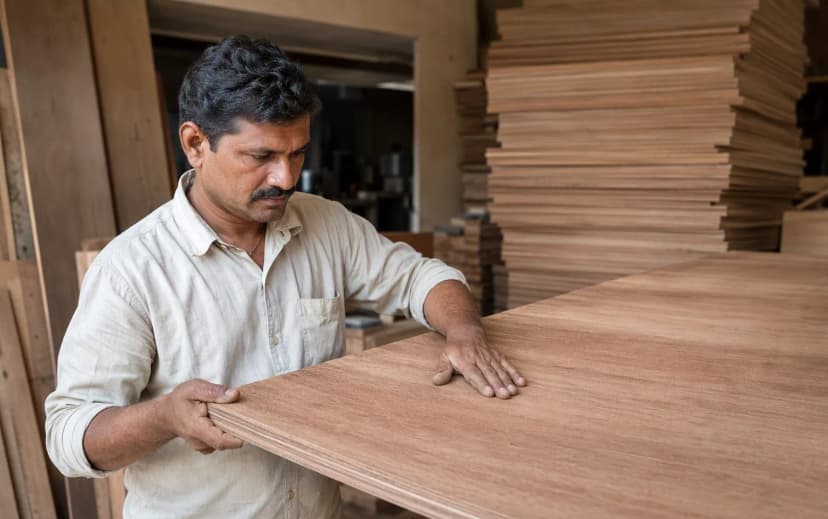
The 8×4 ft sheet is the industry's volume standard and the cheapest per square foot. The 7×4 and 6×4 sizes cost more per sq ft but reduce cutting waste for small jobs; oversize sheets (8×6 and up) carry a premium for low production volume. Buying odd sizes to "save money" often costs more after wastage.
Price impact: 8×4 is the value benchmark · price everything per sq ft, not per sheet
The Market Factors: GST, Transport, Channel, Season
GST at 18% — usually added on top
Plywood attracts 18% GST, and wholesale quotes in Bangalore's timber yards are frequently ex-GST. A ₹4,000 sheet is actually ₹4,720 billed. Online platforms and brand depots quote GST-inclusive prices, which makes them look 18% costlier than yard quotes that aren't comparable at all. Always normalise every quote to "per sq ft, GST included, delivered."
Price impact: +18% on the base price · confirm GST inclusion before comparing
Transport & logistics to your site
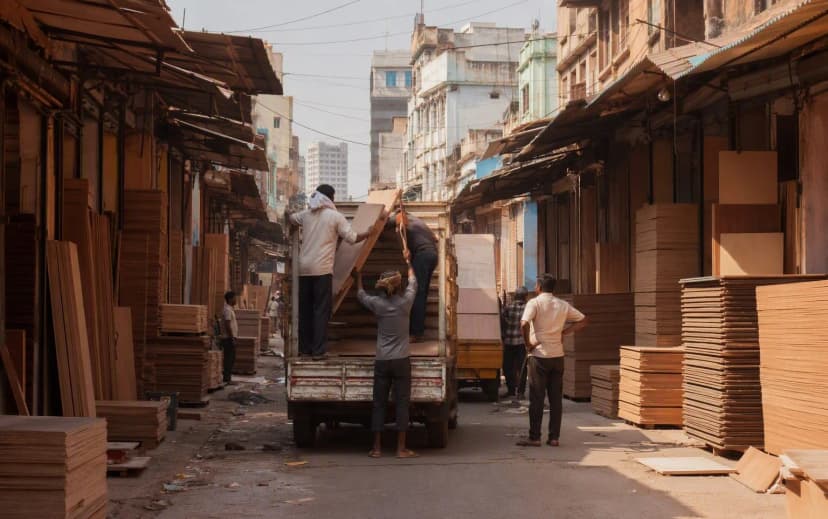
Bangalore sits far from the northern manufacturing hubs (Yamunanagar, Gujarat) — freight adds a real per-sheet cost that mills near Mangalore and coastal Karnataka partly avoid. Within the city, delivery to upper floors, narrow lanes or distant suburbs (Whitefield to Mysore Road) adds ₹15–40 per sheet in handling. Small orders lose bulk transport efficiency entirely.
Price impact: ₹15–40/sheet delivery & unloading · small orders pay more per sheet
Dealer channel: wholesale yard vs retail vs online
The same Century Sainik sheet can differ by 8–15% between a JC Road wholesale yard (thin margins, volume business, ex-GST quotes), your neighbourhood hardware store (convenience pricing, single sheets) and an online platform (GST-inclusive, delivery built in, frequent discounts). Contractors buying 50+ sheets negotiate a further slab. Retail buyers of 5 sheets have little leverage — except timing and comparison.
Price impact: 8–15% spread across channels · 20+ sheet orders unlock wholesale slabs
Season & raw-material cycles
Demand peaks post-monsoon (October–February) when construction and interiors restart, and again before the wedding/festive season — dealers discount least then. The June–August monsoon lull and the February–March financial-year stock clearance bring the best negotiating windows, typically 5–10%. Underneath the season, timber, resin and fuel costs reset base prices a few times a year.
Price impact: 5–10% seasonal swing · monsoon lull & March = best buying windows
Worked Example: What a Wardrobe's Plywood Actually Costs
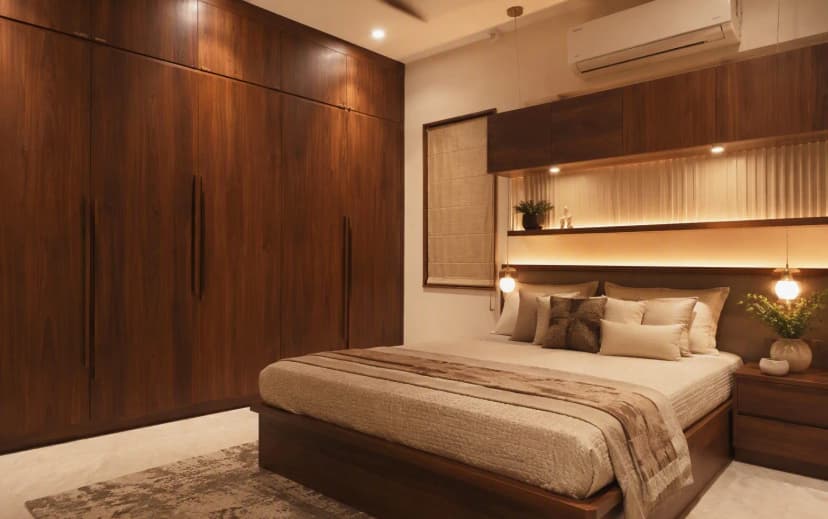
A standard 6 ft × 7 ft wardrobe with shelves and drawers consumes about 5 sheets of 18mm, 2 sheets of 12mm and 1 sheet of 6mm. At mid-range Bangalore rates:
| Component | Spec | Qty | Rate | Cost |
|---|---|---|---|---|
| Carcass, sides, shelves | 18mm BWR | 5 sheets | ₹4,500/sheet | ₹22,500 |
| Partitions, drawers | 12mm BWR | 2 sheets | ₹3,400/sheet | ₹6,800 |
| Back panel | 6mm MR | 1 sheet | ₹1,700/sheet | ₹1,700 |
| Plywood subtotal | ₹31,000 | |||
| GST @ 18% | ₹5,580 | |||
| Total plywood cost (before laminate, hardware, labour) | ≈ ₹36,600 | |||
Use this to sanity-check carpenter quotes. If a quote comes in far below this, the grade or thickness has usually been quietly downgraded — ask which. For a full 2BHK (kitchen + 2–3 wardrobes + TV unit + beds), expect 35–55 sheets and ₹1.4–2.6 lakh in plywood alone, roughly 30–40% of the carpentry material budget.
Where to Buy Plywood in Bangalore
- JC Road & Shivajinagar (central): the densest cluster of plywood wholesalers and distributors — best per-sheet rates, volume pricing, ex-GST quotes. Ideal for full-project orders of 20+ sheets.
- Deepanjalinagar / Mysore Road (west): wholesale yards with strong local-mill stock, including Karnataka-made eucalyptus-core ply at competitive rates.
- Hosur Road / Bommanahalli (south): convenient for Electronic City, HSR and Sarjapur-side projects; mixed wholesale-retail dealers.
- Brand depots & authorised dealers: guaranteed genuine branded ply with manufacturer warranty; prices 8–15% above wholesale but zero counterfeit risk.
- Online platforms: GST-inclusive transparent pricing, single-sheet ordering, fast delivery — useful for small top-up orders and price benchmarking before you negotiate offline.
Benchmark first, buy second: get an online GST-inclusive per-sq-ft price for your exact spec, then take it to JC Road. Any offline quote more than ~10% above the benchmark needs a reason — better core, calibration, or genuine brand stock.
7 Ways to Pay Less Without Buying Worse
- Match grade to zone, not to fear. MR for dry bedrooms, BWR for kitchens, BWP only for genuinely wet zones. Whole-house BWP wastes ₹40,000–70,000 on a 2BHK.
- Layer thicknesses correctly. 18mm structure + 12mm internals + 6mm backs saves ₹3,000–5,000 per wardrobe versus all-18mm construction.
- Compare per sq ft, GST-inclusive, delivered. The only honest comparison format. Ex-GST wholesale quotes hide 18%.
- Buy the full project in one order. 20+ sheets unlocks wholesale slabs and a single transport cost.
- Time it. Monsoon months (June–August) and February–March year-end bring 5–10% better discounts.
- Verify the ISI stamp and weigh the sheet. Genuine 18mm gurjan-core BWP is noticeably heavy. Light sheets at heavy-sheet prices are poplar or under-thickness stock.
- Buy branded ply only from authorised channels. A 20%-below-market "branded" sheet is almost always counterfeit — the worst value in the market.
Frequently Asked Questions
What is the price of plywood in Bangalore?
Indicative retail rates for an 8×4 ft sheet: 18mm MR ₹2,900–4,300 (₹90–135/sq ft), 18mm BWR ₹3,700–5,800 (₹115–180/sq ft), 18mm BWP/marine ₹5,200–8,500 (₹160–265/sq ft). Unbranded MR starts near ₹45–55/sq ft at wholesale; premium branded marine crosses ₹165/sq ft. GST and delivery are often extra.
Which is the biggest factor affecting plywood price?
Grade and thickness. Moving from MR to BWP roughly doubles the price of the same sheet, and every 3mm of thickness adds 15–25%. An 18mm BWP sheet typically costs 2–2.5x an 18mm MR sheet of the same brand.
Why is marine plywood more expensive than commercial plywood?
BWP/marine plywood (IS 710) uses costly phenol-formaldehyde resin instead of urea-formaldehyde, selects better gap-free hardwood veneers, and passes 72-hour boiling-water tests. The resin and veneer selection together justify a 60–100% premium over MR grade.
Does the core wood species change the price?
Yes, by 20–35%. Gurjan cores are the most expensive and heaviest, eucalyptus sits mid-range (common in Karnataka-milled ply), and poplar is the cheapest and lightest. Sheet weight at the shop is a quick proxy for core quality.
Is GST included in plywood prices quoted by Bangalore dealers?
Not always. Plywood carries 18% GST and many wholesale yard quotes are ex-GST — a ₹4,000 sheet becomes ₹4,720 billed. Confirm GST, transport and unloading before comparing any two quotes.
Where can I buy plywood at wholesale rates in Bangalore?
JC Road and Shivajinagar in central Bangalore, Deepanjalinagar/Mysore Road in the west, and Hosur Road/Bommanahalli in the south. Wholesale yards typically run 8–15% below neighbourhood retail for orders of 20+ sheets; online platforms offer GST-inclusive pricing and single-sheet delivery.
How much plywood does a 2BHK interior need and what does it cost?
Roughly 35–55 sheets of mixed thickness for a kitchen, 2–3 wardrobes, TV unit and beds. At mid-range rates that's ₹1.4–2.6 lakh in plywood — about 30–40% of the carpentry material budget before laminate, hardware and labour.
When is plywood cheapest in Bangalore?
The June–August monsoon lull and the February–March financial year-end stock clearance typically bring 5–10% better dealer discounts. Prices peak in the post-monsoon construction season (October–February) and pre-festive rush.
Want a sheet-wise estimate for your project?
Share your floor plan and we'll calculate the exact plywood list — grade, thickness and sheet count — with current Bangalore rates, so no quote can quietly downgrade you.
Get a Free Material Estimate




