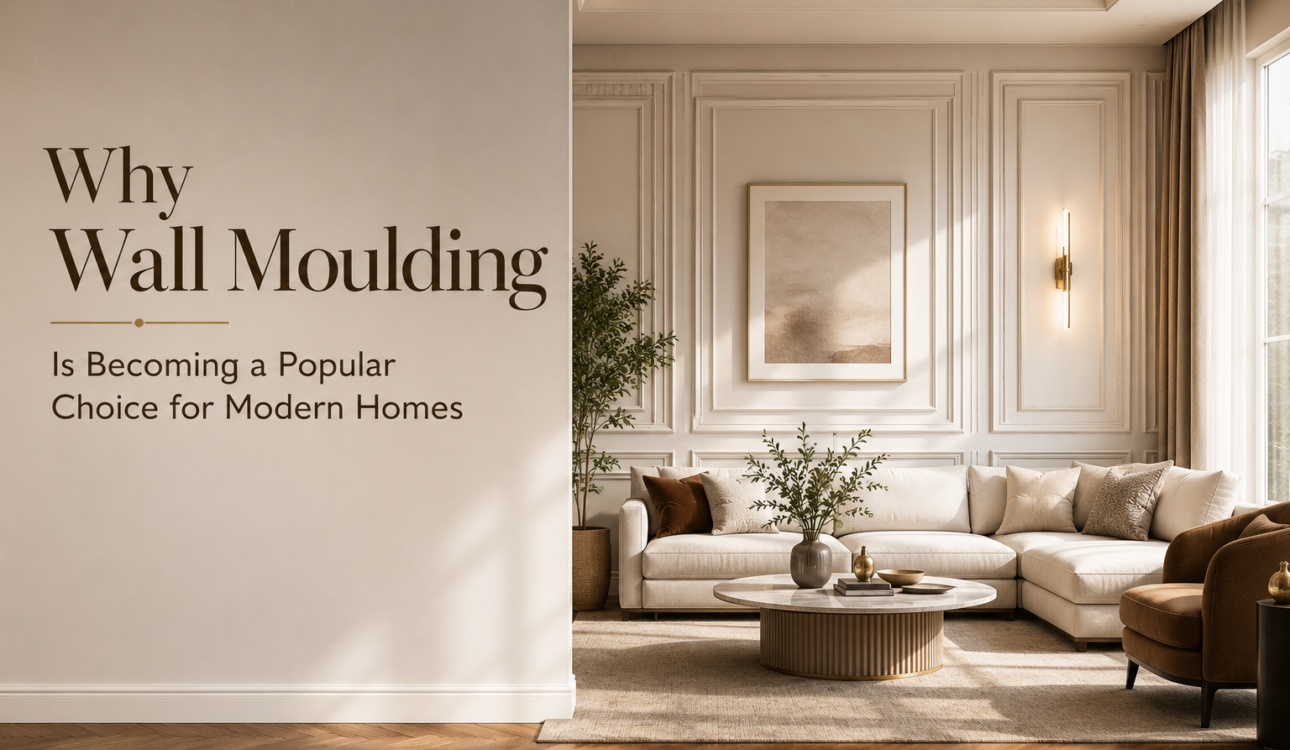
It’s in every designer project on Instagram, every new Bangalore flat, every Pinterest board — but is the wall moulding trend in Bangalore a fad or a genuinely smart investment? Here are eight honest reasons behind the boom, the real cost maths against wallpaper and texture paint, and the situations where you shouldn’t bother.
Quick answer: the wall moulding trend in Bangalore is booming because it fixes the one thing new apartments lack — architectural character — at a price paint and wallpaper can’t match. A designer-looking moulded wall costs ₹5,000–₹8,000 versus ₹15,000–₹40,000 for premium wallpaper, lasts 15–20 years, protects the wall underneath, and can simply be repainted when tastes change instead of being stripped off. It’s not a fad: moulding has cycled through 300 years of design, and the 2026 shift toward “classic craftsmanship” has simply brought it back to the mainstream.
Table of Contents
Table of Contents
Why Now? The Apartment Problem Behind the Wall Moulding Trend in Bangalore
The wall moulding trend in Bangalore is surging because it answers a very modern complaint: new apartments are comfortable but architecturally blank. Developers hand over smooth plastered boxes — flat walls, flat ceilings, no cornices, no panelling, no soul. Older homes had carved teak, high skirting and plaster cornices built in; a 2020s 2BHK has none of that, and homeowners feel the absence even if they can’t name it.
Three forces collided to make moulding the fix of choice:
- The social-media effect. Neoclassical and “Parisian apartment” interiors — picture-frame walls, tone-on-tone trim, panelled TV units — dominate Indian interior content on Instagram and Pinterest. Homeowners arrive at designers with screenshots, not sketches.
- The craftsmanship revival. Global trend forecasts for 2026 explicitly name wainscoting, crown moulding and panelled walls among the year’s defining features — “classic craftsmanship” replacing the stark minimalism of the last decade. India, with its own heritage of ornate interiors, adopted the trend instantly.
- The economics. Materials and labour for basic moulding are cheap in Bangalore — POP, HDHMR and PU trims cost ₹30–₹120 per running foot, and carpenters everywhere know how to fix them. What costs lakhs in the West costs under ₹10,000 for a wall here.
Put simply: moulding lets a ₹60-lakh flat feel like a ₹1.2-crore one, for the price of a new TV.
8 Reasons the Wall Moulding Trend in Bangalore Is Winning Over Homeowners
1. It delivers a designer look for the cost of a dinner out
A standard 10 ft × 9 ft picture-frame moulded wall costs roughly ₹5,000–₹8,000 all-in — trim strips at ₹30–₹120 per running foot, paint, and installation. Compare that with premium wallpaper (₹15,000–₹40,000 for the same wall) or imported stone cladding. Few upgrades in interior design offer this much visual transformation per rupee — which is exactly why the wall moulding trend in Bangalore has moved so fast from designer showrooms to standard flats.
2. It adds the architectural depth modern flats don’t have
Flat painted walls read as “unfinished” the moment furniture is minimal. Moulding creates shadow lines, proportion and rhythm — the qualities that make heritage homes feel rich. Frames, rails and cornices essentially draw architecture onto a blank wall, giving a room structure even before a single piece of furniture arrives.
3. It outlasts paint and wallpaper in Bangalore’s climate
Good emulsion paint needs refreshing every 5–7 years; wallpaper can peel or bubble in monsoon humidity. Properly installed moulding lasts 15–20 years (POP and gypsum in dry rooms; PU and WPC even in humid conditions), needs nothing more than a repaint every 5–7 years, and hides the minor cracks and undulations old plaster develops. This durability is a big part of why the wall moulding trend in Bangalore has stuck around rather than fading like other finishes.
4. You can change the look without ripping anything out
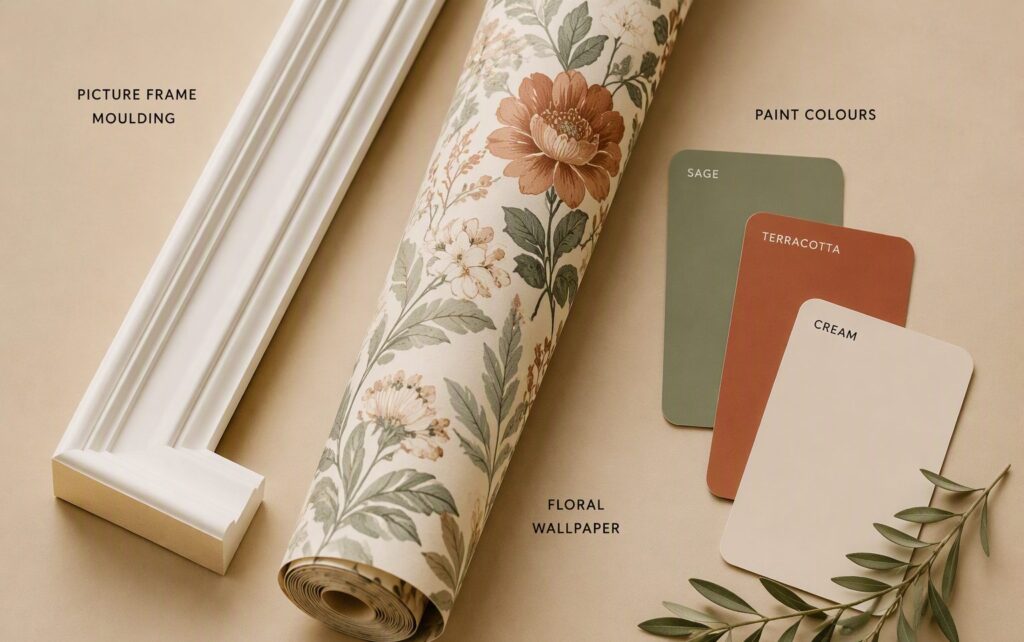
This is moulding’s quiet superpower. Wallpaper that dates must be stripped; texture paint is almost impossible to remove without re-plastering. Moulding is just repainted. Tired of the sage green wall? Two coats of terracotta and it’s a new room. The trim itself is architecture — permanent, neutral, endlessly re-styleable — which is why designers call it “future-proof.”
5. It actually protects your walls
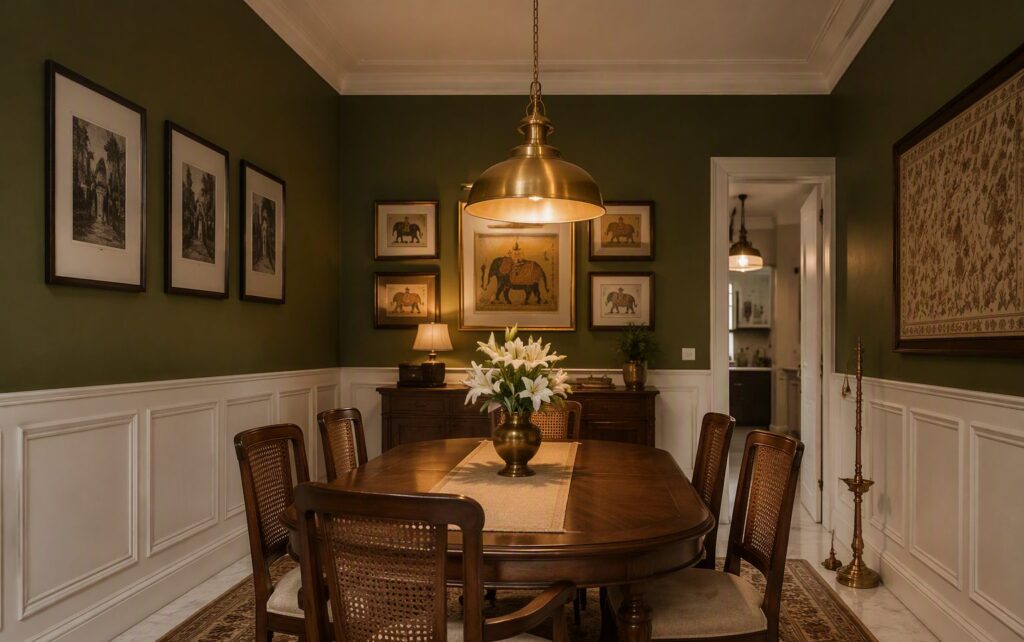
Moulding isn’t only decorative. Wainscoting and chair rails shield the lower third of the wall — the zone that absorbs furniture scuffs, children’s handprints, pet claws and daily mopping splashes. Skirting guards against wet mopping. For families with kids or pets, a wainscoted corridor or kids’ room stays presentable years longer than bare paint.
6. It makes small rooms look bigger, not smaller
Counter-intuitive but true — when done right. Slim profiles (25–50 mm) painted the same colour as the wall add depth without clutter, and vertical lines visually stretch standard 9-ft ceilings upward. Tone-on-tone moulding is one of the most effective tricks driving the wall moulding trend in Bangalore’s compact flats, where every visual inch matters.
7. It’s fast, low-mess and doesn’t need a renovation
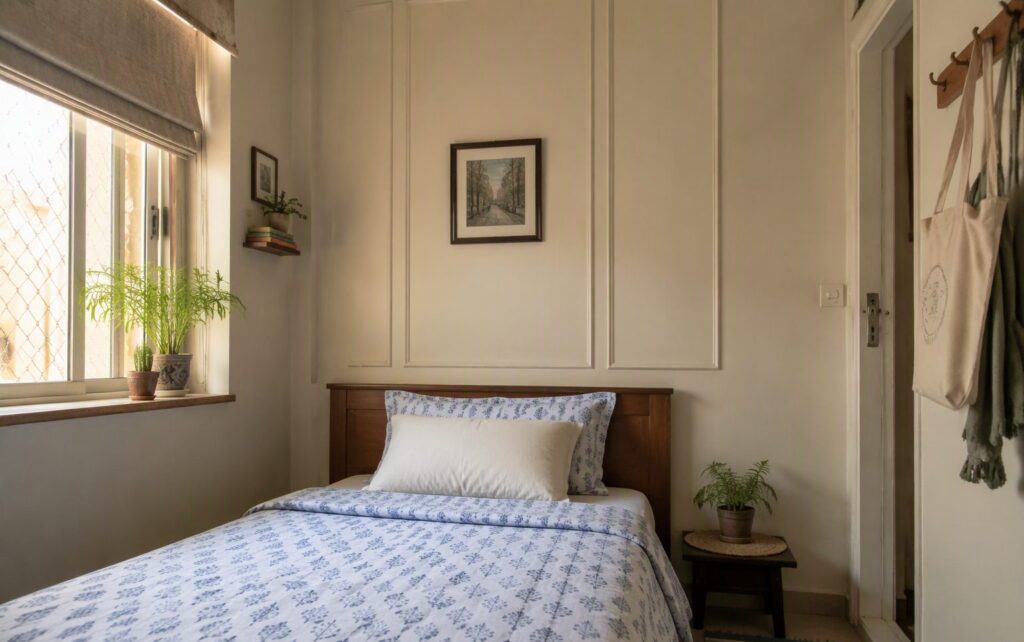
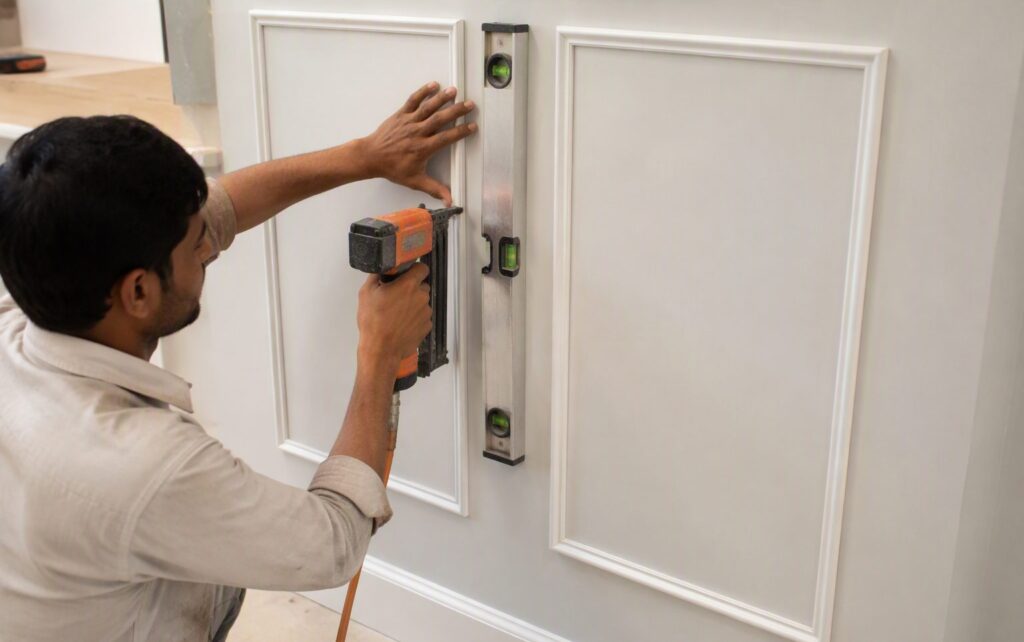
Unlike flooring or false-ceiling work, a picture-frame moulding job is typically done in one to two days per wall, with no demolition, no heavy dust and no need to vacate the room. PU and HDHMR trims go up with adhesive and a nail gun on a finished painted wall — which makes moulding the most practical “big change” for families already living in the home.
8. It improves resale and rental appeal
International property studies attribute a 2–5% perceived value uplift to quality wall panelling, and the logic holds locally: moulded walls photograph beautifully on listing portals, signal a “maintained, designed” home, and help flats stand out in identical tower blocks. For landlords, a moulded accent wall is among the cheapest ways to justify a higher rent — one more reason the wall moulding trend in Bangalore keeps gaining ground.
Moulding vs Wallpaper vs Texture Paint: The Real Numbers
For an accent wall, moulding usually wins on cost, durability and flexibility — wallpaper wins on pattern, texture paint on flaw-hiding. Here’s the honest comparison for a standard 10 ft × 9 ft (90 sq ft) wall.
| Wall moulding | Wallpaper | Texture paint | |
|---|---|---|---|
| Cost, 90 sq ft wall | ₹5,000–8,000 (picture frame); ₹18,000–54,000 (WPC fluted) | ₹15,000–40,000+ (₹40–510/sq ft incl. install) | ₹7,200–22,500 (₹80–250/sq ft) |
| Lifespan | 15–20 yrs (POP/PU/WPC) | 8–12 yrs; peels in humidity | 5–7 yrs before refresh |
| Humidity handling | Good (choose PU/WPC/POP wisely) | Poor — edges bubble & peel | Good |
| Hides wall flaws | Partially (panels fully hide) | No — needs smooth wall | Yes, best of the three |
| Change the look later | Just repaint — easiest | Strip & re-paste | Very hard — needs re-plastering |
| Installation mess/time | 1–2 days, low mess | 1 day, needs skilled installer | 2–4 days, messy |
| Best for | Structure, elegance, longevity | Patterns, murals, drama | Subtle texture, imperfect walls |
Designer’s cheat code: combine them. Picture-frame moulding for structure, wallpaper inside the frames for pattern — a classic combination that looks bespoke and protects the wallpaper edges from peeling. Texture paint inside moulded frames works the same way.
Evospace shop-floor wisdom
The 2026 Wall Moulding Trend in Bangalore Worth Copying
Not every moulding look ages equally. These five are on the right side of the trend cycle — fashionable now, but grounded in classic proportion so they won’t embarrass you in 2032.
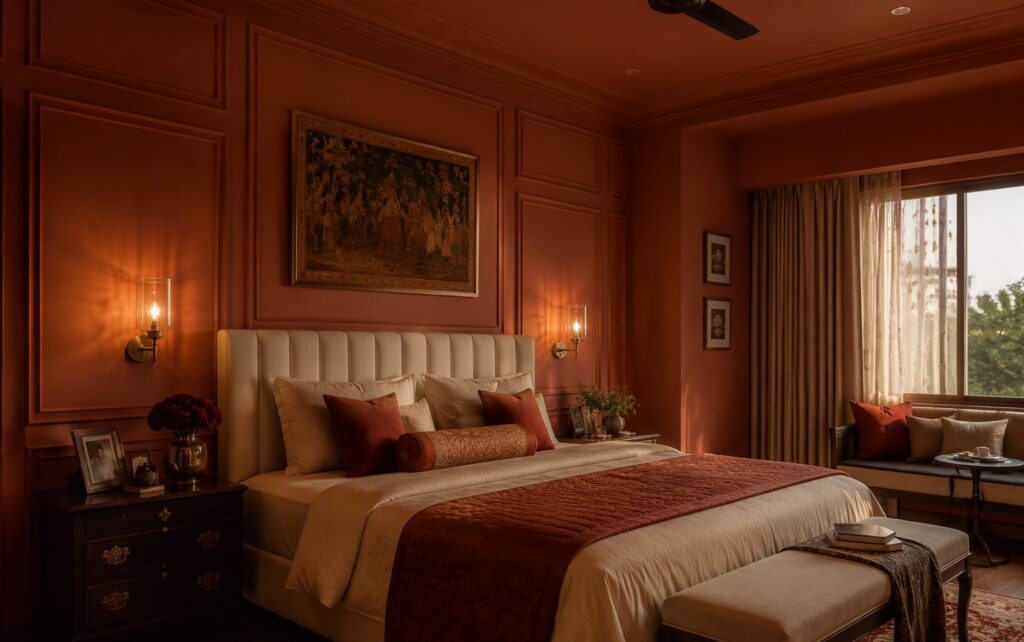
- Tone-on-tone everything. Moulding, wall and sometimes ceiling in one colour — sage, clay, warm white, mushroom. The texture does the talking, not the colour contrast. This is the defining look of the moment and the easiest to get right.
- Colour drenching. Walls, trim, doors and ceiling saturated in a single deep hue — terracotta, olive, inky blue. Moulding is what makes colour-drenched rooms feel designed rather than painted; the shadow lines break the monochrome into architecture.
- Slim, modern profiles. Thin 25–50 mm trims with clean square edges instead of ornate curves — “classic bones, contemporary tailoring.” Suits modern apartments far better than heavy baroque profiles.
- Full-height panelling. Floor-to-ceiling frames and vertical battens replacing the old “half wall” habit — adds drama and verticality, especially with 9–10 ft ceilings.
- Warmth and craft over grey minimalism. Warm whites and creams over cool greys, natural wood fluting paired with painted trim, visible craftsmanship — the broader shift behind moulding’s comeback. Not sure which profile suits your walls? Our full guide to types of wall moulding breaks down POP, PU, MDF and WPC options in detail.
When NOT to Follow the Wall Moulding Trend in Bangalore
Moulding is not universally right — an honest guide has to say where it fails. Skip it (or postpone it) in these situations:
- Walls with active seepage. No moulding fixes a damp wall — POP powder will crumble and MDF will swell within one or two monsoons. Waterproof first, wait a full dry cycle, then install only PU, PVC or WPC trims.
- Termite-prone ground floors, if you want wood/MDF. Untreated wood-based trims are termite food. Either choose termite-proof materials (POP, PU, WPC) or insist on treated HDHMR with documentation.
- Very small rooms done wrong. Wide ornate frames and dark contrasting trim in a sub-100 sq ft room will make it feel like a jewellery box. Small rooms demand slim tone-on-tone work — or a single moulded wall only.
- Rented flats without landlord consent. Nailed moulding is a structural change. If your landlord won’t allow it, use self-adhesive PU trims — genuinely removable — or skip it.
- When the wall finish budget is tight overall. A ₹3,000 “budget moulding” job with poor mitred corners looks worse than a beautifully painted flat wall. Badly installed moulding is worse than none — the corners give it away instantly.
Is the Wall Moulding Trend in Bangalore Right for Your Home?
Answer these seven questions — if most land on “yes”, moulding is likely your best wall investment this year.
- Your walls are flat and characterless — builder-finish apartment, minimal furniture planned.
- You want a designed look under ₹10,000 per wall rather than a ₹40,000 wallpaper budget.
- Your walls are dry — no active seepage, or already waterproofed.
- You’d rather repaint than renovate when tastes change in five years.
- You have kids, pets or high-traffic corridors that scuff bare paint within months.
- You own the home (or your landlord has agreed to the work).
- You can access a decent carpenter — or a designer who supervises mitred corners.
Mostly yes? Start with one accent wall — the sofa wall or headboard wall — in slim tone-on-tone picture frame moulding. It’s the lowest-risk, highest-reward entry point into the wall moulding trend in Bangalore, and you can always extend the treatment once you see it in your own light.
Quick-Fire FAQ
Why is wall moulding becoming so popular in modern homes?
Because it solves the biggest problem of modern apartments — flat, characterless walls — at a fraction of renovation cost. A designer-look picture-frame wall costs just ₹5,000–₹8,000 versus ₹15,000–₹40,000 for comparable wallpaper. It’s durable (10–20 years), repaintable so it never dates, protects walls from scuffs, and photographs beautifully for the Instagram era.
Is the wall moulding trend in Bangalore just a passing fad?
No. Moulding has existed for over 300 years and has cycled back through every design era. What’s trending is the specific styling (tone-on-tone, slim profiles), but the trim itself is architecture, not fashion — and because moulding can simply be repainted, it adapts to the next trend instead of being ripped out like dated wallpaper.
Is wall moulding cheaper than wallpaper?
Usually yes. Picture frame moulding costs roughly ₹30–₹120 per running foot (₹5,000–₹8,000 for a standard 10×9 ft wall all-in), while quality wallpaper with installation runs ₹40–₹510 per sq ft (₹15,000–₹40,000+ for the same wall). Moulding also outlasts wallpaper in humid conditions, where wallpaper edges peel and bubble.
Does wall moulding work in small flats and 2BHKs?
Yes — arguably better than in large homes. Slim 25–50 mm profiles painted the same colour as the wall add depth without eating space, and vertical moulding lines make standard 9-ft ceilings feel taller. The key is tone-on-tone colour and restraint: one accent wall, not four.
Is wall moulding outdated or old-fashioned?
Only when styled outdatedly. Wide ornate golden profiles look dated, but slim profiles in tone-on-tone neutrals, colour-drenched schemes and clean geometric layouts are at the centre of 2026’s “classic craftsmanship” trend — wainscoting, crown moulding and panelled walls are among the year’s most requested features in interior design.
Does wall moulding increase home value?
Moulding isn’t a priced line item in valuations, but it measurably improves buyer and tenant perception: international studies attribute a 2–5% value uplift to quality wall panelling, and in resale and rental markets a moulded accent wall helps listings photograph better and close faster. Timeless styles add value; hyper-trendy ones may not.
Which is better: moulding, wallpaper or texture paint?
Moulding wins on durability and cost — it survives humidity (in POP/PU/WPC), hides minor flaws and can be repainted. Wallpaper offers unmatched patterns but peels in humidity and costs more; texture paint hides imperfections but is nearly impossible to remove. Many designers combine them: moulding for structure, wallpaper inside the frames.
How long does wall moulding last?
Properly installed moulding lasts 10–20+ years: POP and gypsum 15–20 years in dry rooms, WPC and PU 15–20 years even in humid conditions, MDF 8–12 years in dry AC rooms. It only needs a repaint every 5–7 years — outlasting paint alone (5–7 years) and matching good wallpaper (8–12 years) with none of the peeling risk.
Can wall moulding be installed in a rented flat?
Yes, with the right material. Self-adhesive polyurethane (PU) trims mount without nails and remove cleanly, giving the moulded look without structural changes. Always get your landlord’s written consent before any screwed or nailed installation.
Does wall moulding collect dust?
Ornate, deeply grooved profiles do collect dust in their crevices — a real consideration in dusty cities. The fix is design, not avoidance: choose slim, simple profiles with shallow grooves that wipe clean, and you’ll spend no more time dusting than you do on a bare wall with picture frames.
Want the Look Without the Guesswork?
Share your room photos and dimensions with the Evospace design team — we’ll recommend the profile, material and layout that suits your home, with transparent per-wall pricing. Get a free design consultation.
Sources & references
Wall moulding is architectural millwork with a history spanning centuries, cycling through classical, colonial and modern revivals alike. Prices in this guide are indicative 2025–26 market ranges compiled from Indian dealer and installer quotes; actual costs vary by city, material and installer.