Essential Interior Materials for a Home Renovation in India: The Complete Guide with Prices
Renovations don't go over budget because of the big items — they go over because nobody listed the small ones. Every material your project will actually consume, with real prices, what to splurge on, what to save on, and how not to get cheated.
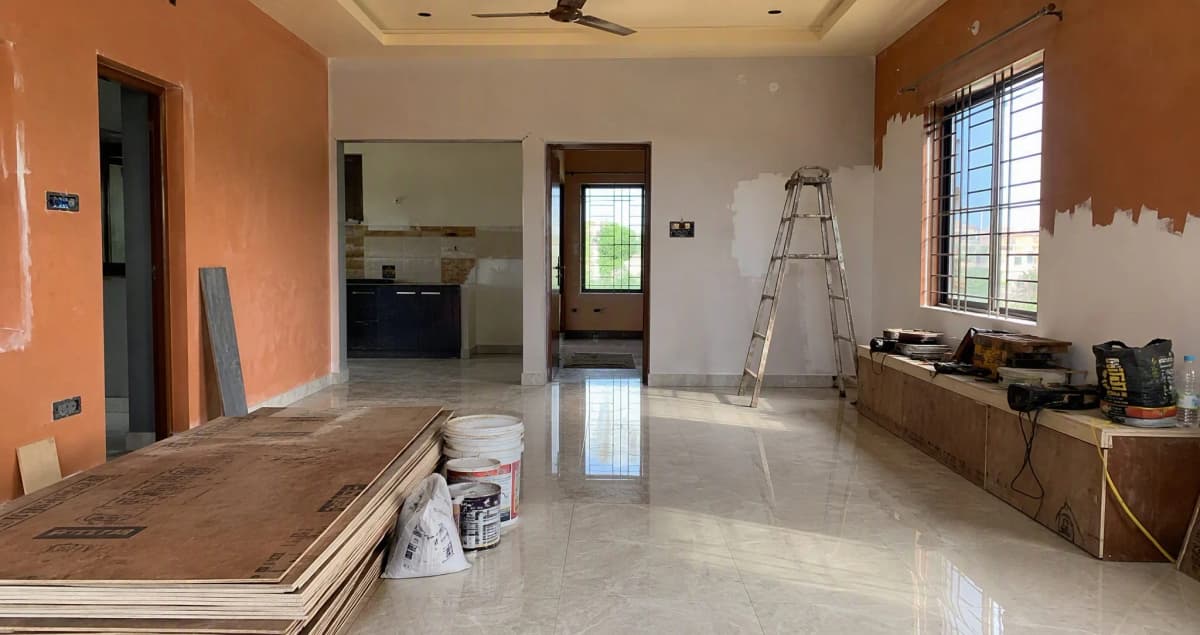
A full Indian home renovation needs eight material categories: carpentry boards (BWR/BWP plywood, HDHMR, blockboard), surface finishes (laminates, veneer, acrylic), furniture hardware (soft-close hinges and channels — Hettich/Häfele last 15+ years), flooring (vitrified tiles ₹60–200/sq ft), paint system (putty + primer + emulsion, ₹8–50/sq ft), kitchen countertop (granite ₹120–800 or quartz ₹180–1,500/sq ft), electricals (wires, MCBs, switches) and ceiling/plumbing materials. Budget roughly ₹5–9 lakh (budget) to ₹17–35 lakh (premium) for a full 2BHK renovation, with materials at 55–60% of that — and always keep 10–15% contingency.
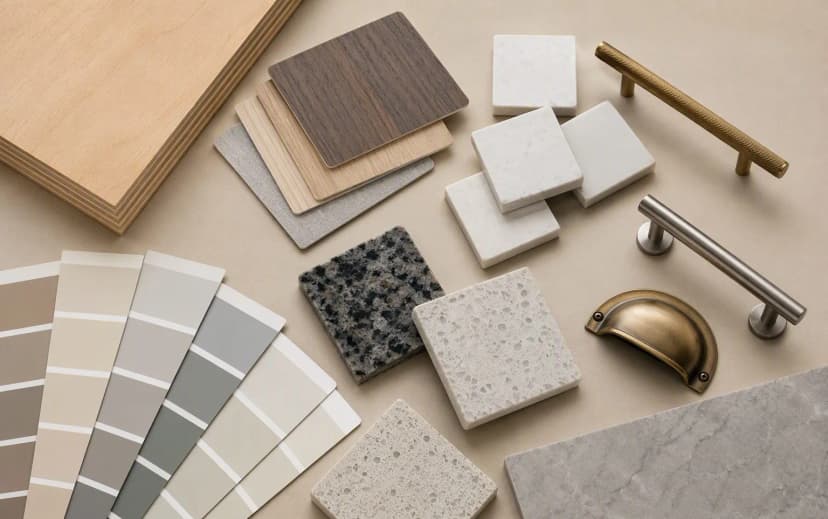
Before You Buy: How to Plan Materials for a Renovation
The single biggest renovation mistake Indian homeowners make is starting work before the material list is frozen. Every change mid-project — a different laminate, an extra drawer, a tile swap — costs 2–3× more than it would have on paper, because it triggers re-ordering, re-cutting and re-scheduling labour.
Three rules before the first sheet is ordered:
- Freeze the design first. Finalise layouts, shutter counts, tile sizes and electrical points before any purchase. A cutting plan from your carpenter tells you exact sheet counts (a standard 6×7 ft wardrobe needs ~5–6 sheets of 18 mm ply plus a 6 mm back).
- Get itemised quotes, not lump sums. "2BHK interiors — ₹8 lakh" hides everything. "18 mm BWR gurjan-core ply, 24 sheets @ ₹2,900; Hettich Sensys hinges, 40 nos @ ₹280" lets you verify, compare and audit.
- Match material grade to location, not to budget alone. The cheapest sheet in the wrong place (MR ply in a kitchen) costs more than the expensive sheet would have. Location first, budget second.
1. Carpentry Boards: Plywood, HDHMR, MDF & Blockboard
Boards are the skeleton of a renovation — wardrobes, kitchen cabinets, beds, TV units all begin here — and they're usually the largest single material spend. For a 2BHK, expect 25–40 sheets of 18 mm ply plus thinner sheets for backs and drawers.
Choose by moisture grade: MR / BWR / BWP
MR (IS 303) for dry bedrooms and living rooms — ₹55–90/sq ft (18 mm). BWR (IS 303) as the kitchen minimum — ₹70–125/sq ft (standard quality runs ₹95–112/sq ft in the current fiscal year, up 7–8% year-on-year). BWP/marine (IS 710) for under-sink units, bathrooms and balconies — ₹90–180+/sq ft.
Tip: ask for the core species — gurjan/hardwood holds screws far better than poplar.
High-density board for shutters & moisture-prone zones
HDHMR (high-density high-moisture-resistant board) machines to a factory-smooth edge, resists moisture better than plain MDF and costs less than BWP ply — the professional default for kitchen shutters and bathroom vanities.
Use it for: shutters, 16–17 mm thickness
Decorative panels and tall doors
MDF for CNC-routed decorative panels and painted shutters in dry rooms only — it swells permanently when wet. Blockboard (IS 1659) for tall wardrobe shutters (7 ft+) and doors — its softwood-strip core resists sagging where plywood would bow.
Smart hybrid: plywood carcass + blockboard tall shutters
| Board | Use for | Never for | Price/sq ft |
|---|---|---|---|
| MR plywood (IS 303) | Dry-room carcasses | Kitchen, bath, balcony | ₹55–90 |
| BWR plywood (IS 303) | Kitchen cabinets, humid cities | Constant wet zones | ₹70–125 |
| BWP / marine (IS 710) | Under-sink, bath, balcony, coastal | — | ₹90–180+ |
| HDHMR | Shutters, vanities | Standing water | ₹60–110 |
| MDF | CNC panels, dry painted shutters | Any moisture | ₹40–80 |
| Blockboard (IS 1659) | Tall shutters, doors, partitions | Kitchens, bathrooms | ₹50–100 |
2. Surface Finishes: Laminates, Veneer, Acrylic & PU
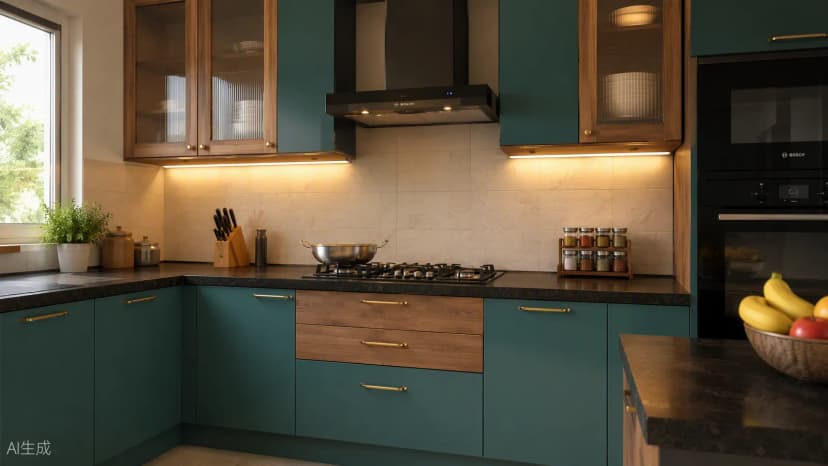
The finish is what you see and touch every day — and the decision is really about maintenance, not just looks. For heavy Indian cooking and busy households, textured HPL laminate is the lowest-maintenance everyday finish.
| Finish | Price/sq ft | Best for | Watch out for |
|---|---|---|---|
| HPL laminate | ₹120–350 | Base cabinets, wardrobes, daily-use surfaces | Edge lift if bonding/edge-banding is weak |
| Acrylic | ₹350–700 | Glossy upper shutters | Shows fingerprints; scratches |
| PU paint | ₹600–1,200 | Custom-colour accent shutters | Chips on impact; colour-match repairs are tricky |
| Natural veneer | ₹500–1,000+ | Warm wood-grain feature areas | Needs polishing & humidity care |
The popular hybrid: acrylic uppers + laminate base units in kitchens — gloss where it shows, durability where the wear is. Whatever you choose, insist on machine edge banding (not hand-glued tape) — edges are where finishes fail first.
3. Furniture Hardware: The Splurge That Pays for Itself
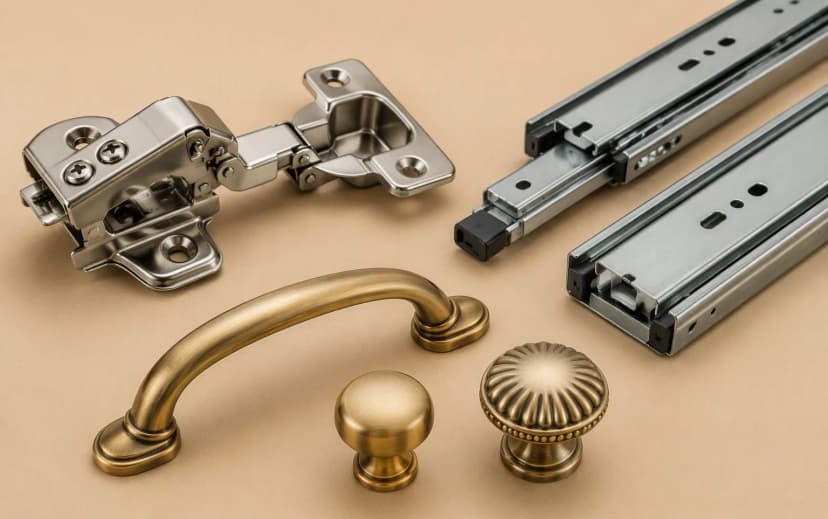
If you upgrade only one material category in your renovation, make it hardware. Hinges and drawer channels are the only parts you operate dozens of times a day — a kitchen hinge sees 100,000–180,000 open-close cycles over 10 years — and they're the most painful to retrofit.
| Hettich | Häfele | Ebco | Local/unbranded | |
|---|---|---|---|---|
| Positioning | Premium value | Luxury | Indian value brand | Avoid |
| Hinge cycles | 100,000+ | 100,000+ | 50,000–80,000 | 5,000–15,000 |
| Drawer load | 30–70 kg | 35–70 kg | 25–40 kg | ~15 kg (unverified) |
| Full kitchen cost | ₹24,000–40,000 | ₹32,000–57,000 | ₹11,000–22,000 | ₹2,500–7,000 |
| Realistic lifespan | 15–20 yrs | 20+ yrs | 8–12 yrs | 2–4 yrs |
The maths: local hardware "saves" ₹20,000–35,000 upfront, then fails in 2–4 years — replacing hinges and channels twice over a decade, with labour, costs more than fitting Hettich at the start. The professional pattern: Hettich in the kitchen and master wardrobe, Ebco in guest rooms and utility storage, unbranded nowhere. Genuine check: ask to see the original branded packaging — "Hettich-type" is not Hettich.
4. Flooring: Tiles, Stone & Wooden
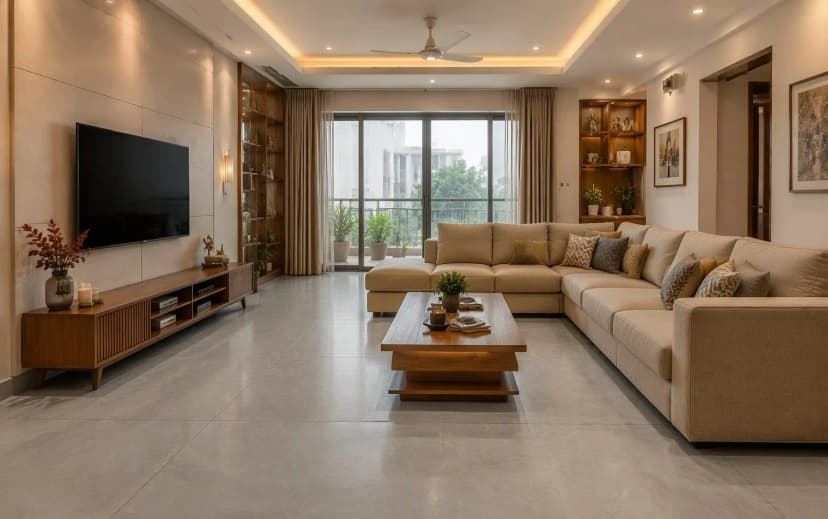
Flooring is the largest surface in the house and the hardest to change later — choose for durability first. In most Indian homes that means vitrified tiles for living areas, anti-skid for wet zones, and SPC/wood for bedrooms if you want warmth.
| Material | Price/sq ft | Best for | Notes |
|---|---|---|---|
| Ceramic tiles | ₹30–200 | Budget rooms, walls | Porous; can crack in heavy traffic |
| Vitrified tiles (GVT) | ₹60–300 | Living, dining, bedrooms | The all-rounder; low porosity, huge design range |
| Full-body / porcelain | ₹75–250 | High-traffic, outdoor | Colour runs through; chips don't show |
| Indian marble | ₹70–1,000 | Premium living rooms, pooja | Needs periodic polishing; cooler underfoot |
| Italian marble | ₹300–7,000 | Luxury statements | Hairline cracks & sealing; high upkeep |
| Granite | ₹80–500 | Stairs, counters, outdoors | Hardest-wearing natural stone |
| Kota stone | ₹15–100 | Balconies, utility, budget | Earthy, durable, very affordable |
| SPC wooden flooring | ₹150+ | Bedrooms | Waterproof, installs over existing tiles |
| Vinyl | ₹30–120 | Rentals, quick makeovers | Budget-friendly; shorter life |
Don't forget installation: tile laying runs ₹30–150/sq ft on top of material, plus adhesive/grout. And always buy 7–10% extra tiles for cutting wastage and future repairs — the same batch may not exist next year.
5. The Paint System: Putty, Primer & Emulsion
Paint is quoted per square foot of paintable area, which is roughly 2.5–3× your carpet area — the number that surprises everyone. A 2BHK of 800–1,200 sq ft carpet area has 2,500–3,500 sq ft to paint, so painting typically costs ₹35,000 (economy) to ₹1.8 lakh (premium).
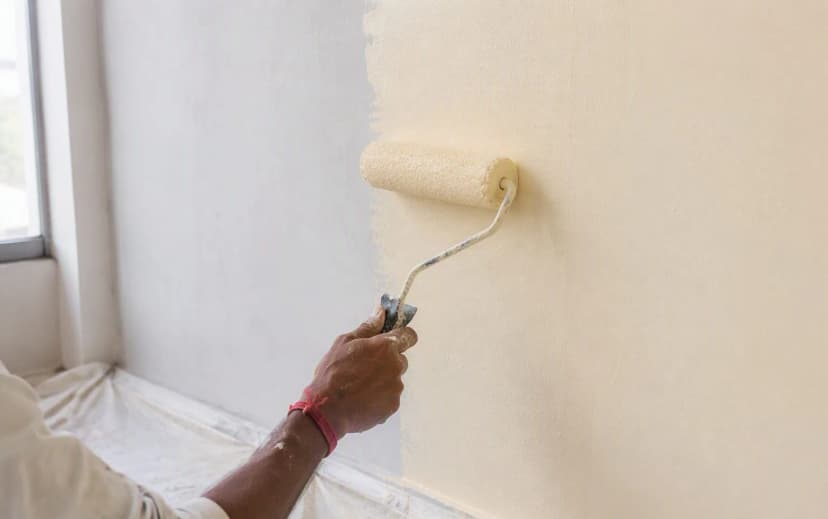
- Wall putty — ₹10–20/sq ft. The smooth base coat; never skip it on fresh or patched plaster.
- Primer — ₹10–30/sq ft. Improves adhesion and cuts the number of topcoats needed.
- Emulsion — ₹8–50/sq ft interior (economy distemper from ₹8; washable emulsions ₹15–50; texture ₹80–250). Repaint jobs run cheaper (₹14–45/sq ft) than fresh painting (₹18–60/sq ft) because surface prep is lighter.
- Labour — usually bundled into per-sq-ft rates; standalone painting labour is ₹20–60/sq ft depending on city.
Smart allocation: premium washable emulsion in living rooms and kids' rooms (where walls get touched and scrubbed), standard emulsion in guest rooms and low-traffic spaces. And choose washable paint — in homes with children it pays for itself by the first festival cleaning.
6. Kitchen Countertop: Granite vs Quartz
A typical Indian kitchen uses 25–40 sq ft of counter — the hardest-working surface in the house, exposed to hot tawas, oil, haldi and daily chopping. Two materials dominate, and both last 20+ years:
| Granite | Quartz | |
|---|---|---|
| Price/sq ft | ₹120–800 | ₹180–1,500 (domestic ₹180–600) |
| Typical kitchen total (installed) | ₹7,000–25,000 | ₹15,000–40,000+ |
| Maintenance | Seal every 12–18 months | None — never needs sealing |
| Stain resistance (oil, haldi) | Good, but porous | Excellent — non-porous |
| Heat resistance | Excellent | Good — use trivets for hot pans |
Verdict: granite if budget leads and you don't mind annual sealing; quartz if you cook heavily and want zero-maintenance. For either, check slabs in person (colour varies by lot) and get sink/hob cut-outs done at the fabricator, not on site.
Budget Split & the Splurge-vs-Save Map
A full 2BHK renovation runs roughly ₹5–9 lakh (budget), ₹9–17 lakh (standard) or ₹17–35 lakh (premium), with materials taking 55–60% and labour 40–45%. Painting, flooring and the modular kitchen are the three biggest line items in almost every project.
| Scope | Budget finish | Standard finish | Premium finish |
|---|---|---|---|
| Painting only | ₹50K–85K | ₹90K–1.3L | ₹1.3L–2L |
| Partial (paint + flooring + ceiling) | ₹2L–3.5L | ₹3.5L–6L | ₹6L–10L |
| Full (incl. kitchen + electrical) | ₹5L–9L | ₹9L–17L | ₹17L–35L |
Hardware (Hettich/Häfele hinges & channels), BWR/BWP plywood in kitchens, countertop stone (granite/quartz), bathroom waterproofing & CP fittings, electrical wiring, MCBs & switches, kitchen sink & faucet.
Paint in low-use rooms, handles & knobs (easy to upgrade later), light fixtures & decor, laminates in guest/utility rooms, loose furniture & furnishings, fancy tiles in low-visibility areas.
All prices are indicative market ranges, usually exclusive of 18% GST. Metro cities run 8–15% above tier-2/3 towns; always take written, itemised quotes.
The Buying Checklist — and How Not to Get Cheated
- Freeze design and sheet counts before ordering — a carpenter's cutting plan is your shopping list.
- Buy from authorised dealers only, with a bill naming brand, grade and thickness for every item.
- Verify marks on the material itself: IS 303/IS 710 stamps on plywood edges, ISI on wires, brand embossing on hardware, batch numbers on tiles.
- See hardware packaging before installation — "Hettich-type" or "same quality" means it isn't Hettich.
- Order 7–10% extra tiles and one extra laminate sheet — batch matching later is often impossible.
- Confirm whether quotes include 18% GST, transport and cutting — the classic quote-inflation trio.
- Store boards flat and dry on site, off the floor — monsoon damp ruins even BWP edges before installation.
- Keep 10–15% contingency and release payments against milestones, not lump-sum advances.
- Collect every warranty card — plywood (up to 30 years on premium BWP), hardware, countertop and appliances — before the final payment.
Frequently Asked Questions
What are the essential materials needed for a home renovation in India?
Eight categories: (1) carpentry boards — BWR/BWP plywood, HDHMR, blockboard; (2) surface finishes — laminates, veneer, acrylic or PU; (3) hardware — soft-close hinges, drawer channels, handles; (4) flooring — vitrified tiles, stone or SPC wood; (5) paint system — putty, primer, emulsion; (6) countertop — granite or quartz; (7) electrical — wires, MCBs, switches; (8) ceiling and plumbing materials — plus adhesives, edge banding and sealants.
How much do renovation materials cost for a 2BHK in India?
A full 2BHK renovation (800–1,200 sq ft) runs roughly ₹5–9 lakh budget, ₹9–17 lakh standard and ₹17–35 lakh premium, including painting, flooring, false ceiling, kitchen, wardrobes, electrical and plumbing. Materials are typically 55–60% of the total; labour 40–45%. Keep 10–15% contingency above any estimate.
Which plywood should I use for a renovation — MR, BWR or BWP?
MR grade (IS 303) for dry-zone furniture like wardrobes and beds; BWR (IS 303) as the kitchen minimum; BWP/marine (IS 710) for under-sink units, bathrooms and balconies. Indicative 18 mm prices: MR ₹55–90/sq ft, BWR ₹70–125/sq ft, BWP ₹90–180+/sq ft. Never use MR in an Indian kitchen — steam delaminates it within 1–2 years.
Is laminate or veneer better for wardrobes and kitchens?
For most Indian homes, HPL laminate (₹120–350/sq ft) is the practical choice: wipeable, fingerprint-hiding in textured finishes, no polishing ever. Veneer (₹500–1,000+/sq ft) gives real wood grain but needs periodic polishing and humidity care. A popular hybrid: acrylic on upper kitchen shutters, laminate on base units.
Which flooring is best for Indian homes — tiles, marble or wood?
Vitrified tiles (₹60–200/sq ft) are the default for living areas — durable, cool and low-maintenance. Indian marble (₹70–1,000/sq ft) suits premium living rooms but needs polishing; granite is best for high-wear zones. For bedrooms, SPC wooden flooring (from ₹150/sq ft) adds warmth and installs over existing tiles. Always use anti-skid tiles in bathrooms and balconies.
Granite or quartz for the kitchen countertop?
Granite (₹120–800/sq ft) is cheaper at entry level and handles heat best, but needs sealing every 12–18 months. Quartz (₹180–1,500/sq ft) is non-porous, never needs sealing and resists oil and haldi stains — the low-maintenance choice for heavy Indian cooking. Both last 20+ years; a typical kitchen counter installs for ₹7,000–40,000 depending on material.
What should I splurge on vs save on in a renovation?
Splurge on what's hard to replace: hardware (branded hinges and channels last 15–20 years vs 2–4 for unbranded), waterproof plywood in kitchens, countertop stone, bathroom waterproofing and electrical wiring. Save on easily changeable items: paint colours, handles, light fixtures, low-use-room laminates and loose furniture.
How do I avoid getting cheated on materials during renovation?
Buy from authorised dealers with a bill naming brand, grade and thickness; verify ISI marks and standard codes on the material itself; demand original packaging for hardware; get every material named in an itemised quote; confirm whether GST and transport are included; and stage payments to milestones rather than paying lump sums in advance.
Is Hettich worth the extra cost over local hardware?
Yes. Hettich hinges are rated for 100,000+ open-close cycles (15–20 years of daily use) versus 5,000–15,000 for unbranded hinges that fail in 2–4 years. A full kitchen's Hettich hardware costs ₹24,000–40,000 — about ₹18,000–35,000 more than local — but replacing failed hardware twice with labour costs more than the upgrade. The professional pattern: Hettich in kitchens and master wardrobes, Ebco in secondary rooms, unbranded nowhere.
How much extra material should I order for wastage?
Tiles: 7–10% extra for cutting and future repairs (batches get discontinued). Plywood: your carpenter's cutting plan already includes wastage — typically 10–15%. Laminate: one extra sheet per colour. Paint: calculated at 2.5–3× carpet area for paintable surface, plus one litre spare per colour for touch-ups.
Renovating? Get your material list right first.
Share your floor plan with our design team — we'll prepare an itemised material schedule with brands, grades, quantities and transparent pricing for every room.
Get a Free Material Estimate