Door Handle Buying Guide for Indian Homes: Material, Length & Finish for Main, Bedroom & Wardrobe Doors
The most-touched object in your home is also the most under-researched purchase. Here's how to choose handles that feel right, last decades and suit each door, with honest Indian prices and the mistakes to avoid.
Choosing a door handle: the quick answer
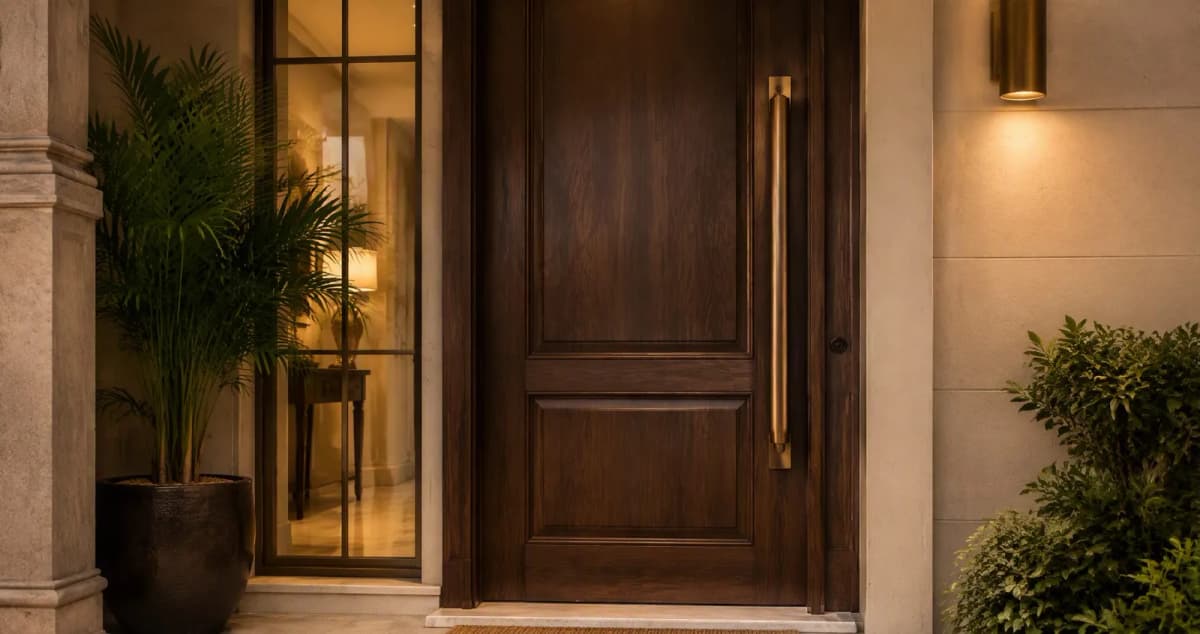
Choose by door, not by looks. Main door: a long pull handle (18–36 inch) in solid brass or 304-grade stainless steel, paired with a separate security lock. Bedroom: a lever handle on a mortise lock for latching and privacy. Wardrobe: a slim pull handle sized to the shutter (96–600 mm), no lock needed.
On materials: brass and SS304 survive Indian humidity and daily use for 15–25 years; zinc alloy costs 40–60% less but wears faster on high-traffic doors. On finish: PVD-coated brass, rose gold or matte black outlasts ordinary plating by years. Expect ₹60–₹600 per wardrobe handle, ₹800–₹3,500 per bedroom set, and ₹1,500–₹12,000+ for a main door pull, around ₹20,000–₹45,000 to hardware a full 3BHK well.
The three things to check before anything else (the order matters): (1) the metal under the finish, solid brass or SS304 for the main door, no exceptions; (2) the size relative to the door, a pull should be a quarter to a third of the door height, centred at 36 inches from the floor; (3) the finish technology, PVD outlasts plating outlasts paint. Looks come fourth.
1. One house, three different handle jobs
The single biggest mistake in handle shopping is buying one design for every door. A main door, a bedroom door and a wardrobe shutter do three completely different jobs, and the hardware should reflect that.
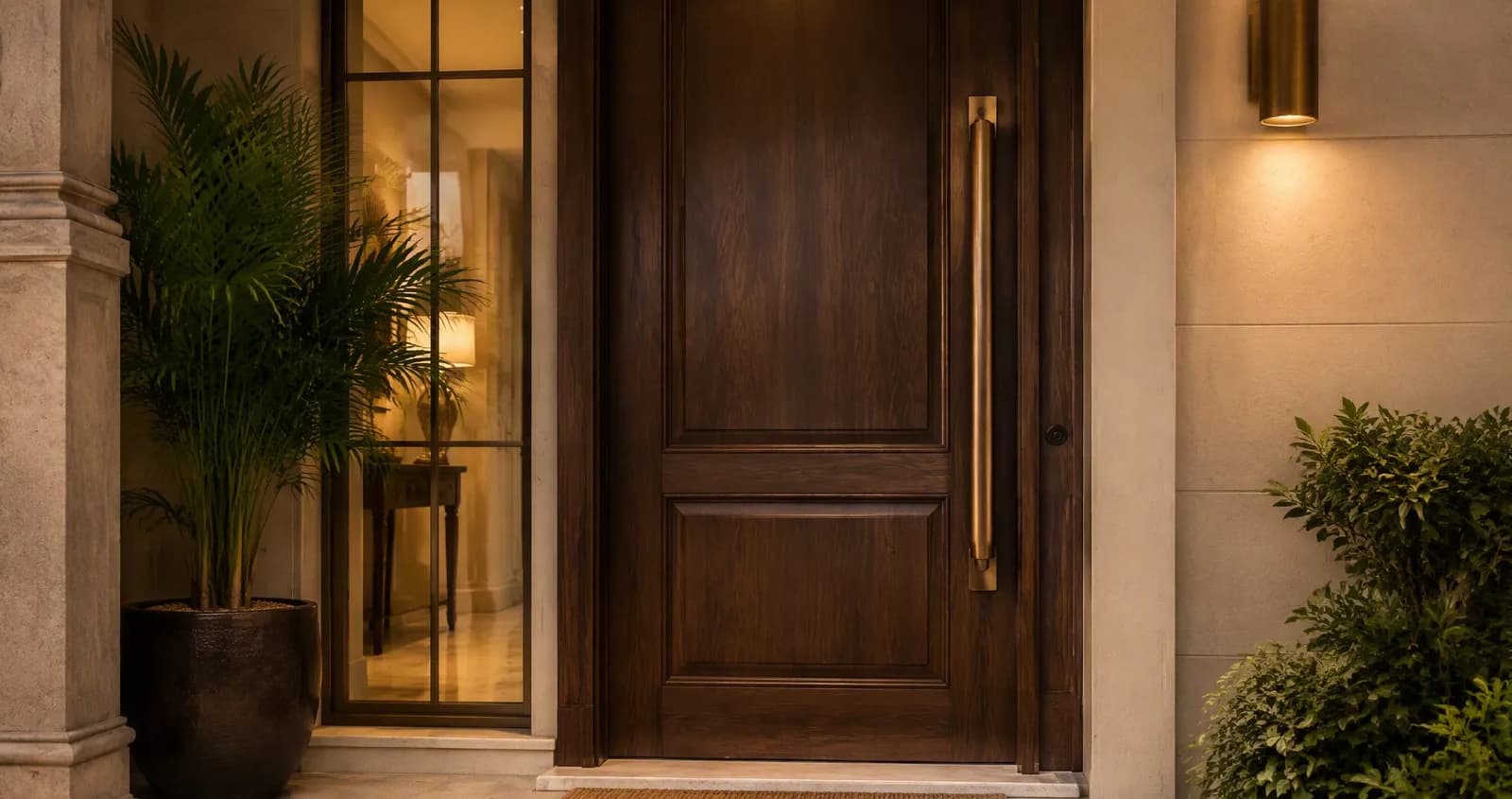
The main door handle is a grip, not a lock. It's a long pull you grab to swing a heavy door, the actual locking is done by a separate deadbolt, night latch or smart lock. So a main door handle is judged on three things: presence (it's the first thing a guest touches), grip (a 40–60 kg teak or flush door needs leverage), and weatherproofing (sun, rain and monsoon air if it's even partly exposed).
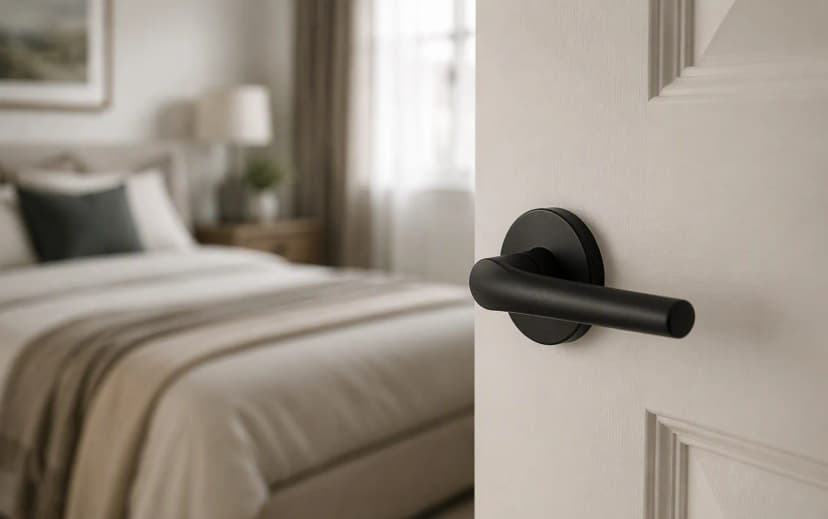
The bedroom handle is a latch, not a statement. It works a mortise lock body: press the lever, the latch retracts, the door opens. Add a bathroom-style privacy turn or a key cylinder depending on the room. What matters here is feel (smooth spring action, no rattle) and quietness at 11 pm.
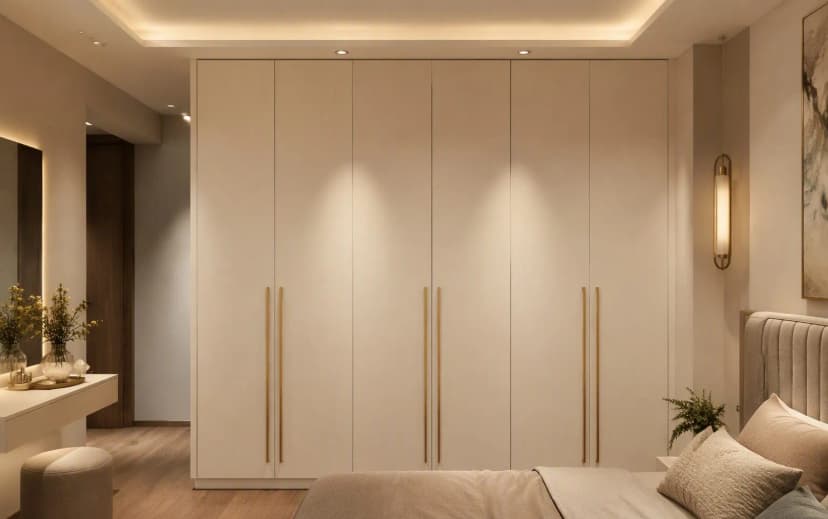
The wardrobe handle is jewellery. No latch, no lock, no weather, just a pull against a magnetic catch or soft-close hinge. It's the lowest-stress hardware in the house, which means it's where design and finish can lead, and where slim long handles currently do the heavy lifting in modern Indian bedrooms.
Spend in proportion to daily touches. Main door: 20–40 touches a day, plus weather. Bedroom: 10–15 touches. Wardrobe: 2–6 touches. That's why the main door deserves the premium material and the wardrobe can carry the experimental finish.
The four handle types you'll meet in a showroom
Hardware catalogues split handles into four families. Knowing the names saves you twenty minutes of confusion at the counter:
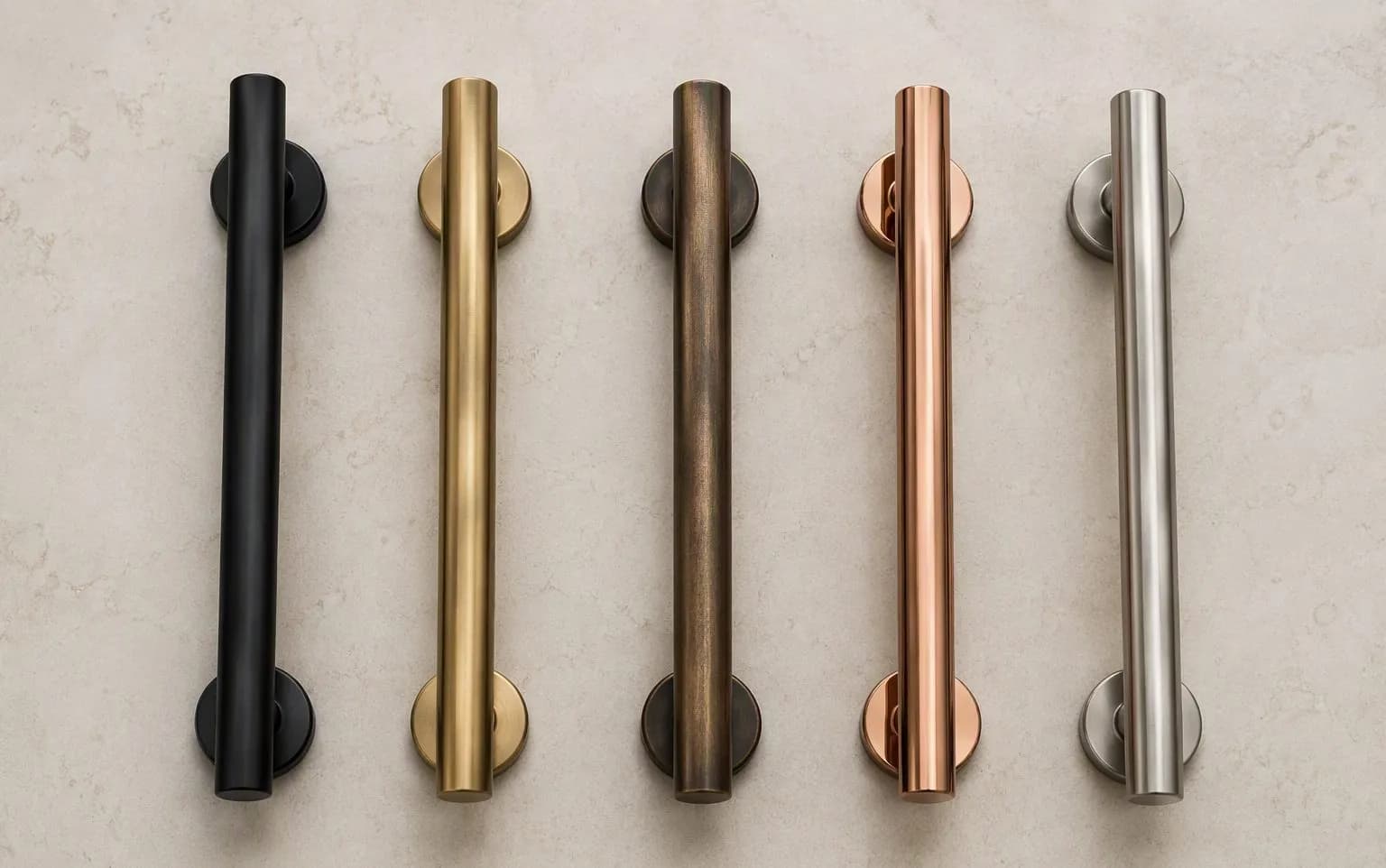
- Pull handle (long handle): a fixed bar you pull. It operates no latch, pair it with a separate deadbolt or smart lock on the main door, or a magnetic catch on wardrobes. The Labacha catalogue is built around this family.
- Lever handle on rose: a lever on a round or square rose that retracts a latch. Minimal, modern look; needs a separate mortise or tubular latch inside the door.
- Mortise handle set: a lever on a backplate with the lock body recessed (mortised) into the door edge. The standard Indian bedroom and bathroom answer, latch and lock in one unit, with key or thumb-turn options.
- Knob: round or shaped, fixed or turning. Best for small shutters, pooja rooms and vintage-look doors; awkward on heavy doors because there's no leverage.
A well-dressed home typically uses three of the four: long pulls on the main door and tall wardrobes, lever-on-mortise sets on rooms, knobs on the small stuff.
2. Brass vs stainless steel vs zinc alloy vs aluminium
Two handles can look identical in a showroom and be five years apart in lifespan. The difference is the metal under the finish.
| Material | Strength & life | Humidity / coastal behaviour | Price band, 2026 (per piece) | Best for |
|---|---|---|---|---|
| Solid brass | Excellent; 20+ years; naturally antimicrobial | Very good; develops a warm patina unless lacquered/PVD | ₹500–₹3,000+ / pc | Main doors, premium interiors, classic styles |
| SS 304 stainless steel | Excellent; 15–25 years | Best-in-class rust resistance; ideal for coastal cities | ₹300–₹1,800 / pc | Main doors, bathrooms, high-traffic doors |
| Zinc alloy (Zamak) | Good for interiors; 5–10 years typical | Plating wears on high-use doors; pitting in humid air | ₹150–₹900 / pc (40–60% cheaper than brass) | Bedrooms, wardrobes, rental interiors |
| Aluminium | Moderate; dents under impact | Rust-proof by nature; anodised finishes hold well | ₹100–₹700 / pc | Interior doors, sliding doors, budget projects |
| Iron / MS (powder-coated) | Strong but coating-dependent | Rusts wherever the coating chips | ₹60–₹400 / pc | Dry interiors only; avoid bathrooms and coasts |
The one-line verdict: main door = brass or SS304, always. It's touched the most, carries the heaviest door, and faces the weather. Bedrooms and wardrobes can happily run on good zinc alloy or aluminium if the budget needs balancing, nobody has ever worn out a wardrobe handle.
Carry a small magnet when shopping. Genuine SS304 is only weakly magnetic; cheap "stainless-look" mild steel grabs the magnet hard and will show rust blooms within a monsoon or two. For brass, check weight, solid brass is noticeably heavier than brass-plated zinc of the same size.
3. Length & proportion: the size rules that make handles look "right"
A handle that's 20% too small makes a door look cheap; one that's correctly scaled makes even a plain flush door look designed. The rules are simpler than they look.
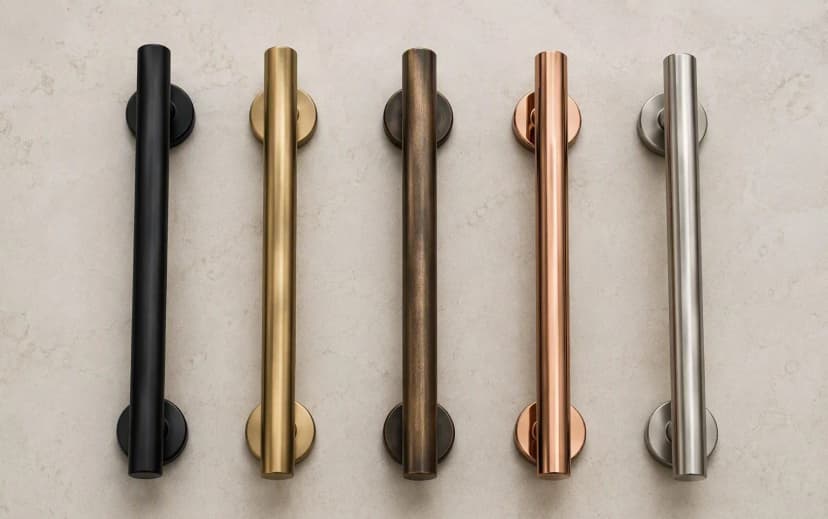
Main doors, think in fractions of the door. The pull handle should be roughly one-quarter to one-third of the door's height. Indian main doors are typically 7 ft (84 in / 2135 mm):
- 7 ft door: 18–24 inch pull handle (450–600 mm)
- 8 ft door or double doors: 24–36 inch (600–900 mm)
- Statement villa doors (9 ft+): 36–48 inch
Mount it so the centre of the grip sits about 36 inches (915 mm) from the finished floor, the universal comfortable hand height. On a long handle, that means the handle straddles that point rather than starting at it.
Wardrobes, think in shutter height. The current long-handle trend follows a similar proportion: a pull that's about one-third of the shutter height. On a standard 7 ft wardrobe shutter that's a 600 mm handle; on a 4 ft shutter, 288–350 mm. For drawers and small shutters, the classic hole-to-hole sizes are 96, 128, 160 and 224 mm, always measure hole-to-hole (centre-to-centre), not the overall length, when replacing existing handles.
Bedroom doors, the lever is fixed, the rose isn't. Lever handles come in a narrow size band (110–140 mm lever length), so the choice is really about the backplate or rose size and the mortise lock body, standard Indian mortise locks use a 60–70 mm backset and a 3–4 lever or pin-cylinder body.
Replacing an old handle? Measure the existing hole-to-hole distance and buy to match, or you'll be drilling new holes and filling old ones. Fresh door? You have freedom, but decide the handle before the carpenter's final polish, not after.
4. Finishes that survive Indian conditions
Finish is where Indian homes are hardest on hardware: sweaty palms, humid monsoon air, coastal salt, and aggressive cleaning agents. Choose the coating technology first, the colour second.
Three Indian realities sit behind every finish recommendation in the table below. Monsoon humidity attacks cheap plating from beneath, the blisters you see on a two-year-old "chrome" handle start as moisture creeping through a porous plated layer. Coastal salt air (Chennai, Mumbai, Kochi, Vizag) accelerates pitting on anything that isn't SS304, brass or PVD-protected. And daily hand chemistry, sweat plus kitchen oils, is mildly acidic, which is why the finish fails first exactly where your fingers land. That's why the same handle model can look new after five years in a dry Delhi flat and shabby after two in a humid coastal home: the finish technology, not the price tag, decides.
| Finish | How it's made | Durability in India | Fingerprints / care | Pairs with |
|---|---|---|---|---|
| PVD (brass / rose gold / black / graphite) | Vacuum-bonded ceramic-hard layer | Best, resists sweat, humidity, scratches for years | Low smudge; wipe with dry cloth | Main doors, premium interiors |
| Satin / brushed steel or nickel | Brushed metal, sometimes lacquered | Very good, especially on SS304 | Hides fingerprints well | Kitchens, bathrooms, utility doors |
| Matte black (powder coat / PVD) | Powder coating or PVD over base metal | Good indoors; powder coat can chip outdoors | Good; shows dust less than gloss | Contemporary interiors, wardrobes |
| Antique brass / bronze | Chemically aged + lacquered | Designed to age; patina is part of the look | Very forgiving | Classic, Shaker and heritage interiors |
| Polished chrome / mirror | Electroplated, mirror-polished | Good plating lasts; cheap plating pits and peels | Shows every fingerprint; needs wiping | Bathrooms; avoid on main doors |
| Rose gold / copper tones | Usually PVD | Excellent when PVD; poor when spray-painted | Good | Statement main doors, wardrobes |
Three rules of thumb: PVD beats plating beats paint, in that order, for lifespan. Brushed and satin hide life; mirror polish displays it. And on a main door, whatever finish you pick, ask whether it's rated for exterior use, many beautiful finishes are interior-only and will cloud within a year of semi-outdoor exposure.
Pick one primary finish and run it through the home, main door pull, bedroom levers, wardrobe handles, even cabinet hardware. Scale and shape can vary by door type; the finish should not. Two finishes maximum (for example brass + matte black), and never chrome-and-gold in adjacent rooms.
5. The door-by-door buying table
Everything above, distilled into one reference table. Save it before your hardware run.
| Door | Handle type | Size / length | Material & finish | Lock pairing | 2026 price band |
|---|---|---|---|---|---|
| Main door | Long pull handle | 18–24 in (7 ft door); 24–36 in (8 ft / double) | Solid brass or SS304; PVD or antique finish | Separate deadbolt / smart lock / night latch | ₹1,500–₹12,000+ |
| Bedroom | Lever on rose or backplate | 110–140 mm lever | Brass / SS304 / good zinc; match house finish | Mortise lock body, 60–70 mm backset, key or privacy turn | ₹800–₹3,500 / set |
| Bathroom | Lever with privacy turn | 110–130 mm | SS304 or brass only, zinc pits in steam | Mortise bathroom lock (thumb-turn, no key) | ₹700–₹2,500 / set |
| Wardrobe (long shutters) | Slim long pull | ~⅓ of shutter height; 288–600 mm | Any, zinc/aluminium fine; finish is the star | None, magnetic catch / soft-close hinge | ₹150–₹1,200 / pc |
| Wardrobe (small) / drawers | Pull handle or knob | 96 / 128 / 160 / 224 mm hole-to-hole | Match the wardrobe finish | None | ₹60–₹600 / pc |
| Balcony / utility | Pull or lever | 8–12 in | SS304 or aluminium, weather-exposed | As per door | ₹400–₹1,500 |
| Pooja room | Decorative pull or knob | 4–8 in | Brass, antique finish, traditional motifs fit here | Ball catch or small bolt | ₹200–₹1,000 |
Note the pattern: the further a door is from weather and traffic, the more freedom you have. The main door row is the only one where every cell is non-negotiable.
6. What good handles cost in 2026, and where the money actually goes
Handles are a small line item that punches far above its cost in daily experience. A 3BHK has roughly 35–50 touch-points, here's an honest whole-house budget.
| Item | Qty | Value spec | Premium spec |
|---|---|---|---|
| Main door long pull | 1 | ₹1,500–₹3,000 (SS304) | ₹4,000–₹12,000+ (brass / PVD designer) |
| Bedroom mortise lever sets | 3 | ₹2,400–₹4,500 total | ₹6,000–₹10,500 total |
| Bathroom privacy sets | 2–3 | ₹1,400–₹3,000 | ₹4,000–₹7,500 |
| Wardrobe long handles | 6–10 | ₹900–₹2,500 | ₹3,600–₹12,000 |
| Drawer / small pulls & knobs | 10–15 | ₹600–₹2,000 | ₹3,000–₹9,000 |
| Whole-house total | ~25–32 pcs | ₹7,000–₹15,000 | ₹21,000–₹51,000 |
Where the premium goes, in order of worth-it: (1) the main door pull, it's the house's handshake; (2) mortise lock bodies, a ₹300 lock body inside a ₹2,000 handle set is a false economy, it's the part that fails; (3) PVD finish on high-touch doors. Where you can safely economise: wardrobe and drawer pulls, utility doors, and guest-room hardware.
Premium Indian brands like Labacha price by design, size and finish rather than a flat rate, a 12-inch and a 36-inch version of the same handle can be 3–4× apart. Always ask for the current price list against specific model numbers and sizes instead of comparing MRP stickers across brands.
7. The buyer's checklist
Ten checks before you pay
- List every door and its job first, main, bedroom, bathroom, wardrobe, utility. Handle type follows function.
- Main door gets brass or SS304, no zinc alloy on the heaviest, most-touched, weather-exposed door.
- Size the pull to the door, ¼–⅓ of door height; grip centre at ~36 inches from the floor.
- Match the lock plan, pull handle + separate deadbolt on main doors; mortise body (60–70 mm backset) on bedrooms; privacy turn on bathrooms.
- Measure hole-to-hole on replacements, 96/128/160/224 mm standards; don't assume "12 inch" means the same thing everywhere.
- Ask how the finish is made, PVD > electroplating > powder coat > paint; exterior rating for main doors.
- Do the magnet test on "stainless", strong magnetic pull means mild steel underneath.
- Weigh the "brass", solid brass is heavy; if it's feather-light, it's plated zinc.
- One finish family across the home, vary size by door, not colour by room.
- Get prices against model numbers, size and finish change the price 3–4× within the same design.
Frequently asked questions
How do I choose the right door handle for a main door versus a bedroom or wardrobe?
Match the handle to the door's weight, traffic and function. Main doors need a long pull handle (18–36 inches) in solid brass or SS304 paired with a separate security lock, the handle is a grip and a statement, not the lock. Bedroom doors need a lever handle on a mortise or rose lock for latching and privacy. Wardrobe shutters need slim pull handles sized to the shutter height (96–600 mm), with no lock at all.
Which material is best for door handles in India?
For main doors and coastal or humid cities, solid brass or 304-grade stainless steel last the longest, 15–25 years with basic care. Zinc alloy handles cost 40–60% less and are fine for low-traffic interior doors, but the plating wears faster on high-use doors. Aluminium is light, rust-proof and budget-friendly for interior use, though it dents more easily.
What size long handle should I buy for my main door?
Aim for a handle roughly one-quarter to one-third of the door height. For a standard 7 ft (84-inch) Indian main door, that means an 18–24 inch pull handle; for 8 ft doors or double doors, 24–36 inches looks proportionate. Install it so the grip centre sits about 36 inches from the floor.
What is the difference between a pull handle and a mortise handle?
A pull handle is a fixed bar you pull to open the door, it does not operate a latch, so it pairs with a separate deadbolt or lock on main doors, or a roller catch on wardrobes. A mortise handle set combines a lever with a lock body recessed (mortised) into the door edge, giving latching and locking in one unit, the standard choice for bedrooms and bathrooms.
Which door handle finish lasts longest in Indian conditions?
PVD (physical vapour deposition) coated finishes are the most durable, a PVD brass, rose gold or black finish resists scratches, sweat corrosion and coastal humidity for years. Satin and brushed finishes hide fingerprints better than polished ones. Powder-coated matte black is tough indoors but can chip on exterior doors; antique brass and unlacquered finishes are designed to age and patina gracefully.
How much do good door handles cost in India in 2026?
Wardrobe handles run ₹60–₹600 per piece. Bedroom mortise lever sets cost ₹800–₹3,500 for decent brass or SS304 with a lock body. Main door long pull handles range from ₹1,500 for basic steel to ₹4,000–₹12,000+ for designer brass, PVD or rose gold pieces like Labacha's premium lines. Budget roughly ₹20,000–₹45,000 to hardware a full 3BHK with quality handles.
Should all the door handles in my house match?
They should belong to the same family, not necessarily be identical. Keep one finish (or at most two) across the whole home, for example brushed brass main door pull, brass levers on bedrooms, slim brass pulls on wardrobes. Consistent finish with size scaled to each door type reads as designed; mixing chrome, black and gold room to room reads as assembled.
What is PVD coating on door handles and is it worth it?
PVD (physical vapour deposition) bonds a thin ceramic-hard layer to the metal in a vacuum chamber. Unlike electroplating or lacquer, it doesn't flake, and it resists the two biggest finish killers in Indian homes, sweaty palms and humid air. On a main door handle touched dozens of times a day, PVD is worth the 20–40% premium; on a wardrobe handle touched twice a day, standard finishes are fine.