Mortise Lock vs Cylindrical Lock vs Rim Lock: Which Is Right for Your Main Door?
Three lock types, three very different ways of keeping a door shut. Here is how each mechanism actually works, what it costs in India in 2026, and a door-by-door recommendation so you buy once and buy right.
The quick answer
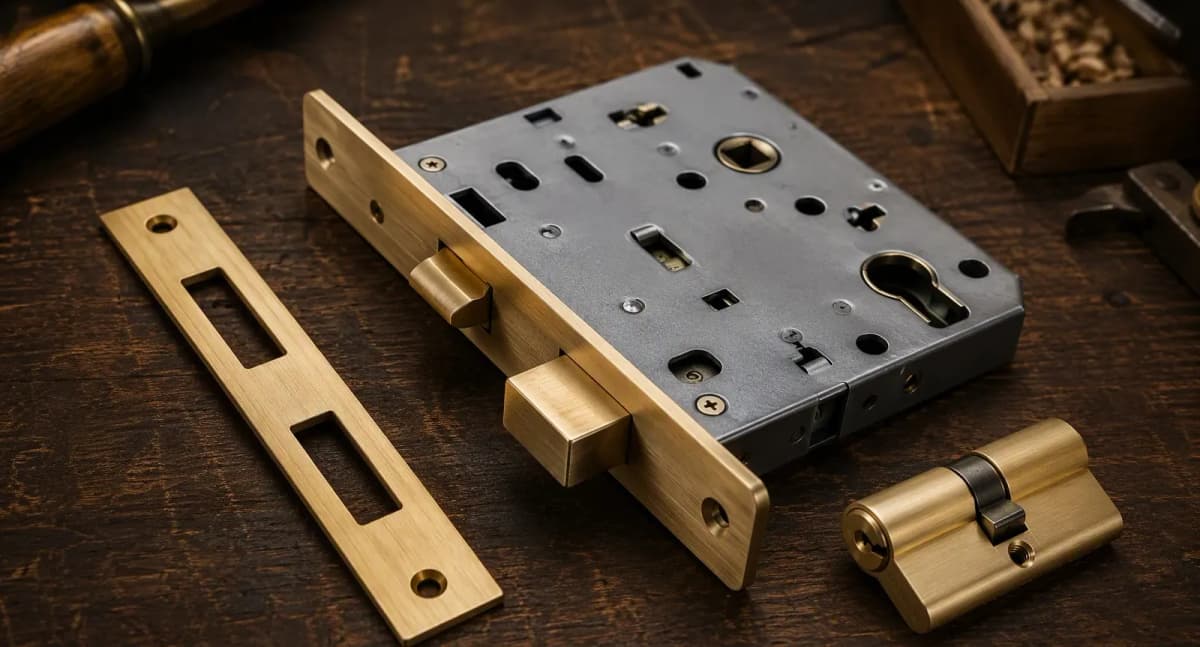
A mortise lock is a heavy lock case chiselled into a pocket in the door's edge, the strongest and most durable option. A cylindrical lock is a lighter key-in-lever set pushed through two drilled holes, the easiest to fit. A rim lock (night latch) is a box screwed onto the door's inside face, the quickest add-on.
In 2026 India, expect to pay ₹550–₹1,545 for a Godrej rim lock or night latch, ₹835–₹1,800 for a branded cylindrical lock, and ₹850–₹2,200 for a 6-lever mortise lock set from Harrison or Godrej, with premium sets like Labacha's around ₹3,200.
Rule of thumb: main door = mortise deadbolt plus a night latch; bedrooms and bathrooms = cylindrical; grill gates, old thin doors and quick security upgrades = rim lock. If your door is thinner than 35 mm, skip mortise entirely, the pocket will weaken the stile.
1. The three lock types, in one minute
Every lock you'll be shown in an Indian hardware shop is one of these three mechanisms. The difference is not cosmetic, it is where the working parts live, and that decides how strong the lock is, how thick your door must be, and how much carpentry the fitting takes.
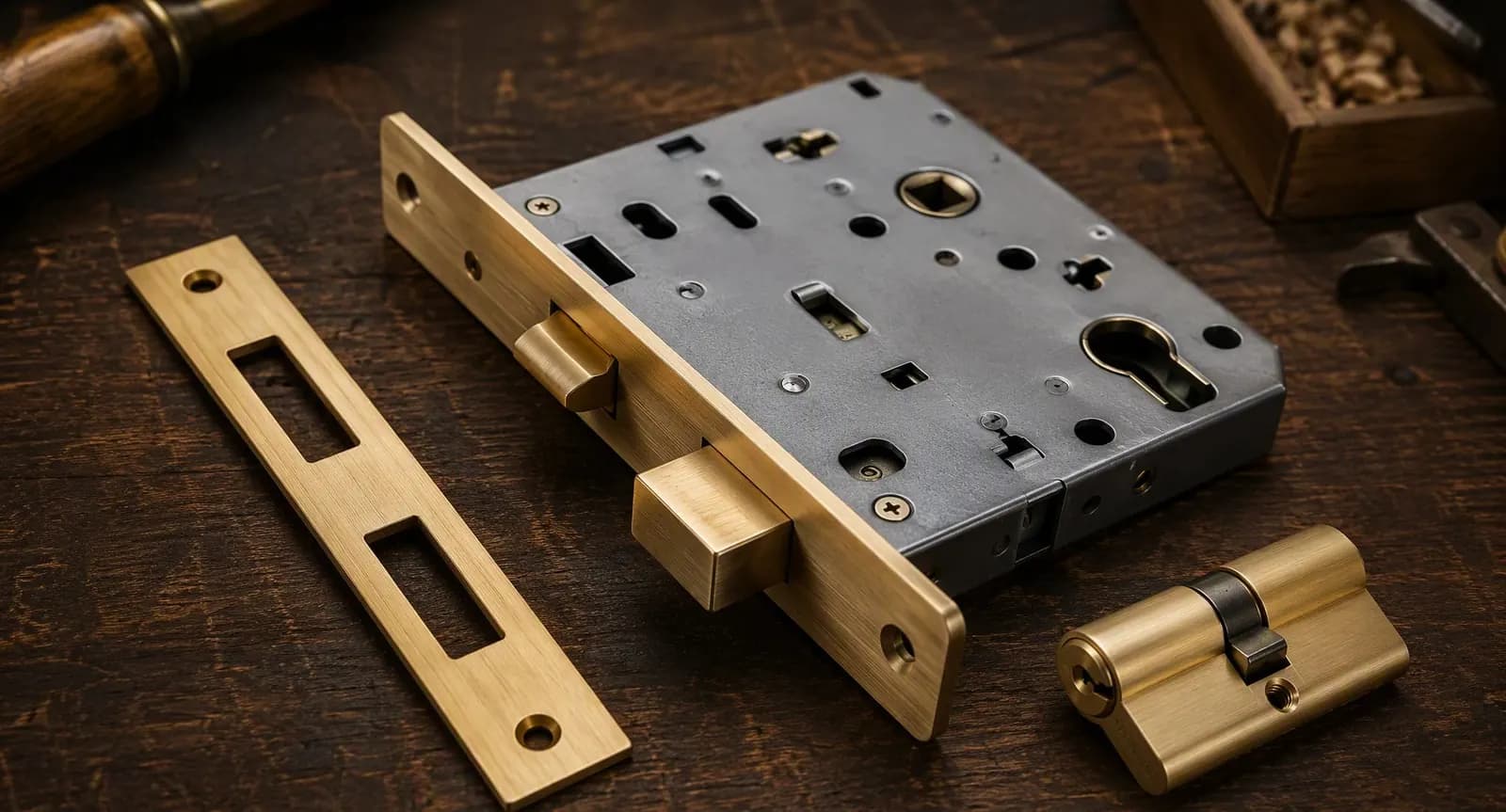
Mortise lock. A rectangular steel or brass case, typically 85–100 mm deep, that sits inside a pocket chiselled into the edge of the door. The latch and deadbolt throw out of the case through a faceplate, and the handles mount through it. Because the whole mechanism is buried in the door stile, it is the most robust design, and the most demanding to install.
Cylindrical lock. Also called a tubular or key-in-lever lock. The mechanism lives inside the lever handle itself, and the whole set slides through a 54 mm hole bored straight through the door face, with a small latch bolt in the edge. Universal, quick to fit, easy to replace, and the weakest of the three under a determined attack.
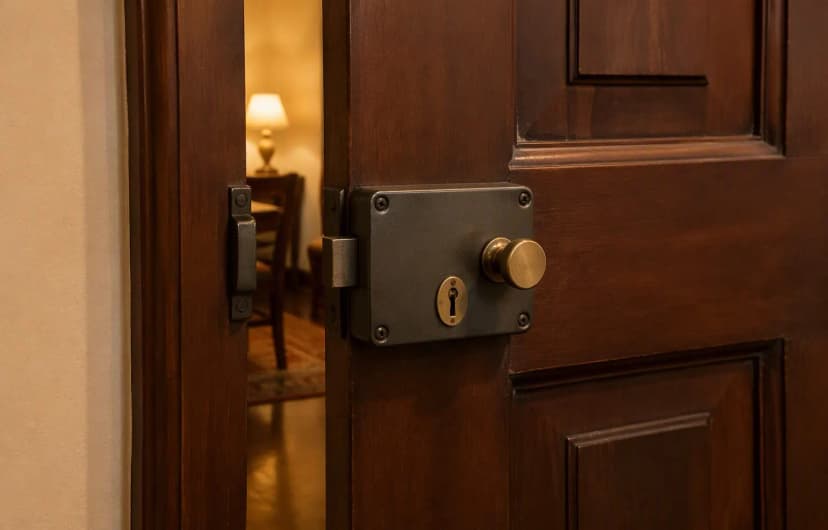
Rim lock. The whole lock is a box screwed onto the inside surface of the door; a latch (and sometimes a deadbolt) shoots sideways into a staple fixed to the frame. The Indian night latch is the classic example. Nothing is cut into the door, which makes rim locks the go-to for doors that already exist, or are too thin for anything else.
2. Mortise lock: the main-door standard
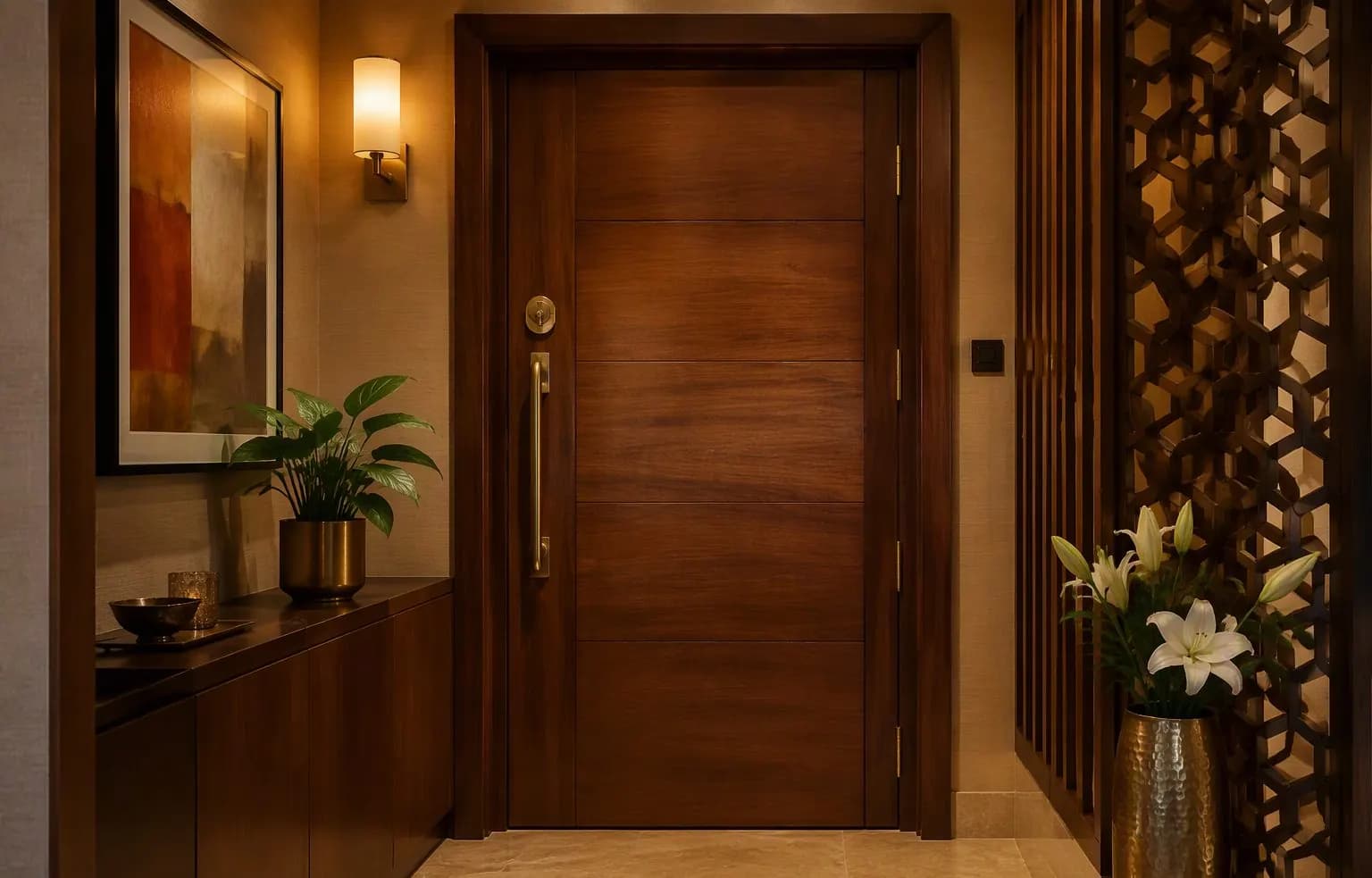
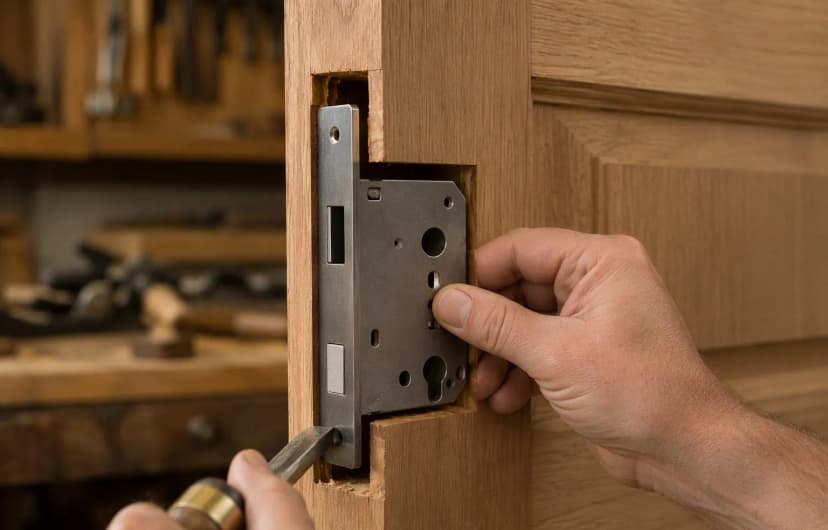
The mortise lock is what "a proper lock" means in Indian carpentry. The carpenter chisels a deep rectangular pocket, the mortise, into the door's edge, slides the lock case in, and covers the edge with a faceplate. Handles and the key cylinder pass through the case, so latch, deadbolt and handles all work as one unit.
That buried construction is exactly why mortise locks dominate main doors:
- Security. Quality Indian mortise locks carry 6 or more levers (Harrison and Godrej's mainstream lines are 6-lever), and the deadbolt is longer and heavier than anything a cylindrical chassis can throw. Many premium cases add hardened anti-saw pins inside the bolt.
- Durability. The mechanism sits in a solid brass or steel case rather than a thin tubular chassis, so it shrugs off decades of slamming. This is the lock type that routinely outlives the door.
- Feel. A mortise handle set has a weight and smoothness that builders and clients both notice, one reason premium sets like Labacha's (in 85×45, 85×50, 85×60 and 60×72 mm case sizes, about ₹3,200 a set) sell largely on how the lever moves.
The catch is the door. A full-size mortise case needs the door to be at least 35 mm thick, and 38–45 mm is comfortable. Cut a deep pocket into a 25–30 mm flush door and you leave a sliver of timber holding the stile together, the lock becomes the weak point, and the door can split around it within a few monsoons. Fitting also needs a skilled carpenter and adds roughly ₹150–₹400 per door in labour.
3. Cylindrical lock: the quick-fit option
Cylindrical locks, you'll also hear them called tubular locks or key-in-lever sets, are the default on interior doors across new Indian apartments. Instead of a chiselled pocket, the carpenter (or you) drills just two holes: a 54 mm hole through the door face for the chassis, and a 25 mm hole in the edge for the latch. Most sets ship with a paper template, and a careful DIYer can fit one in 30–45 minutes with a hole saw.
That convenience drives three real advantages:
- Installation cost and speed. No chiselling, no specialist, often fitted the same day the door is hung.
- Replaceability. The bore is universal, so when a lock wears out or you want a new finish, the new set drops into the same holes in minutes.
- Price. Branded cylindrical sets for bedrooms start around ₹835 in 2026, and even heavy-duty Grade 2 commercial models stay well under mortise money.
The trade-off is strength. The locking mechanism lives inside the lever itself, exposed on the face of the door, and the lever is the first thing a pipe-wrench or crowbar attack grabs. Cylindrical locks span ANSI Grades 1–3, but the models actually sold for Indian homes are overwhelmingly Grade 2–3: fine for privacy, not for resisting forced entry. The latch bolt is also short, typically a 60–70 mm backset spring latch with no deadbolt unless you add a separate deadbolt unit above it.
4. Rim lock & night latch: the surface add-on
The rim lock is the oldest design of the three, the whole lock is a box fixed to the inside face of the door, shooting a bolt into a staple on the frame. In India its everyday form is the night latch: a spring latch that locks automatically when the door slams, opened by key outside and a knob inside. You'll also find combination rim units like the Godrej 1CK that throw both a latch and a deadbolt from the same box.
Because nothing is cut into the door, rim locks solve three situations nothing else can:
- Existing doors. Adding one takes a drill and 20 minutes, no chiselling, no re-hanging, no damage to a finished door.
- Thin and old doors. A 25 mm flush door or an aging panel door that would never survive a mortise pocket carries a rim lock happily.
- A second locking point. On a main door, a night latch or deadbolt rim lock above the mortise set gives an independent bolt, an intruder forcing one lock still has another to beat.
The honest limitation: a basic night latch is a convenience lock. Its spring latch can be slipped with a card on a badly fitted door, and the whole box is only as strong as its screws and the timber they're in. Choose a rim unit with a proper deadbolt action (the 1CK style) when the rim lock is doing real security work, and never rely on a night latch alone as your main door's only defence. Godrej night latches run ₹550–₹1,545 in 2026, with the 1CK deadbolt model around ₹1,529.
5. Head-to-head comparison table
| Factor | Mortise lock | Cylindrical lock | Rim lock / night latch |
|---|---|---|---|
| Where it sits | Case chiselled into door edge | Chassis through bored face holes | Box screwed onto door face |
| Security level | Highest, 6+ levers, heavy deadbolt | Moderate, Grade 2–3 typical | Basic latch; good with deadbolt type |
| Min. door thickness | 35 mm (38–45 mm ideal) | 28–30 mm works fine | Any thickness |
| Installation | Skilled carpenter, chisel work | DIY with 2 drilled holes | DIY, drill + screws, 20 min |
| Price, 2026 (lock only) | ₹850–₹2,200 (premium ₹3,200) | ₹835–₹1,800 | ₹550–₹1,545 |
| Fitting labour | ₹150–₹400 per door | ₹0–₹150 | ₹0–₹100 |
| Durability | Decades; brass/steel case | 5–10 years typical | Long, but box + screws loosen |
| Aesthetics | Clean, only faceplate visible | Lever set visible both sides | Visible box on inside face |
| Best use | Main door, terrace door | Bedrooms, bathrooms, offices | Second lock, thin/old doors, gates |
6. Which lock for which door
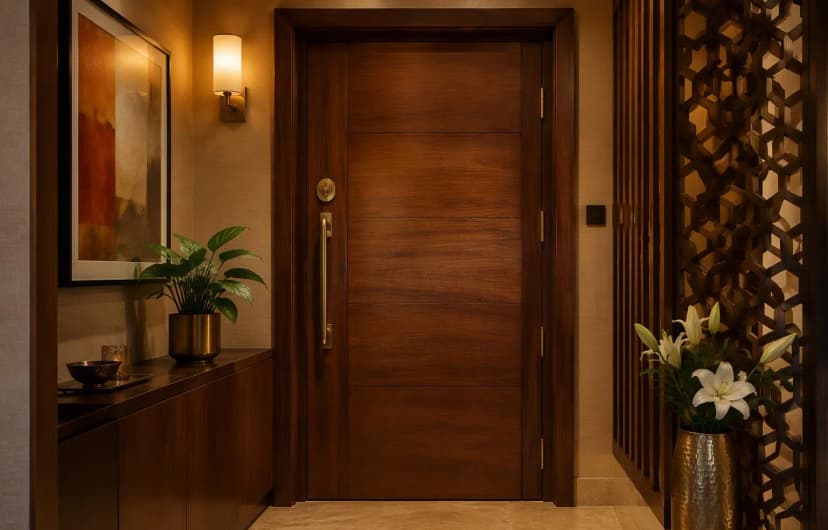
Put the three mechanisms together and the house sort-of specs itself:
| Door | Primary lock | Second lock | Budget, 2026 |
|---|---|---|---|
| Main entrance (35–45 mm) | 6-lever mortise handle set | Night latch or 1CK deadbolt rim lock | ₹2,000–₹4,700 |
| Main door under 32 mm | No mortise, too thin | Deadbolt rim lock + night latch | ₹1,100–₹3,100 |
| Terrace / balcony door | Mortise or heavy cylindrical | , | ₹850–₹2,200 |
| Bedrooms | Cylindrical key-in-lever | , | ₹835–₹1,400 |
| Bathrooms | Cylindrical privacy set (no key) | , | ₹500–₹900 |
| Pooja / store room | Rim lock or cylindrical | , | ₹550–₹1,200 |
| Grill gate / metal door | Rim lock (surface mount) | Padlock hasp if needed | ₹550–₹1,545 |
7. Making a main door genuinely secure
The lock is only one of four things a forced-entry attack tests. In order of how often each one actually fails:
- The frame and strike plate. A 6-lever deadbolt thrown into a softwood frame held by 25 mm screws is decoration. Fit a heavy strike plate with 75 mm screws that bite into the wall structure behind the frame, not just the architrave.
- The door itself. Hollow-core flush doors flex and split around any lock. A main door should be solid teak, solid-core engineered wood, or metal-skinned, and at least 35 mm thick, which conveniently is also what a mortise lock demands.
- The lock. 6 levers minimum on a mortise case; a deadbolt throw of at least 20 mm; hardened inserts if you can get them. Then add a second, independent locking point, a deadbolt rim unit or night latch, so one defeated lock doesn't open the door.
- The hinges. On an outward-opening door, exposed hinge pins are a faster way in than picking any lock. Use hinges with non-removable or grub-screwed pins, or fit hinge bolts.
This is also the practical answer to "smart lock or normal lock?", every decent smart lock on the Indian market is either a mortise case with electronics, a rim-mounted retrofit, or a cylindrical replacement. The mechanics underneath are the same three types in this article, so the same door-thickness and security rules apply before you spend on fingerprints and Wi-Fi.
8. The 8-point lock buyer's checklist
Before you pay for any door lock
Eight checks that take two minutes in the shop, and save a second trip.
- Measure your door thickness. Under 35 mm rules out mortise locks, go cylindrical or rim and don't let anyone talk you into "adjusting".
- Count the levers. 6 levers minimum for a main-door mortise lock; 4-lever budget cases belong on interior doors at most.
- Check the deadbolt throw. At least 20 mm, and ask whether the bolt has hardened anti-saw inserts.
- Match the backset and case size. Labacha, for instance, offers 85×45, 85×50, 85×60 and 60×72 mm cases, your carpenter must know which before chiselling.
- Plan the second locking point. Main door gets a night latch or deadbolt rim unit in addition to the mortise set, buy both together so finishes match.
- Feel the lever action. Gritty or loose movement in the shop means a worn-feeling lock at home within a year.
- Check the finish against your humidity. Coastal and high-humidity cities: brass or stainless internals, not plain mild steel.
- Keep the keys and card. Note the key number; branded locks can supply duplicates by number long after the shop has forgotten you.
Frequently asked questions
What is a mortise lock and how is it different from a cylindrical or rim lock?
A mortise lock is a heavy lock case that sits inside a rectangular pocket chiselled into the edge of the door, with the latch and deadbolt thrown from inside that case. A cylindrical lock is a lighter key-in-lever chassis that slides through two round holes bored through the face of the door. A rim lock (night latch) is a box screwed onto the inside surface of the door that shoots a latch into a staple on the frame. Mortise is the strongest and most durable of the three; cylindrical is the easiest to install; rim is the quickest add-on for a door that already exists.
Which lock is best for a main door in India?
A mortise lock with a deadbolt, ideally paired with a night latch or a deadbolt rim lock as a second locking point. The mortise case gives you the strongest mechanical hold inside the door stile, and the second surface lock adds an independent bolt that a crowbar attack on one lock will not defeat. For a typical 32–45 mm teak or engineered-wood main door, a 6-lever mortise lock set costs ₹850–₹3,200 in 2026.
How much does a mortise lock cost in India in 2026?
A branded 6-lever mortise lock body starts around ₹850–₹1,000, and complete mortise handle sets run ₹1,300–₹2,200 from brands like Harrison and Godrej. Premium and designer sets, for example Labacha mortise lock sets in 85×45, 85×50, 85×60 and 60×72 mm sizes, are priced around ₹3,200 per set. Budget ₹150–₹400 extra per door for a carpenter to chisel the mortise pocket.
Is a night latch enough for a main door?
On its own, no. A standard night latch throws a single spring latch that can be slipped or forced more easily than a deadbolt. It is fine as a convenience lock and as a second locking point, but the primary security of a main door should come from a deadbolt, either inside a mortise lock or a rim lock with a proper deadbolt action. Many Indian homes sensibly run both: mortise as the main lock, night latch for quick locking from inside.
What door thickness do I need for a mortise lock?
A mortise lock needs a door at least 35 mm thick (about 1⅜ inches); 38–45 mm is comfortable for full-size 6-lever cases. Fitting a deep mortise case into a door thinner than 32 mm leaves too little timber around the pocket and can weaken or even split the stile. Thin flush doors of 25–30 mm should use cylindrical locks or surface-mounted rim locks instead.
Can I install a cylindrical lock myself?
Yes, that is its biggest advantage. A cylindrical lock needs only two round holes: a 54 mm hole through the door face and a 25 mm hole in the edge for the latch. Both are drilled with standard hole saws, most locks ship with a paper template, and a careful DIYer can fit one in 30–45 minutes. Mortise locks, by contrast, need a precise rectangular pocket chiselled into the door edge, a carpenter's job.
Which is more secure: mortise lock or cylindrical lock?
A mortise lock. The lock case sits deep inside the door stile, the deadbolt is longer and heavier, and quality mortise locks carry 6 or more levers with hardened anti-saw bolts. Cylindrical locks put most of their mechanism in the lever handle itself, which is exposed on the face of the door and is the first thing a forced-entry attack targets. For anything you truly want to keep shut, main doors, terrace doors, store rooms, mortise wins.
What is the difference between a rim lock and a night latch?
A night latch is the most common type of rim lock in India: a surface-mounted box with a spring latch you slam shut and open with a key from outside or a knob from inside. "Rim lock" is the broader category, it also includes surface-mounted deadbolts and combination units like the Godrej 1CK that throw both a latch and a deadbolt. All rim locks mount on the door surface, so no pocket is cut into the door at all.