
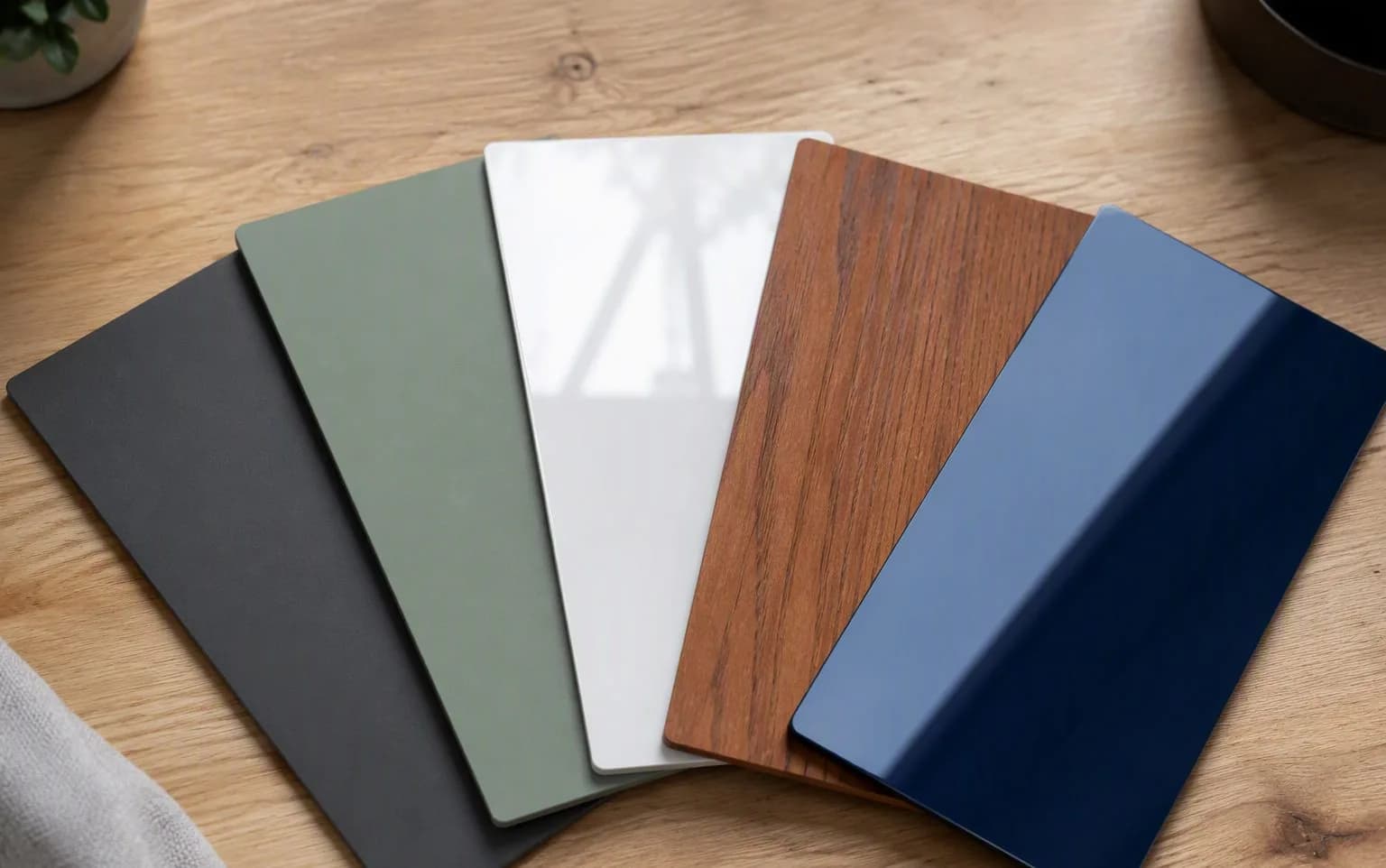
How to Choose the Right Laminates for Your Home Interiors
A laminate catalogue has hundreds of options and zero guidance on order. This is the decision sequence we use on projects — type first, then thickness, finish, colour, quality tests and finally the dealer — so every choice narrows the next one, and you cannot end up with a beautiful sheet that is wrong for the room.
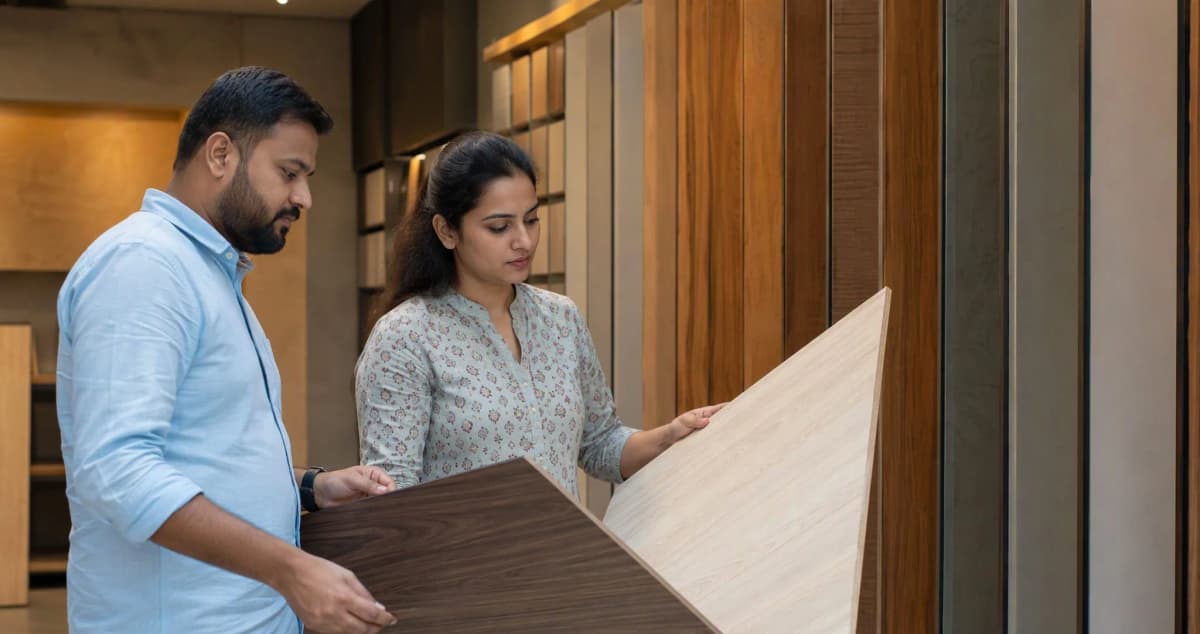
Choose laminates in this order — 1) type: 1 mm HPL (not LPL/melamine board) on every working surface; 2) thickness: 1 mm on shutters and tabletops, 0.8 mm only on low-touch verticals; 3) finish: matte or anti-fingerprint for daily-touch zones, gloss only for dark rooms and feature panels; 4) colour: matched to the room's light and your city's dust, judged on a full-size sample in daylight; 5) quality: BIS IS 2046 mark plus the coin, bend and batch tests at the shop; 6) dealer: brand + decor code + thickness written on the invoice. Budget ₹900–1,850 per 8×4 sheet for workhorse 1 mm HPL.
1. Step 0: HPL or LPL — know what you're buying
Before colour or brand, one technical distinction decides how long your furniture lasts — and it is rarely explained at the counter.
HPL (high-pressure laminate) is a standalone sheet: 6–8 layers of resin-soaked kraft paper, a printed decorative layer and a clear wear layer, fused under roughly 1,400 psi of pressure. It is bonded to your plywood or MDF afterwards by the carpenter. This is the material behind every quality kitchen shutter and wardrobe face — branded sheets from Greenlam, Merino, Century and Royale Touche are all HPL.
LPL (low-pressure laminate), sold as melamine board or pre-laminated board, is a single decorative paper layer fused directly onto particleboard or MDF in one factory pressing. It arrives pre-finished, costs less, and has its place — cabinet interiors, shelves, budget furniture. But the wear layer is a fraction as thick, and it shows: HPL survives 10,000+ abrasion test cycles; standard LPL manages 150–500. On a daily-touch surface, that is the difference between 15 years and 5.
| Factor | HPL (the sheet) | LPL / melamine (pre-laminated board) |
|---|---|---|
| Construction | 6–8 kraft layers + decorative + wear layer, pressed at ~1,400 psi | Single decorative paper fused to board in one press |
| Abrasion resistance | 10,000+ cycles | 150–500 cycles |
| Best use | Kitchen shutters, wardrobe faces, tabletops, desks | Cabinet interiors, shelves, low-touch budget furniture |
| Edge finish | Needs edge banding (2 mm, matched code) | Needs edge banding; edges are the weak point |
| Lifespan on working surfaces | 12–18 years | 3–7 years |
The practical rule: if hands touch it daily, it is HPL territory. The smart budget move is not all-LPL — it is HPL on faces and shutters, LPL or liner inside the carcass where nobody looks and nothing scrapes.
2. Thickness: the number that decides lifespan
Within HPL, thickness is the single most important line on your order — and the most commonly shaved to win a quote.
| Thickness | Grade | Right for | Wrong for |
|---|---|---|---|
| 0.6–0.72 mm | Liner | Cabinet backs, drawer bottoms, hidden interiors | Anything visible or touched daily |
| 0.8 mm | Standard decorative | Low-touch verticals, inner panels, budget furniture | Kitchen shutters, tabletops |
| 1 mm | Decorative HPL | The workhorse: shutters, wardrobe faces, drawers, desks | — |
| 1 mm+ textured/synchronized | Premium HPL | Hero surfaces: TV walls, headboard panels, pooja units | Beside the hob (grease traps in grooves) |
| 6–12 mm | Compact laminate | Bathroom cladding, self-supporting panels, partitions | Standard furniture (overkill and costly) |
The trap to know: a common quote-padding trick is pricing a premium 1 mm brand but installing a cheaper 0.8 mm sheet. The defence takes ten seconds — check the thickness and brand marking on the back of the full sheet before it is cut. After pasting, nobody can tell; before pasting, anybody can.
3. Finish: matte, gloss or textured, by room
Finish decides how the surface looks after a year of fingerprints, dust and wiping — not just on installation day.
Matte and anti-fingerprint are the default right answer for Indian homes. They hide fingerprints, fine scratches and the dust that every Indian city delivers daily; they read calm under warm lighting; and they have dominated design for exactly these reasons. Bedrooms, wardrobes, kitchen base cabinets, study desks — matte everywhere hands go.
Gloss is a tool, not a default. Its reflectivity genuinely helps small or dark kitchens feel bigger and brighter, and it wipes clean easily — but it shows every smudge and micro-scratch on daily-touch surfaces. Keep it on upper cabinets and feature panels; keep it off base cabinets in homes with kids.
Textured and synchronized finishes are where premium money is best spent. A synchronized woodgrain — texture pressed to match the printed grain — is the closest laminate gets to real timber, and fluted panels add architectural depth to TV walls and headboards. One rule: texture and grease do not mix. Keep fluted and deep-texture finishes out of the hob zone.
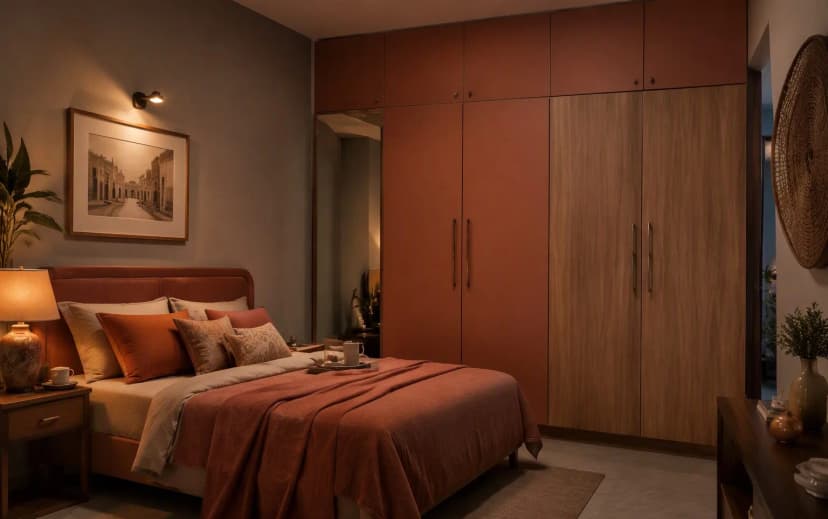
For what is currently in fashion across these finishes — fluted panels, super-matte, earth tones — our laminate trends guide maps the palette. Choose finish by function first, then check that your pick is also current.
4. Colour: matched to light, dust and room size
Colour is where most buyers start — and where most regrets live. Three physical factors matter more than preference.
Light. North-facing and low-light rooms in Bangalore apartments need help: light neutrals, warm whites and pale woodgrains lift them, while dark shades make them cave-like. Bright, sun-filled rooms can carry deep walnut, charcoal and terracotta without shrinking.
Dust and maintenance. Pure white shows every mark; very dark shades show every dust film within hours of cleaning. The forgiving middle — medium woodgrains, greige, sage, warm neutrals — looks presentable longest between wipes. In a city with Bangalore's construction dust, this is not a small consideration.
Scale. Bold colours and busy patterns belong on accent panels, not whole rooms. The reliable whole-home composition is three laminate families: one woodgrain, one solid neutral, one accent.
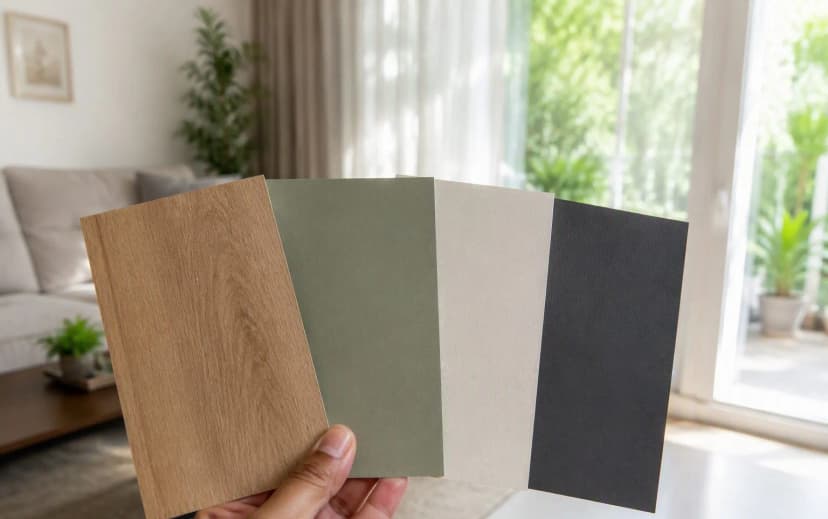
The non-negotiable test: never finalise a colour from a catalogue chip, a phone photo or showroom lighting. Take full-size samples home, hold them against the wall at the time of day you use the room most, and live with them for a day. Showroom lights lie; your window does not.
5. 5 quality tests you can do at the shop
BIS IS 2046 is the Indian standard a genuine HPL sheet must meet. These five checks take five minutes and catch what the stamp alone cannot.
-
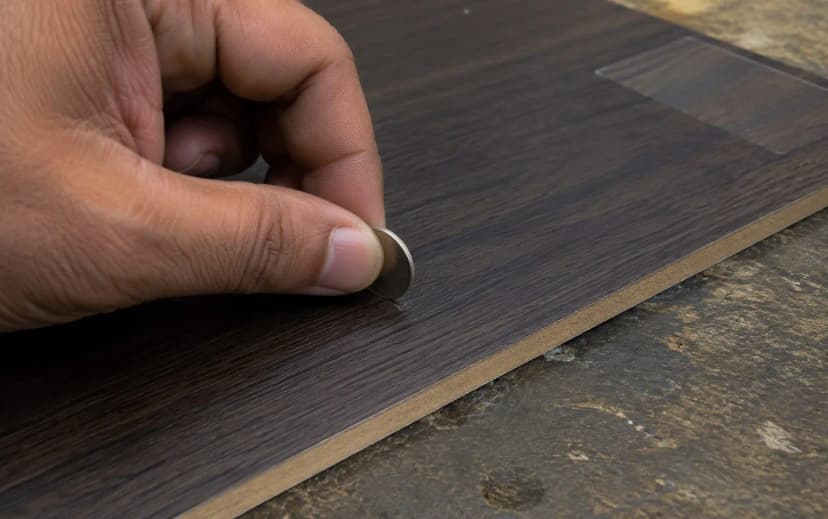
The coin scratch test
Drag a coin edge across the surface with moderate pressure. A branded 1 mm HPL wear layer shows no white line; a white streak means a soft, thin wear layer that will scratch within months of daily use.
-
The edge and corner check
Inspect the sheet's corners and edges. Brittle, chipping decorative paper at the edges signals a low-grade batch or aged stock — both fail early on furniture corners.
-
The daylight batch check
Hold two sheets of the same decor code side by side in natural daylight. Shade variation between batches is common in local brands; if these two differ, your 40-sheet order will too. Order all sheets from one batch.
-
The flex test
Bend the sheet gently. Good 1 mm HPL flexes slightly and springs back; a sheet that snaps or creases has poor resin saturation and will crack during pasting and routing.
-
The flatness check
Lay the sheet flat on the floor or a table. Bowing or ripples mean bad storage — moisture has already entered the stack — and a warped sheet never pastes flat.
Add the paperwork test: the invoice should name brand + range + decor code + thickness per line item. "Laminate sheets — 30 nos" protects nobody but the seller. The full dealer-verification routine is in our supplier selection guide, and the mistakes these tests prevent are catalogued in common laminate selection mistakes.
6. Budget planning and prices
Laminate pricing is quoted per 8×4 ft sheet (32 sq ft). Here is what the bands look like in Bangalore this year, and how to allocate budget across a home.
| Category | Price per sheet | ≈ per sq ft | Where to use |
|---|---|---|---|
| Liner grade (0.6–0.72 mm) | ₹300–450 | ₹9–14 | Hidden interiors only |
| Standard decorative (0.8 mm) | ₹350–1,200 | ₹11–38 | Low-touch verticals, budget furniture |
| 1 mm HPL (Greenlam, Merino, Century) | ₹900–1,850 | ₹28–58 | All working surfaces — the default |
| Premium woodgrain (1 mm) | ₹1,400–2,900 | ₹44–91 | Hero shutters, statement panels |
| Textured / synchronized (1 mm+) | ₹1,800–3,600 | ₹56–113 | TV walls, headboards, pooja units |
| Acrylic-finish | ₹2,300–5,500+ | ₹72–172+ | Mirror-gloss showpiece panels only |
A typical 2BHK needs 30–60 sheets across kitchen, wardrobes and TV unit. The allocation that makes sense: workhorse 1 mm HPL for 80% of surfaces, premium or synchronized sheets for the 2–3 hero surfaces visitors actually notice, liner grade inside every carcass. That mix lands most 2BHK laminate budgets between ₹45,000 and ₹90,000 — and the upgrade from standard to premium on just the visible surfaces adds only ₹10,000–20,000.
The 10-point laminate selection checklist
- Type decided first — 1 mm HPL on every working surface; LPL/melamine only inside carcasses and on shelves.
- Thickness matched to surface — 1 mm on shutters, drawers, tabletops; 0.8 mm only on low-touch verticals; liner only hidden.
- Finish matched to room — matte/anti-fingerprint where hands go; gloss only in dark rooms and on uppers; texture away from the hob.
- Colour tested in your own light — full-size samples at home, in daylight, at the hour you use the room.
- Palette capped at three families — one woodgrain, one solid, one accent across the home.
- Quality tests done at the shop — coin test, edge check, batch check, flex test, flatness check.
- BIS IS 2046 mark verified — plus brand authenticity marking or QR on the full sheet before cutting.
- Invoice names brand + decor code + thickness per line — no generic entries.
- All sheets from one batch — shade drift between batches is real; order the whole room together.
- 1–2 spare sheets stored flat — decors get discontinued; spares are the cheapest repair insurance.
Frequently asked questions
How do I choose the right laminate for my home interiors?
Follow a six-step order: decide the laminate type first (1 mm HPL for working surfaces), set thickness by surface, pick the finish family by room (matte for touch zones, gloss only for light-starved or feature areas), choose colour by the room's natural light and dust exposure, verify quality with the BIS IS 2046 mark and simple shop tests, then verify the dealer — decor code and thickness on the invoice, authenticity marking checked on the full sheet.
What is the difference between HPL and LPL laminate?
HPL (high-pressure laminate) is a separate 0.6–1.5 mm sheet made by pressing multiple resin-soaked kraft paper layers under extreme pressure, then bonded to a board. LPL (low-pressure laminate, also called melamine board) is a single decorative paper layer fused directly onto particleboard or MDF in one pressing. HPL is far more durable — over 10,000 abrasion cycles versus 150–500 for LPL — and is the right choice for kitchen shutters, wardrobes and any surface you touch daily.
What thickness of laminate should I choose?
1 mm HPL for every working surface: kitchen shutters, wardrobe faces, drawer fronts, tabletops and study desks. 0.8 mm is acceptable for low-touch verticals like cabinet backs and inner panels. 0.6–0.7 mm sheets are liner grade, only for hidden interiors. Never let a supplier substitute liner on a surface your hands touch daily — it chips and lifts at edges within a few years.
Which laminate finish is best: matte, gloss or textured?
Matte and anti-fingerprint finishes are the best default for Indian homes: they hide fingerprints, dust and fine scratches, and suit bedrooms, wardrobes and kitchen base cabinets. Gloss earns its place in small dark kitchens and on upper cabinets where reflectivity adds light. Textured and fluted finishes belong on feature walls and low-grease zones — grooves near a hob collect oil. Synchronized textures are the premium pick for hero surfaces.
How do I choose laminate colours for Indian homes?
Match colour to light and lifestyle, not just taste. Light neutrals and soft whites open up small or dim rooms; medium woodgrains (oak, walnut) are the most forgiving all-round choice and hide dust and scratches best; dark shades work as accents in well-lit rooms but show dust in cities like Bangalore; pure white and high-gloss demand the most cleaning. Always judge a full-size sample in your own room's daylight.
How can I check laminate quality at the shop?
Five quick checks: look for the BIS IS 2046 standard mark, run a coin edge across the surface with moderate pressure (branded 1 mm sheets should not show a white line), inspect corners for brittle or chipping decorative paper, hold two sheets of the same code together in daylight to catch batch variation, and flex the sheet slightly — a good 1 mm sheet bends a little without snapping. A brittle or warped sheet signals poor resin or bad storage.
How much do good laminates cost in India?
In Bangalore, workhorse 1 mm HPL from brands like Greenlam, Merino and Century costs ₹900–1,850 per 8×4 sheet (₹28–58 per sq ft). Premium woodgrains run ₹1,400–2,900, textured and synchronized ranges ₹1,800–3,600, and acrylic-finish sheets ₹2,300–5,500+. Liner-grade sheets at ₹300–450 are only for hidden interiors. A typical 2BHK needs 30–60 sheets in total.
Which laminate brand is best in India?
Greenlam, Merino, Century and Royale Touche all meet BIS IS 2046 and offer comparable quality at equivalent price ranges — the honest differentiators are the specific design, stock availability, warranty terms and your dealer, not the logo. Choose the exact decor and thickness you need from whichever brand stocks it locally, and verify authenticity markings and the decor code on the invoice.
Let us build the laminate schedule for your home
Evospace specs every project room by room — type, thickness, finish and decor code — and verifies sheets at delivery, so what you approved at the showroom is what goes on your walls.
Get a Free Material Consultation




