
Top Benefits of Using Laminates in Interior Design
Walk into almost any new Indian home and the surfaces you see — wardrobes, kitchen shutters, TV panels, study desks — are laminate. That dominance is not a trend or a compromise; it is the result of seven very practical advantages. Here is what laminates genuinely do well, what they cost, and where they honestly fall short.
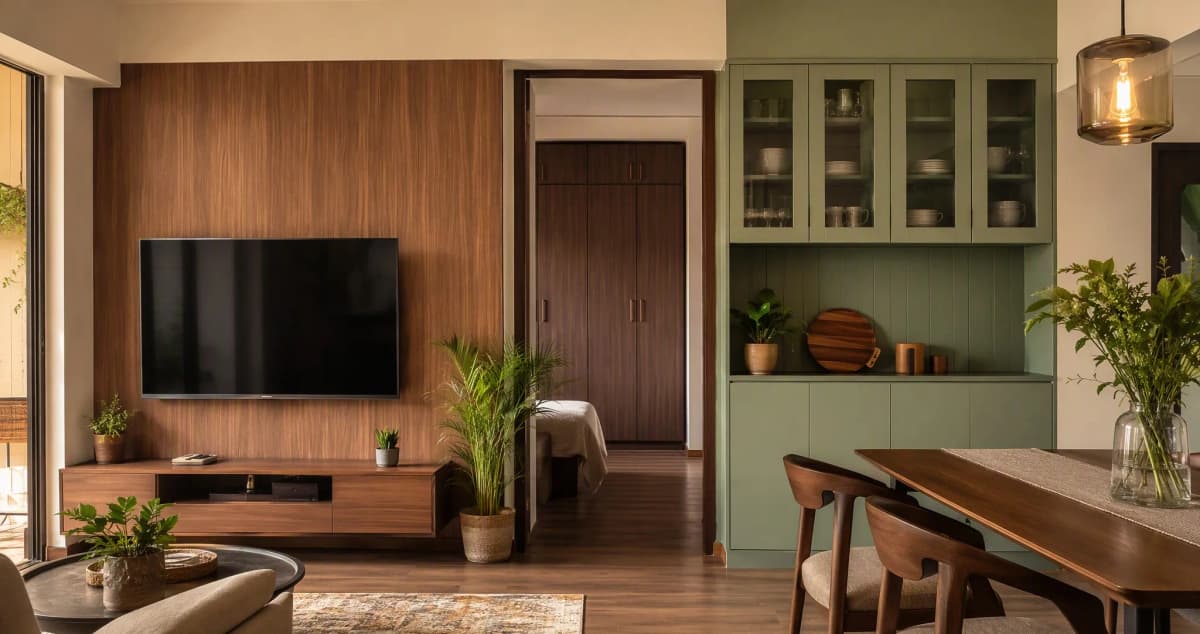
The seven real benefits of laminates in interior design: huge design variety (woodgrains, stones, solids, textures), strong scratch and stain resistance, wipe-clean maintenance with no polishing ever, a non-porous hygienic surface, moisture resistance that suits Indian kitchens, roughly a third the finished cost of veneer or PU paint (₹120–350 per sq ft installed), and sheet-to-sheet consistency with no knots, warping or colour surprises. The honest trade-offs: deep damage cannot be polished out, and edges need proper banding. Specified correctly, laminate is the most cost-efficient durable surface in Indian interiors.
1. Why laminates became India's default surface
Fifty years ago, Indian furniture was solid wood and polish. Today it is engineered board and laminate — and the shift happened for reasons, not fashion.
A laminate sheet is a sandwich: layers of kraft paper soaked in resin, a printed decorative layer, and a clear wear layer on top, all fused under high pressure (which is why the good ones are called HPL — high-pressure laminate). The result is a surface that behaves like a manufactured product should: every sheet identical, every performance number known, every colour repeatable. Natural materials cannot promise any of that.
That engineering is what made laminates the surface of choice for modular kitchens, wardrobes and office furniture across India. Indian conditions are hard on finishes — monsoon humidity, summer heat, dust, heavy cooking with oil and turmeric, households where furniture works hard for decades. Laminates were essentially designed for this brief: a sealed, wipeable, scratch-tolerant skin over an affordable engineered core. The sections below break down exactly what that gets you — and Section 05 covers where the material honestly falls short.
2. The 7 real benefits, explained
Not marketing claims — each benefit has a practical consequence in daily life.
1. Design variety that no natural material can match
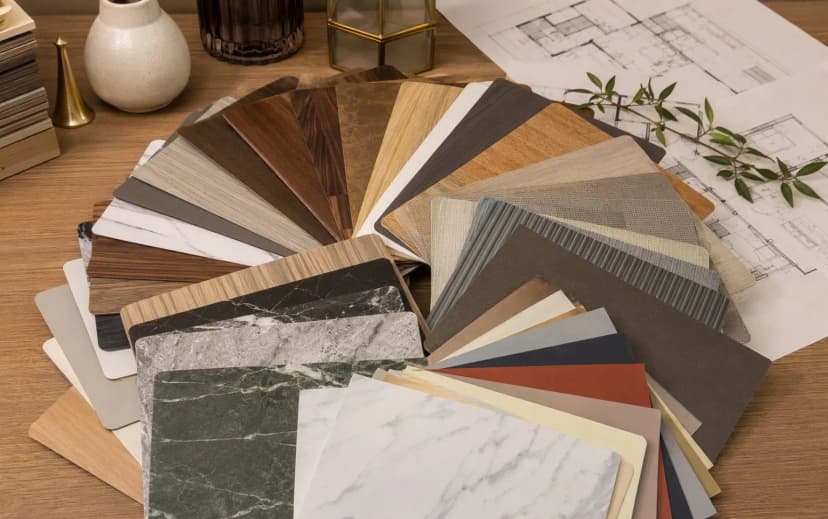
One brand's catalogue alone offers hundreds of decors: oak, walnut and teak woodgrains, marble and slate prints, solid colours from putty to terracotta, fabric textures, metallics, and fluted or synchronized surfaces where the texture matches the printed grain. You can run a warm woodgrain through the living room, an earthy solid in the kitchen and a soft suede finish in the bedroom — all from the same material family, all coordinated. Natural wood offers a dozen species; laminates offer a library.
2. Scratch and stain resistance for real households
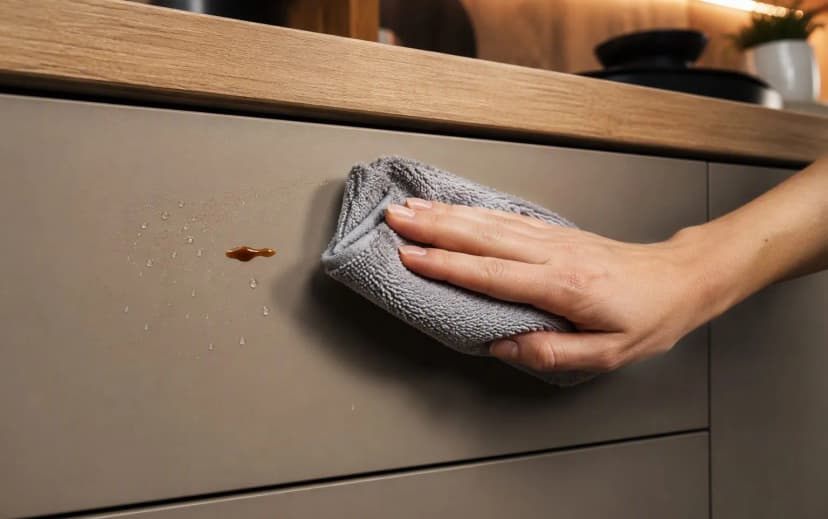
The clear wear layer on a 1 mm HPL sheet is engineered for abrasion: keys dropped on the study desk, toys dragged across the toy cabinet, utensils knocked against kitchen shutters. Turmeric, coffee and oil — the three stains that destroy painted and polished surfaces in Indian kitchens — sit on top of a laminate instead of soaking in, and wipe off. This is why laminates dominate high-traffic zones: schools, hospitals, offices and, above all, Indian kitchens.
3. Maintenance that is genuinely just a damp cloth
No polish, no wax, no annual refinishing, no special cleaners. A soft cloth, water and a drop of mild soap is the complete maintenance routine for the life of the furniture. Compare that with veneer (re-polishing every few years), PU paint (touch-ups after chips) or solid wood (oiling, termite vigilance). Over 15 years, the maintenance saving alone runs into tens of thousands of rupees — and hours of your life back.
4. A hygienic, non-porous surface
Laminate's sealed surface gives bacteria and mould nothing to grip or soak into — a wiped laminate is actually clean, not just moved-around dirty. That matters on kitchen counters, kids' room furniture and wardrobes in humid coastal cities. Several Indian brands now add antibacterial treatments to their ranges, and because the surface is non-porous, those claims rest on a genuinely cleanable base.
5. Moisture resistance where Indian homes need it
The decorative surface itself is effectively waterproof — steam, splashes and wet hands do it no harm, which is why laminate is the standard skin for kitchen shutters and bathroom vanities. The important nuance: the system is only as moisture-proof as its weakest layer. Water entering through a raw edge or a moisture-prone board underneath defeats the best laminate. Pair it with BWR or BWP board and 2 mm edge banding, and the wet zone problem is solved. Our kitchen plywood guide covers the base-board half of this equation.
6. Premium looks at a fraction of the cost
A synchronized woodgrain laminate delivers the look of walnut at roughly ₹120–350 per sq ft finished — against ₹500–1,000+ for real veneer, ₹600–1,200 for PU paint, and ₹350–700 for acrylic. On a full 2BHK's wardrobes and kitchen, choosing laminate over veneer typically saves ₹1.5–3 lakh while reducing maintenance for the next decade and a half. That gap is the single biggest reason laminates dominate Indian interiors.
7. Consistency — no knots, no warping, no surprises
Sheet forty looks like sheet one. There is no grain that runs the wrong way, no knot to cut around, no panel that drinks stain differently, no monsoon movement. For large projects — a full home, an office floor, a retail fit-out — that predictability is a genuine benefit: the design you approve on a sample is the design that arrives on the wall, and a damaged shutter years later can often be matched by decor code. Which is also why keeping 1–2 spare sheets and the decor code on file is the cheapest insurance in interiors — a point we expand on in our guide to common laminate selection mistakes.
3. Laminate vs veneer, PU paint and acrylic
The four finishes Indian homeowners actually choose between, on the factors that decide satisfaction after year two.
| Factor | HPL Laminate | Natural Veneer | PU Paint | Acrylic |
|---|---|---|---|---|
| Finished cost / sq ft | ₹120–350 | ₹500–1,000+ | ₹600–1,200 | ₹350–700 |
| Scratch resistance | High — engineered wear layer | Low-moderate — soft wood under polish | Low — chips on impact | Moderate — scratches show on gloss |
| Moisture behaviour | Surface sealed; edges need banding | Bubbles/cracks with humidity swings | Good if system is intact; chips expose board | Good; edges are the weak point |
| Maintenance | Damp cloth only | Periodic re-polishing | Chip touch-ups, careful cleaning | Soft cloth; fingerprints on gloss |
| Repair of damage | Replace the sheet (easy with decor code) | Can be sanded and re-polished | Spot repair possible, colour-matching hard | Replace the panel |
| Lifespan in Indian homes | 12–18 years | 15+ years if maintained | 5–8 years before visible wear | 8–12 years |
| Best used for | Kitchens, wardrobes, all daily-use furniture | Statement pieces, low-wear zones | Custom-colour feature shutters | Glossy upper cabinets, showpiece panels |
The honest reading of this table: veneer wins on authenticity, PU on colour freedom, acrylic on mirror gloss — but laminate is the only finish that scores well on every row at once, which is exactly what a whole home of furniture needs. Most well-designed Bangalore homes end up hybrid: laminate everywhere the family touches daily, with veneer or acrylic reserved for one or two statement surfaces. For what is currently in fashion within laminate itself, see our laminate design trends.
4. Where laminates work best, room by room
The benefits land differently in each room — here is where the material earns its keep.
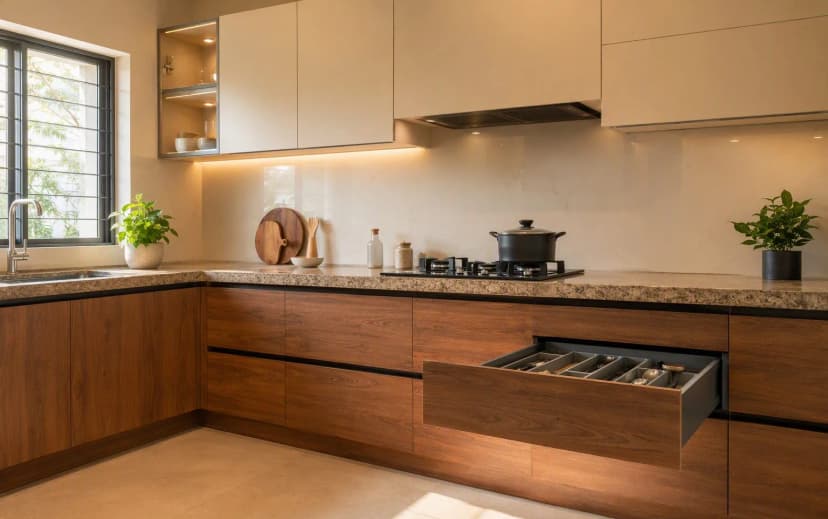
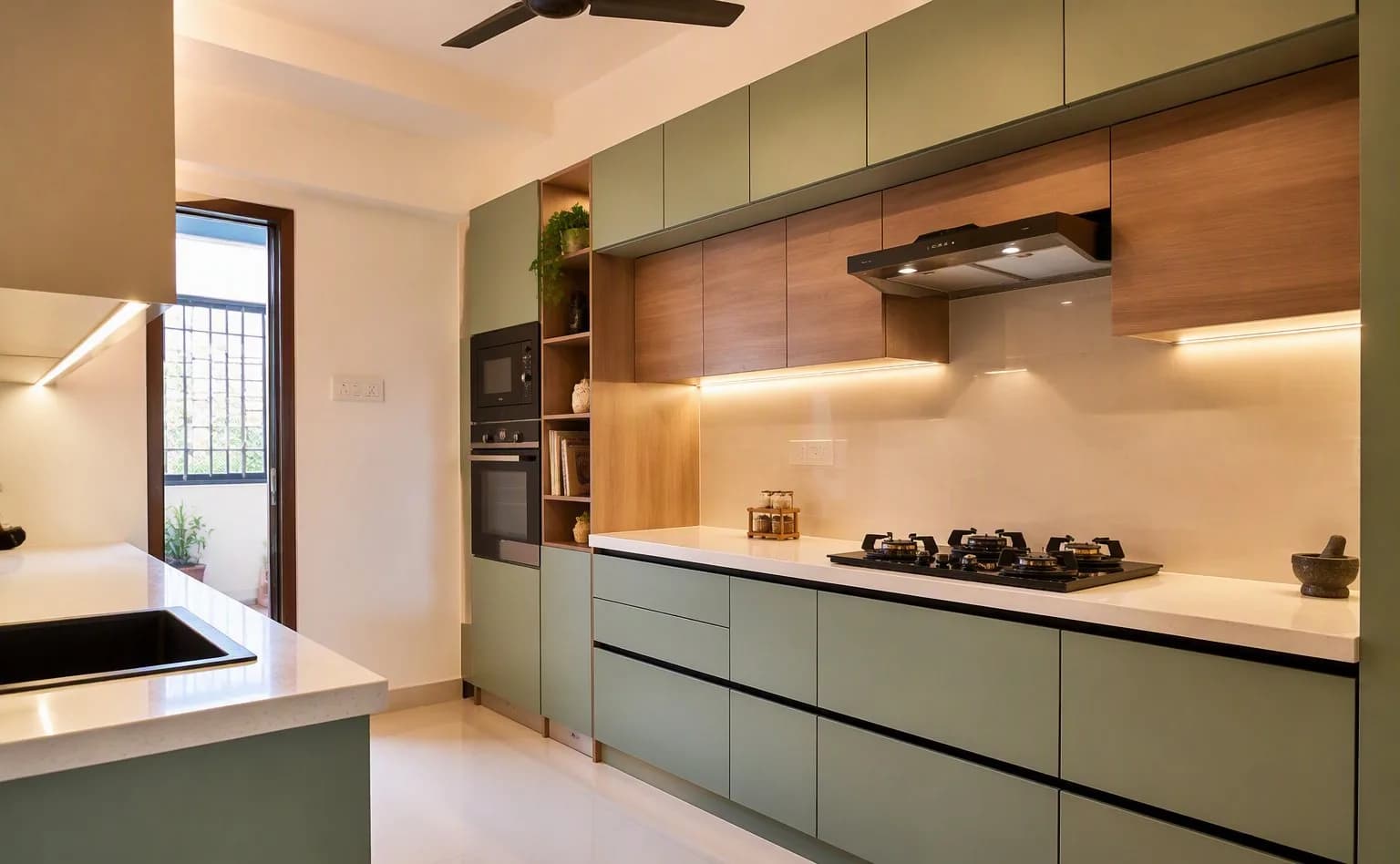
Kitchen. The strongest case. Oil, steam, turmeric and daily wiping destroy paint and polish within years; 1 mm matte or anti-fingerprint HPL takes all of it and wipes clean. Pair with BWP board and sealed edges, keep deep textures away from the hob, and the surface outlasts the countertop. The full material spec is in our modular kitchen materials guide.
Wardrobes and bedrooms. Daily-touch surfaces that benefit from fingerprint-resistant matte and suede finishes. Woodgrain laminates give the warmth of timber without its movement, termites or polishing schedule — and sliding wardrobe doors in laminate stay light enough for the hardware to last.
Living and dining. TV feature walls, crockery units and panelling are where the design variety pays off — fluted panels, stone looks and coordinated woodgrains create the room's character at a fraction of stone or solid timber cost.
Study and home office. Desks take scratches from laptops, stationery and coffee mugs daily — precisely the abuse laminate's wear layer is rated for. A matte neutral desk surface also reduces glare during video calls.
Kids' rooms. The hygiene and wipe-clean benefits matter most here: crayon, food and sticky hands come off a matte solid laminate without drama, and there are no splinters, no polish fumes, no re-finishing while the room is in use.
Offices and commercial spaces. Consistency across dozens of identical workstations, plus the durability to survive public-level traffic, is why almost every Indian office interior is a laminate interior.
5. The honest limitations
A guide that only lists benefits is an advertisement. Laminates have four real limitations — all manageable, none worth hiding.
Deep damage cannot be polished out
Unlike wood or veneer, a badly scratched or chipped laminate cannot be sanded and refinished — the sheet or panel gets replaced. The mitigation is cheap: keep spare sheets and the decor code on file.
FIX: 1–2 spare sheets + decor code recorded
Moisture-resistant, not waterproof
The surface seals perfectly; the edges do not. Water entering through raw or badly banded edges swells the board underneath and the laminate gets blamed. Wet zones need BWP board and 2 mm edge banding, non-negotiable.
FIX: BWP base + sealed edges in wet zones
Cheap grades fail fast
Liner-grade 0.6–0.7 mm sheets on working surfaces chip and lift within years — and give "laminate" a bad name it did not earn. The material only delivers its benefits at the right thickness: 1 mm on anything you touch.
FIX: 1 mm HPL minimum on working surfaces
Print is print, up close
A budget woodgrain viewed from 30 cm reads as a photograph, not timber. Synchronized and premium ranges largely solve this — the texture follows the grain — but if tactile authenticity is the priority on a statement piece, that is veneer territory.
FIX: synchronized ranges for hero surfaces
The pattern: three of these four limitations are solved at the buying stage — thickness, edge banding, grade — not by avoiding the material. Our laminate mistakes guide is essentially a manual for not tripping over them.
Is laminate right for your project? 8 checks
- Daily-use surfaces — kitchen shutters, wardrobes, desks: laminate is the default correct answer.
- Budget matters — you want the premium look at a third of veneer or PU cost.
- Low maintenance is a priority — no polishing, no touch-ups, just a damp cloth.
- Kids, pets or heavy cooking — the household will be hard on surfaces.
- Humidity or coastal climate — you need a surface that ignores moisture swings (with banded edges).
- Large or multi-room project — you need sheet-to-sheet consistency and repeatable colours.
- One authentic timber statement piece — consider veneer for that piece only; laminate around it.
- You can spec it properly — 1 mm HPL, matched edge banding, decor code on the invoice. If yes, laminate will serve you 12–18 years.
Frequently asked questions
What are the main benefits of using laminates in interior design?
The seven main benefits are: unmatched design variety (woodgrains, stones, solids, textures), strong scratch and stain resistance, easy maintenance with just a damp cloth, a non-porous hygienic surface, moisture resistance suitable for kitchens, significant cost savings over veneer and PU finishes, and consistent appearance across large projects with no natural defects.
Are laminates durable enough for Indian homes?
Yes. Branded 1 mm HPL from manufacturers like Greenlam, Merino and Century is engineered with a resin-impregnated wear layer that resists scratches, stains and daily abrasion. Correctly installed on a BWR or BWP board with proper edge banding, laminate surfaces stay presentable for 12 to 18 years in Indian conditions — longer than most paint and polish finishes.
Is laminate better than veneer for furniture?
For most Indian homes, yes. Laminate costs roughly a third of veneer per square foot finished, needs no polishing, resists scratches and moisture far better, and survives humidity swings that make veneer bubble and crack. Veneer wins only on one count: the authentic depth and uniqueness of real wood grain, on statement pieces where maintenance is acceptable.
Are laminates waterproof?
Laminates are moisture-resistant, not waterproof. The surface itself shrugs off spills, splashes and steam, which is why laminates work well in kitchens. But water entering through unsealed edges or a swollen board underneath causes failure — which is why edge banding and a BWR or BWP base board matter as much as the laminate itself.
Are laminates good for kitchen cabinets?
Laminates are the most practical finish for Indian kitchen cabinets. Matte or anti-fingerprint 1 mm HPL handles daily oil splatter, steam and scrubbing better than paint, veneer or acrylic, wipes clean with a damp cloth, and costs ₹120–350 per sq ft finished versus ₹350–1,200 for acrylic or PU. Avoid deep textures right beside the hob, where grease settles in grooves.
How much do laminates cost in India?
In Bangalore, liner-grade sheets cost ₹300–450 per 8×4 sheet, standard 0.8 mm decorative laminates ₹350–1,200, workhorse 1 mm HPL from major brands ₹900–1,850, premium woodgrains ₹1,400–2,900, and textured or synchronized ranges ₹1,800–3,600. Finished and installed, laminate shutters run roughly ₹120–350 per sq ft — a third the cost of veneer or PU paint.
What are the disadvantages of laminates?
Laminates have four honest limitations: deep scratches and chips cannot be polished out (the sheet must be replaced), they are moisture-resistant rather than waterproof at edges, cheap liner-grade sheets fail quickly if misused on working surfaces, and a poor print can look flat next to real wood up close. All four are manageable with correct specification.
How do I maintain laminate furniture?
Wipe with a soft damp cloth and mild soap — that is the entire routine. Avoid abrasive powders and steel scrubbers that dull the wear layer, wipe spills promptly, use trivets under hot vessels, and keep dark finishes out of prolonged direct afternoon sun. No polishing, waxing or refinishing is ever needed, which is the core maintenance advantage over wood and veneer.
Get the surfaces of your home right
Evospace specifies laminates by decor code, thickness and edge band — matched to each room's real workload — so the benefits in this guide are the ones you actually live with.
Get a Free Material Consultation




