10 Types of Wall Moulding for Living Rooms & Bedrooms: Designs, Materials & Prices
From classic POP cornices to trendy fluted WPC panels — every wall moulding type explained for Indian homes, with real costs, the right material for your city's climate, and a checklist that helps you decide without regret.
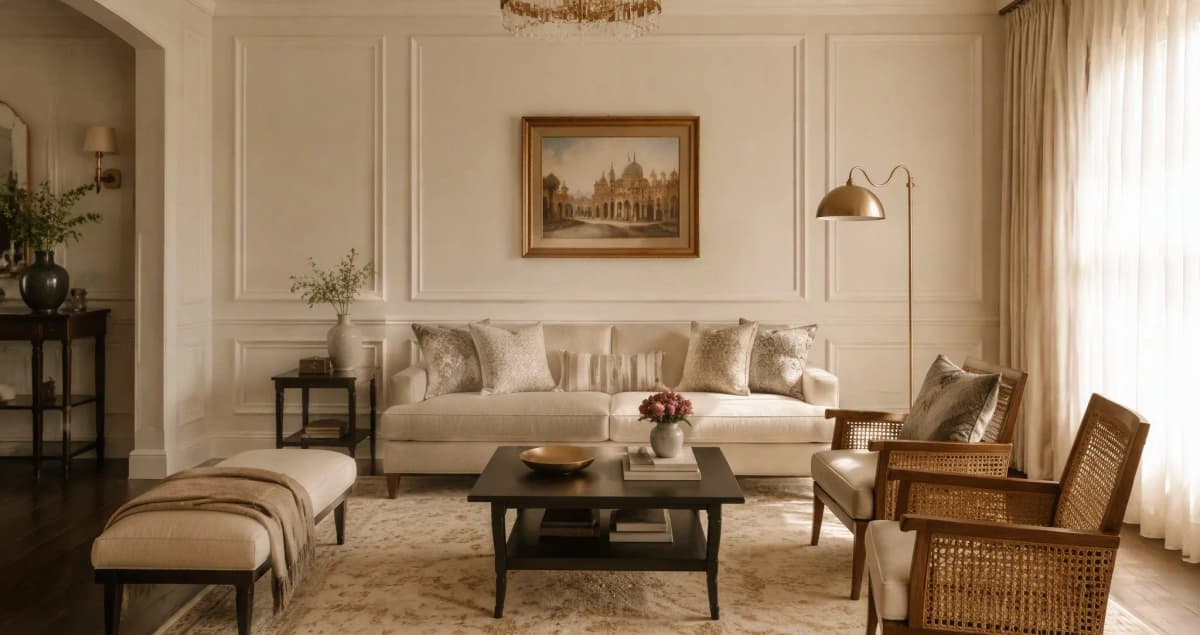
The most popular wall moulding types for Indian living rooms and bedrooms are picture frame (box trim), crown/cornice, wainscoting, chair rail, board-and-batten, beadboard, shiplap, fluted louvre panels, geometric 3D panels and skirting. For tight budgets, POP or HDHMR picture frame trim costs just ₹30–₹120 per running foot; for TV accent walls, fluted WPC panels (₹200–₹600 per sq ft) give a premium wood look that survives Indian humidity. If your wall has any history of seepage, avoid POP and MDF — choose WPC, PVC or PU instead.
What Is Wall Moulding — and What Does It Actually Do?
Wall moulding (also spelled "molding") is decorative trim — strips of POP, gypsum, wood, MDF, polyurethane (PU), PVC or WPC — fixed onto walls or ceilings to add depth, frames and architectural character to a flat surface. What started centuries ago as a way to hide joints and protect plaster is today one of the most affordable ways to make an ordinary Indian flat look custom-designed.
Beyond looks, moulding quietly solves real problems Indian homeowners face:
- Bare builder-finish walls. A ₹5,000–₹8,000 picture-frame moulding job can make a standard 2BHK wall look like a designer project — far cheaper than texture paint or wallpaper.
- Wall protection. Wainscoting and chair rails shield the lower wall from furniture scuffs, children's handprints and daily wear — useful in high-traffic living rooms and dining spaces.
- Visual height and proportion. Crown moulding draws the eye upward; vertical battens and fluted panels make low ceilings feel taller.
- Hiding wires and flaws. Panelled TV walls conceal cabling; moulding layouts can disguise minor undulations in old plaster.
- Resale and rental appeal. A moulded accent wall photographs beautifully and instantly upgrades how a flat is perceived.
The 10 Types of Wall Moulding, Explained for Indian Homes
Each type below covers what it is, where it works best, and what it typically costs in India. Prices are indicative market ranges, vary by city, and usually exclude 18% GST — treat them as budgeting anchors, not quotations.
1. Picture Frame Moulding (Box Trim)
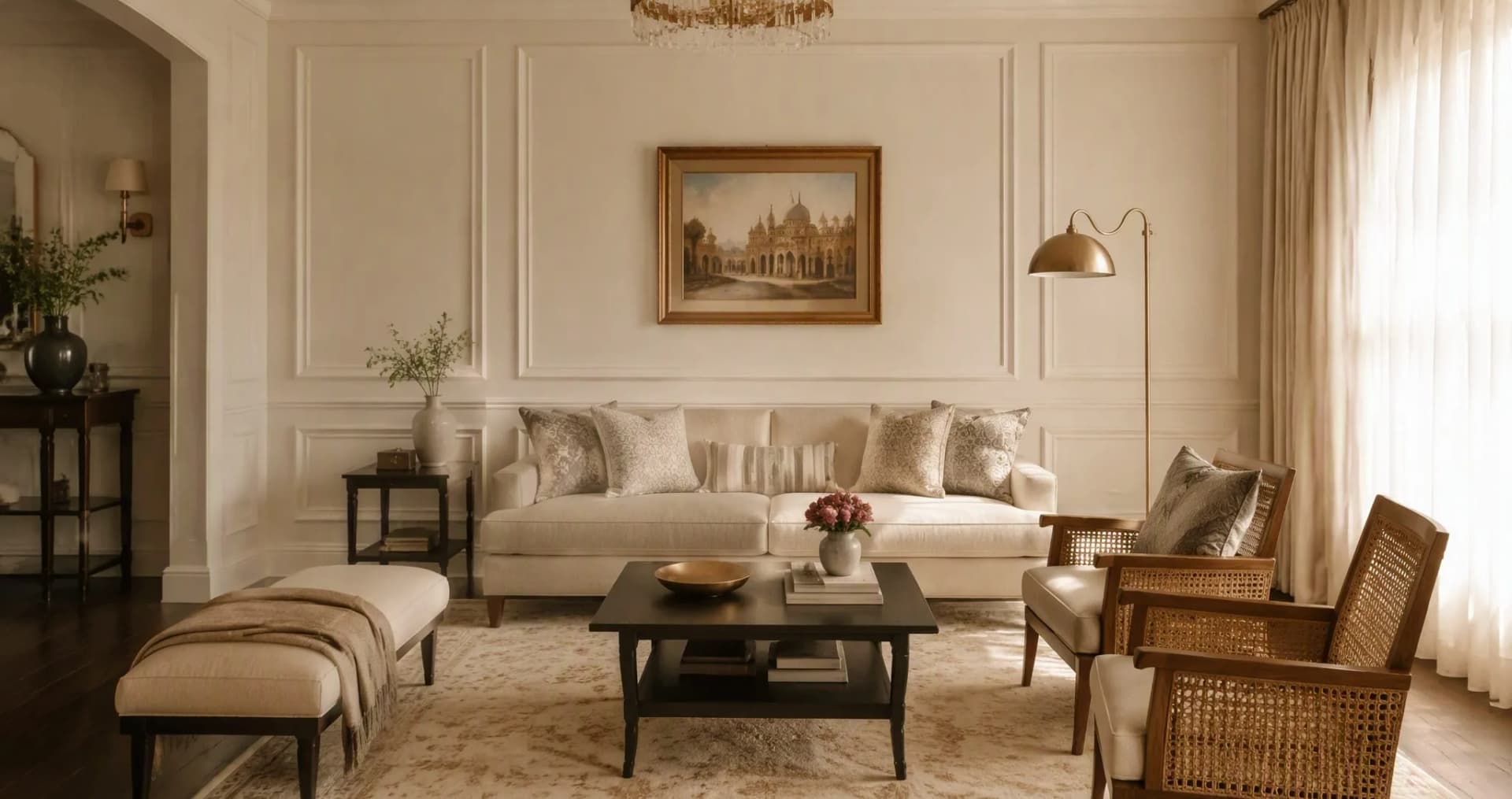
The single most popular wall moulding in Indian homes today. Slim trim strips are fixed in rectangular or square "frames" directly onto a painted wall, creating that Parisian/neoclassical panelled look you've seen all over Instagram. It's purely decorative, quick to install and works on any smooth wall.
Best for: Sofa walls, headboard walls, dining rooms, foyers — almost anywhere.
Typical Indian cost: ₹30–₹120 per running foot for HDHMR/POP trim strips, plus ₹50–₹150 per piece for paint/polish and roughly ₹50 per panel for installation. A standard 10 ft × 9 ft wall usually lands between ₹5,000 and ₹8,000 all-in.
Pro tip: For frames wider than ~72 mm, installers often recommend POP mouldings over MDF strips because they hold crisp detail at larger profiles.
2. Crown Moulding (Cornice)
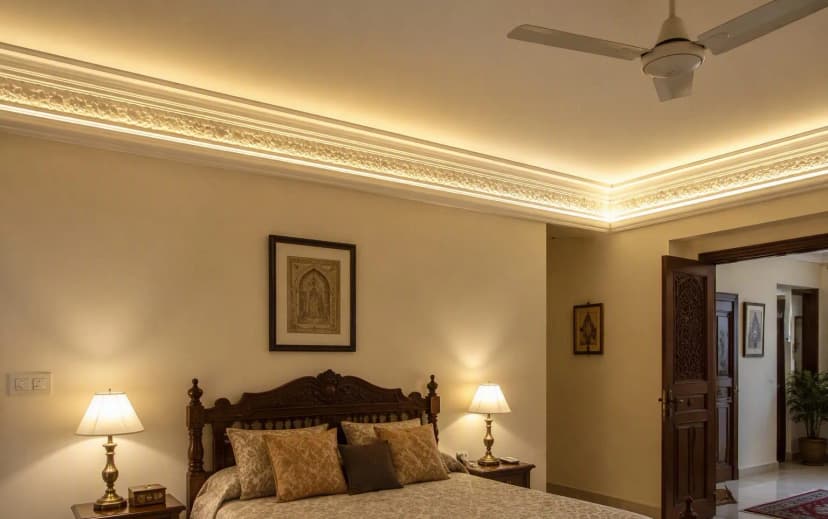
Crown moulding runs along the joint where the wall meets the ceiling, softening the hard angle and adding a finished, "designed" feel. In India this is traditionally done in POP cornices, often paired with cove lighting in the false ceiling. Profiles range from a simple 2-inch cove to ornate layered cornices.
Best for: Living rooms and master bedrooms with ceilings of 9 ft or more; pairs beautifully with chandeliers and cove LEDs.
Typical Indian cost: POP cornice work is usually bundled with false ceiling rates — POP work runs about ₹70–₹120 per sq ft of ceiling area, and cove provisions add roughly ₹95–₹105 per running foot including lighting channel.
3. Wainscoting
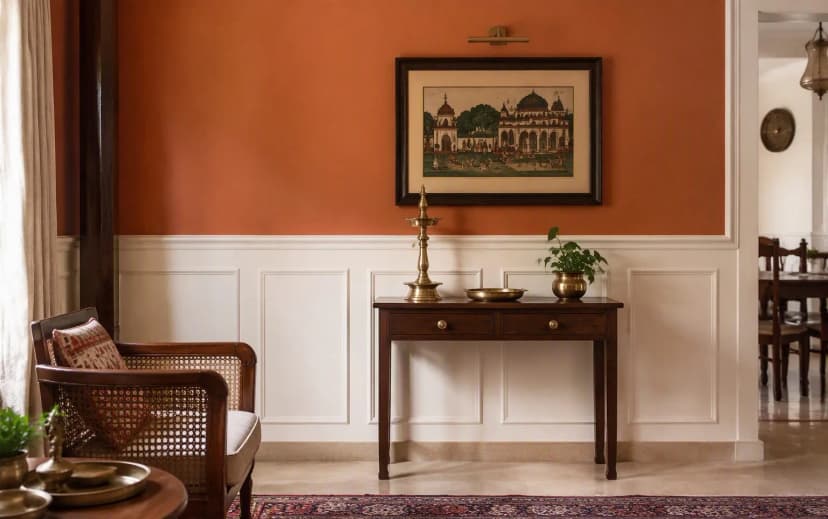
Wainscoting is decorative panelling that covers the lower third of the wall (from floor to roughly chair height, 32–36 inches), finished with a chair rail on top and skirting at the bottom. Originally invented to protect plaster walls from chair backs, it now adds instant heritage character — and genuinely protects the part of your wall that takes the most abuse.
Best for: Living rooms, dining areas, staircases, corridors and kids' rooms. Excellent behind dining tables and sofa backs.
Typical Indian cost: ₹135–₹200 per running foot for solid wood or MDF trims with paint finish.
4. Chair Rail Moulding
A single horizontal trim running around the room at about one-third of the wall height. Functionally it stops chair backs from denting the wall; decoratively it lets you split the wall into two colours or materials — paint below, wallpaper above, or vice versa.
Best for: Dining rooms and formal living rooms; also the finishing top edge of wainscoting.
Typical Indian cost: Usually priced as trim by the running foot — ₹30–₹120 per rft depending on profile and material.
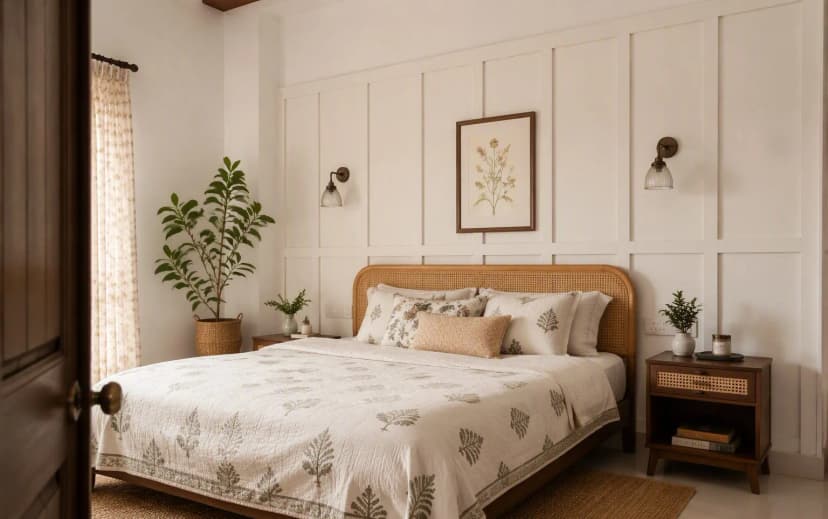
5. Board and Batten
Wide boards mounted on the wall with slim vertical (or grid) strips — the "battens" — covering the joints. The repeated vertical shadow lines add rhythm and texture, and vertical layouts visually lift low ceilings. It's the go-to style for modern-farmhouse and Japandi-inspired Indian interiors.
Best for: Bedroom accent walls, entryways, and full-height treatments in rooms with low ceilings.
Typical Indian cost: ₹750–₹950 per sq ft with paint finish, as part of the beadboard/board-and-batten family.
6. Beadboard
Narrow vertical planks with a small rounded groove ("bead") between each board. Charming and cottage-like, beadboard is most often used as wainscoting in bathrooms and kitchens because the tongue-and-groove boards handle light moisture better than flat trim — especially in PVC.
Best for: Bathroom and kitchen wainscoting, kids' rooms, cozy reading corners.
Typical Indian cost: ₹750–₹950 per sq ft installed with paint finish.
7. Shiplap
Horizontal (or vertical) planks joined with a rabbet so they overlap into clean, airtight ridges. Shiplap brings a relaxed coastal/farmhouse texture and has become a favourite for TV walls and headboard walls in urban Indian apartments.
Best for: TV backdrops, headboard walls, study nooks — anywhere you want texture without ornament.
Typical Indian cost: ₹900–₹1,000 per sq ft.
8. Fluted / Louvre Panels (WPC & Charcoal)
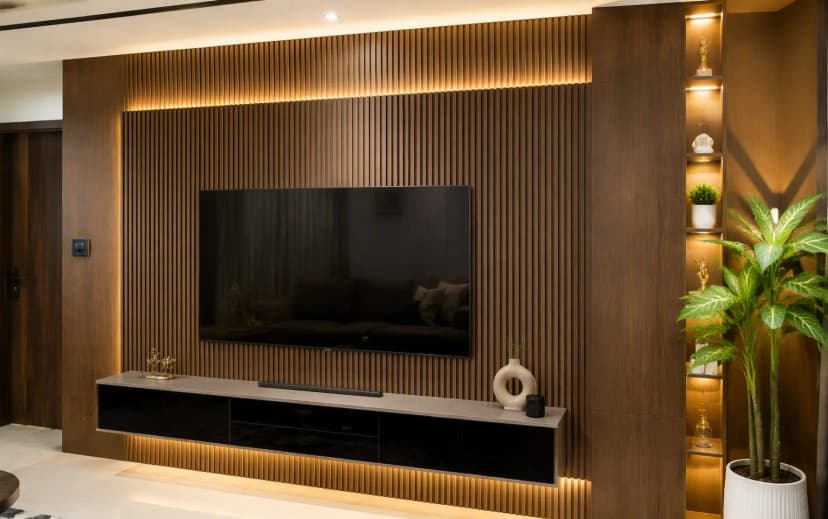
The breakout star of Indian interiors. Pre-finished panels with vertical reeded grooves — usually WPC (wood-plastic composite) or charcoal/PS — deliver a warm wood look that is waterproof, termite-proof and wipeable. They're the default choice for TV walls in new Indian apartments, often with concealed LED backlighting.
Best for: TV units, foyer walls, bed back panels; WPC works even on mildly damp walls where wood would fail.
Typical Indian cost: WPC fluted panels ₹200–₹600 per sq ft (material); charcoal/PS panels ₹120–₹400 per sq ft; individual charcoal moulding accent strips ₹90–₹999 per piece. Professional installation adds ₹30–₹60 per sq ft.
9. Geometric & 3D Panels (CNC-Cut MDF)
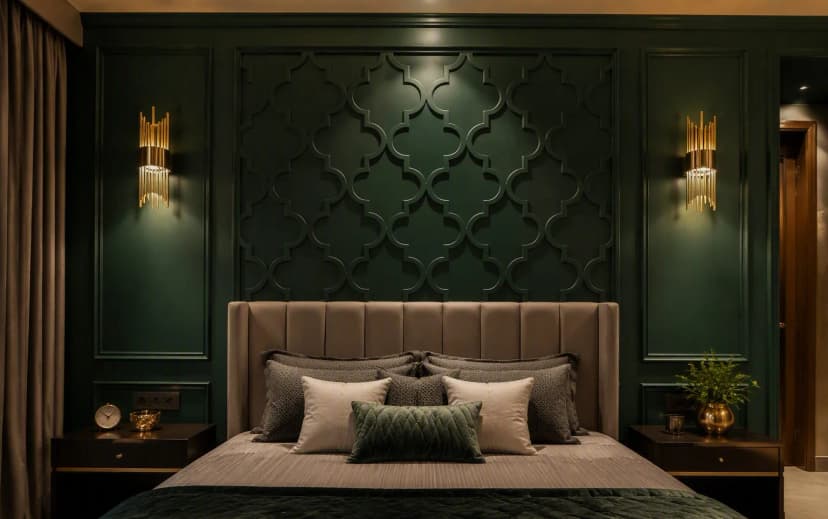
MDF or plywood panels CNC-routed into custom patterns — jaali-inspired grids, waves, concentric geometries, 3D reliefs — then Duco or PU painted. Unlike catalogue panels, CNC work can be cut to your exact design, which is why it's the favourite for statement headboard walls and premium TV units.
Best for: Statement walls in master bedrooms and living rooms; anywhere you want a one-of-a-kind pattern.
Typical Indian cost: Geometric wooden panels ₹500–₹750 per sq ft; custom CNC-routed panels ₹400–₹2,000+ per sq ft depending on depth and finish (Duco ₹150–₹300 per sq ft extra; PU polish ₹250–₹600 per sq ft extra).
10. Skirting (Baseboard) & Picture Rail
The supporting cast that completes every moulding scheme. Skirting covers the wall–floor joint, hides tile edges and protects against mop splashes (PVC and WPC skirting are ideal for Indian wet mopping). Picture rail — a slim trim near the ceiling — lets you hang art from hooks without drilling into walls, a clever option for rental homes.
Best for: Skirting in every room; picture rail in living rooms, galleries and rented apartments.
Typical Indian cost: ₹30–₹150 per running foot depending on material and profile; decorative charcoal skirting series go up to ~₹999 per piece.
Materials in India: POP vs Gypsum vs PU vs MDF vs PVC vs WPC
The moulding style decides how your room looks; the material decides how long it lasts in Indian conditions. The same picture-frame design can be made in POP, polyurethane or HDHMR — and behave very differently through a Mumbai monsoon or a Delhi summer. Here's the honest comparison.
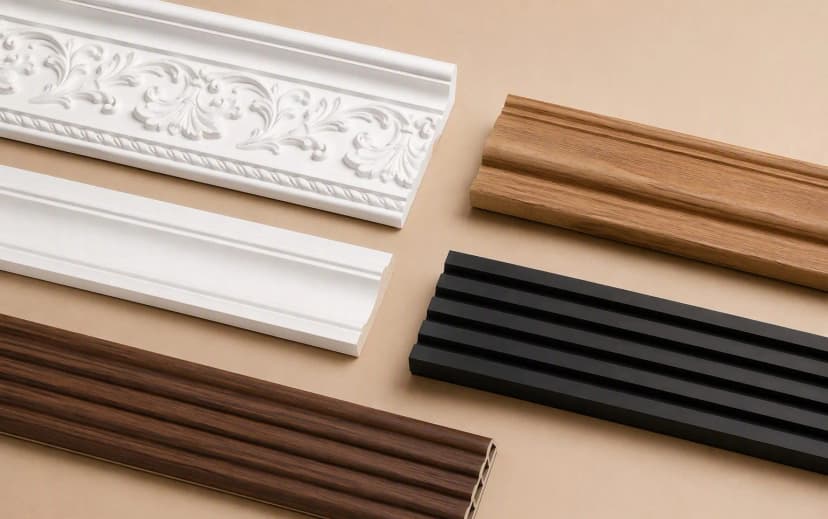
| Material | Typical price | Moisture resistance | Termite-proof | Lifespan | Best for | Watch out for |
|---|---|---|---|---|---|---|
| POP (Plaster of Paris) | ₹30–₹120 per rft (trims); ceiling work ₹70–₹120/sq ft | Low — absorbs moisture, can crack | Yes | 15–20 yrs in dry rooms | Ornate cornices, curved and intricate classic designs | Messy, slow, skill-dependent; avoid damp walls |
| Gypsum | ₹80–₹150 per sq ft | Moderate (moisture-resistant boards available) | Yes | 20–30 yrs | Clean modern profiles, quick turnkey jobs | Less flexible for ornate curves; needs trained installers |
| Polyurethane (PU) | ₹80–₹250 per rft | Excellent | Yes | 15–20 yrs | Lightweight cornices & frames in humid coastal cities | Needs neat mitred joints; premium profiles cost more |
| MDF / HDHMR | ₹150–₹400 per sq ft (panels); trims ₹30–₹120 per rft | Poor (MDF) / Good (HDHMR) | Only if treated — choose HDHMR | 8–12 yrs (dry, AC rooms) | CNC geometric panels, painted trims in dry bedrooms | Swells permanently if wet; never on seepage-prone walls |
| PVC | ₹50–₹350 per sq ft | Excellent — fully waterproof | Yes | 10–15 yrs | Budget walls, bathrooms, rental-friendly upgrades | Can look plasticky; deforms near high heat |
| WPC | ₹200–₹600 per sq ft | Very good | Yes | 15–20 yrs | Fluted TV walls, humid regions, balconies | Heavier — needs sturdy batten framing |
| Charcoal / PS panels | ₹120–₹400 per sq ft; moulding pieces ₹90–₹999 | Good | Yes | 10–15 yrs | Modern textured feature walls, accent strips | Quality varies widely between brands — check density |
| Solid wood (teak etc.) | ₹500–₹2,500 per sq ft | Moderate — needs polish & treatment | No — needs anti-termite treatment | 20+ yrs with care | Luxury villas, heritage looks | Costly; polishing and termite maintenance |
The one-line rule: dry, air-conditioned rooms → POP, gypsum or MDF all work. Humid coastal city, ground floor, or any wall with a damp history → WPC, PVC or PU only.
Best Wall Moulding Ideas for Living Rooms
The living room carries the most visual weight in an Indian home — it's where guests sit and where your festival gatherings happen — so this is where moulding earns its keep. Three proven approaches:
- The neoclassical sofa wall. Floor-to-ceiling picture frame moulding in a tone-on-tone scheme (moulding and wall in the same colour). Add a single large artwork or mirror in the centre frame. Works with both contemporary and traditional Indian furniture, from cane chairs to Chesterfields.
- The fluted TV wall. WPC or charcoal louvre panels behind the TV with a floating console and warm LED backlight. Hides set-top-box wiring, absorbs the visual bulk of a big screen, and wipes clean after Diwali dusting.
- The heritage wainscot. Wainscoting on the lower third with a richer colour above — sage, terracotta or indigo — for a colonial-bungalow feel that pairs beautifully with brass lamps, tanjore art and wooden furniture.
Ceiling pairing: a slim POP cornice with cove lighting frames the whole scheme. In living rooms with 10 ft+ ceilings, a layered crown profile adds genuine grandeur for very little money.
Best Wall Moulding Ideas for Bedrooms
In bedrooms, moulding should calm, not shout — put it on the headboard wall and keep profiles slimmer than in the living room.
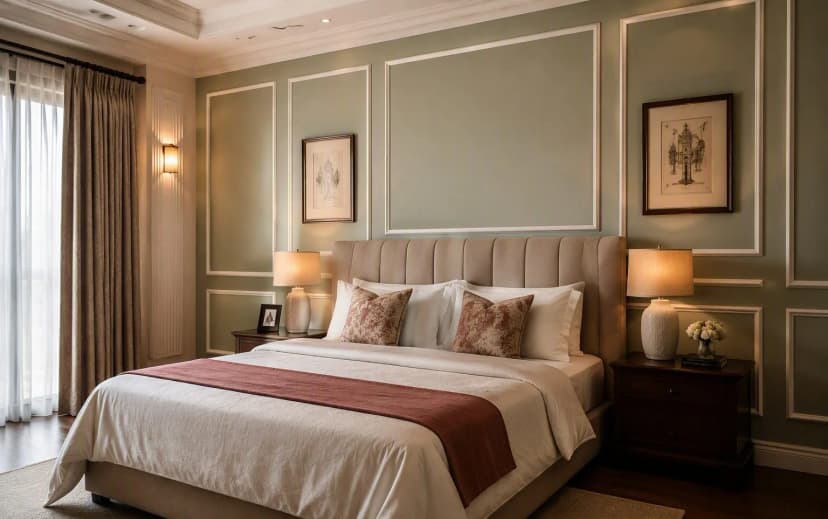
- Headboard frame wall. Two or three picture-frame panels centred on the bed, painted one shade deeper than the wall. Frames the bed like artwork and removes the need for a heavy headboard.
- Vertical board-and-batten. Full-height battens in soft white or greige visually lift the 9-ft ceilings common in Indian apartments.
- CNC 3D statement panel. For master bedrooms, a PU-painted geometric panel behind the bed with warm sconces delivers a boutique-hotel feel.
- Kids' rooms: beadboard or wainscoting on the lower wall survives crayons, cycles and cricket-ball impacts far better than bare paint — and repainting one strip is cheap.
Vastu-friendly note: if your household follows Vastu, moulding is an easy way to introduce recommended calming colours (soft greens, creams, light blues) on specific walls without committing the whole room.
Designed for India: Seepage, Termites, Dust & Small Rooms
Most moulding advice online is written for American drywall homes. Indian apartments have RCC walls, monsoon humidity, wet mopping and termites — here's what changes.
Fix the source first — waterproofing, plumbing, exterior crack repair — then wait a full dry cycle before installing anything. On walls with a damp history, use only WPC, PVC or PU. POP powder absorbs moisture and MDF swells permanently; both will bubble and crumble on a damp wall within one or two monsoons.
POP, gypsum, PU, PVC, WPC and charcoal are all termite-proof by nature. If you want real wood or MDF, choose HDHMR boards or chemically treated timber and ask for the treatment certificate — non-negotiable for ground-floor and independent houses.
Most apartment walls are reinforced concrete or brick — you'll need a hammer drill with masonry bits. Never anchor heavy panels into a POP false-ceiling layer or partition; always fix into the structural wall behind it.
Ornate POP profiles collect dust in their crevices — in cities with high dust or near construction, choose simpler profiles you can wipe. WPC and PVC panels win for daily wet-mop-and-wipe Indian housekeeping.
Tone-on-tone colour (moulding painted the same shade as the wall), slim 25–50 mm profiles, and vertical lines. Skip wide ornate frames and dark contrasts — they visually shrink the room.
Adhesive-mounted PU or PVC trims and picture rails (hang art without drilling) give the moulded look with minimal damage. Confirm with your landlord before fixing anything with screws.
Wall Moulding Cost in India: Price Tables + a Worked Example
A finished moulded wall in India costs anywhere from ₹5,000 (simple POP picture frames) to ₹2 lakh+ (solid wood or CNC luxury panels) — the material and the wall size decide almost everything. Use these tables to budget before you call a contractor.
| Type | Indicative cost | Unit |
|---|---|---|
| Picture frame / trim strips (POP, HDHMR) | ₹30 – ₹120 | per running foot |
| Chair rail | ₹30 – ₹120 | per running foot |
| Wainscoting | ₹135 – ₹200 | per running foot |
| Skirting / baseboard | ₹30 – ₹150 | per running foot |
| Geometric wooden / CNC panels | ₹500 – ₹2,000+ | per sq ft |
| Beadboard / board & batten | ₹750 – ₹950 | per sq ft |
| Shiplap | ₹900 – ₹1,000 | per sq ft |
| Overlay panels (laminate/veneer) | ₹700 – ₹1,050 | per sq ft |
| Fluted WPC panels | ₹200 – ₹600 (material) + ₹30–₹60 install | per sq ft |
| Item | Typical charge |
|---|---|
| Back-ply / batten framing | ₹50 – ₹70 per sq ft |
| Labour (installation) | ₹20 – ₹150 per sq ft (city & complexity dependent) |
| Paint on trims | ₹100 per piece (paint) / ₹150 per piece (polish) |
| Duco / PU / melamine finish on panels | ₹100 – ₹600 per sq ft |
| Cove / LED provision | ₹50 – ₹105 per running foot |
| Electrical point shifting | ₹600 – ₹750 per point |
| GST | 18% on most quotes |
Worked example: one 10 ft × 8 ft accent wall (80 sq ft)
| Level | What you get | Total estimate |
|---|---|---|
| Budget | POP/HDHMR picture frame moulding + 2 coats paint | ₹5,000 – ₹8,000 |
| Mid-range | WPC fluted panels + aluminium LED channel + backlight | ₹24,000 – ₹48,000 |
| Premium | CNC-routed MDF + PU paint + integrated lighting | ₹64,000 – ₹1,20,000 |
| Luxury | Solid wood panels + carving + concealed lighting | ₹1,00,000 – ₹2,00,000+ |
All figures are market estimates compiled from Indian interior cost guides and vary with city, labour, material brand and finish. Always take 2–3 itemised quotes before finalising.
How to Choose: A 7-Point Decision Checklist
Run through this before you finalise a design or sign a quote — it filters out 90% of regret.
- Moisture check first. Any damp patch, bubbling paint or past seepage on the wall? If yes, only WPC/PVC/PU — and only after waterproofing.
- Match profile size to room size. Rooms under 120 sq ft → slim 25–50 mm trims, tone-on-tone. Large rooms and 10 ft+ ceilings can carry wide, layered profiles.
- Decide the mood. Classic/heritage → picture frame, wainscoting, crown. Modern/minimal → fluted panels, board-and-batten. Statement/luxury → CNC 3D or veneer.
- Fix the budget per wall, not per home. One well-done accent wall beats four cheap-looking ones.
- Ask what's included. Insist the quote names the material (e.g. "WPC, 17 mm"), thickness, framing, finish, electrical cut-outs and GST — "per wall" lump sums hide wastage and shortcuts.
- Plan electricals before installation. Switch plates, sconces, TV points and LED channels must be marked before panels are fabricated, not cut on site.
- Check the installer's past work. Moulding quality lives in the mitred corners — ask to see close-up photos of corner joints from previous projects.
DIY or professional?
Self-adhesive PU/PVC trims and pre-cut wainscot kits are genuinely DIY-friendly for a weekend project. But POP work, CNC panels and full WPC framing need professional installers — heavy panels on RCC walls, precise mitres and electrical coordination are not beginner territory. Professional installation typically adds ₹25–₹100 per sq ft and is worth every rupee for large panels.
Frequently Asked Questions
Which wall moulding is best for a living room in India?
For most Indian living rooms, picture frame (box trim) moulding in POP or PU on the sofa wall gives the best cost-to-elegance ratio — roughly ₹5,000–₹8,000 for a standard wall. For TV accent walls, fluted WPC louvre panels (₹200–₹600 per sq ft) are the most popular choice because they handle humidity, hide wiring and need almost no maintenance.
Which wall moulding is best for bedrooms?
Picture frame moulding or board-and-batten behind the headboard works best. Use MDF/HDHMR trims in air-conditioned rooms, and PU or PVC trims in humid coastal cities. Keep profiles slim (25–50 mm) so the room doesn't feel heavy.
What is the cost of wall moulding per square foot in India?
Simple POP/HDHMR trim strips cost ₹30–₹120 per running foot; wainscoting ₹135–₹200 per sq ft; MDF panels ₹150–₹400 per sq ft; WPC fluted panels ₹200–₹600 per sq ft; solid wood ₹500–₹2,500 per sq ft. Labour adds ₹20–₹150 per sq ft. Prices vary by city and are usually exclusive of 18% GST.
Is POP or gypsum better for wall moulding?
POP is better for ornate, curved and intricate designs, and is cheaper and available everywhere — but it absorbs moisture and can crack on damp walls. Gypsum installs faster with a more uniform finish but suits simpler profiles. In damp-prone homes, PU or PVC trims outlast both.
Can wall moulding be done on a wall with seepage (seelan)?
Fix the seepage source first — no moulding survives an actively damp wall. After waterproofing and a full dry cycle, choose WPC, PVC or PU mouldings. Avoid POP, MDF and solid wood on any wall with a damp history.
Is wall moulding termite-proof?
POP, gypsum, PU, PVC, WPC and charcoal/PS mouldings are naturally termite-proof. Solid wood and plain MDF are not — insist on HDHMR boards or chemically treated wood, especially in ground-floor homes.
Does wall moulding make a small room look smaller?
Not if done right. Paint the moulding the same colour as the wall, keep profiles slim, and use vertical lines (board-and-batten, fluted panels) to make ceilings feel higher. Avoid wide ornate frames and dark contrasts in rooms under 120 sq ft.
How long does wall moulding last in Indian conditions?
WPC lasts 15–20 years, PVC 10–15 years, POP/gypsum 15–20 years in dry rooms (much less with damp), MDF 8–12 years in dry AC rooms, and well-maintained solid wood 20+ years. Repainting every 5–7 years keeps painted mouldings fresh.
Can I install wall moulding myself?
Self-adhesive PU/PVC trims and pre-cut wainscot kits are DIY-friendly. POP work, CNC panels and full WPC framing need professionals — they involve heavy panels, hammer-drilling into RCC walls, precise mitred corners and electrical coordination.
What colour should I paint wall moulding?
Tone-on-tone (same colour as the wall) is the safest and most modern choice — it adds texture without visual noise. For contrast schemes, keep the moulding white or cream against a deeper wall colour (sage, terracotta, navy). Metallic gold or champagne highlights suit ornate classic profiles used sparingly.
Ready to transform your walls?
Share your room dimensions and photos with our design team, and get a moulding plan with materials named, per-sq-ft pricing and zero hidden costs.
Get a Free Design Consultation