
What's Your Style? Defining Kitchen Design Styles for Indian Homes
Contemporary, transitional, traditional Indian, industrial — every style sounds great on Pinterest. This guide defines what each one actually means, what it costs in India, how it holds up to real Indian cooking, and how to pick the one that belongs in your home.
The four styles that matter in India — and who they suit
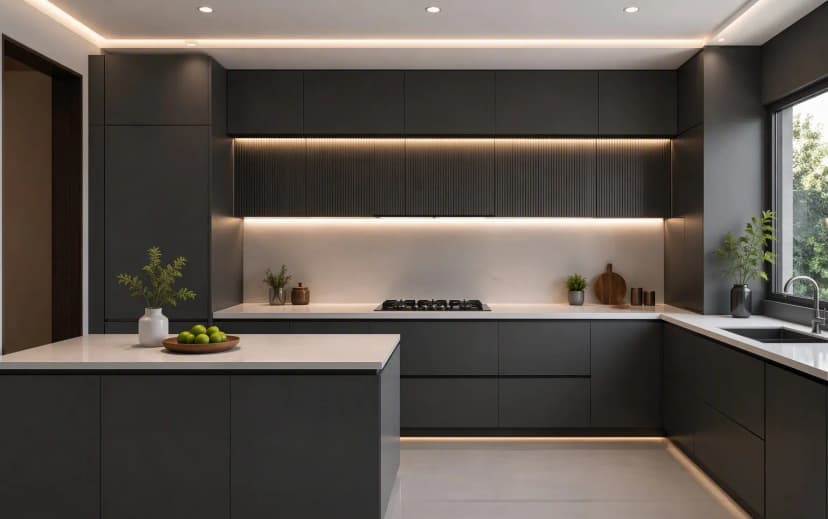
- Contemporary — flat-panel, handleless, sleek. Suits new apartments and minimalists; easiest to clean; ₹1,200–₹2,000/sq ft.
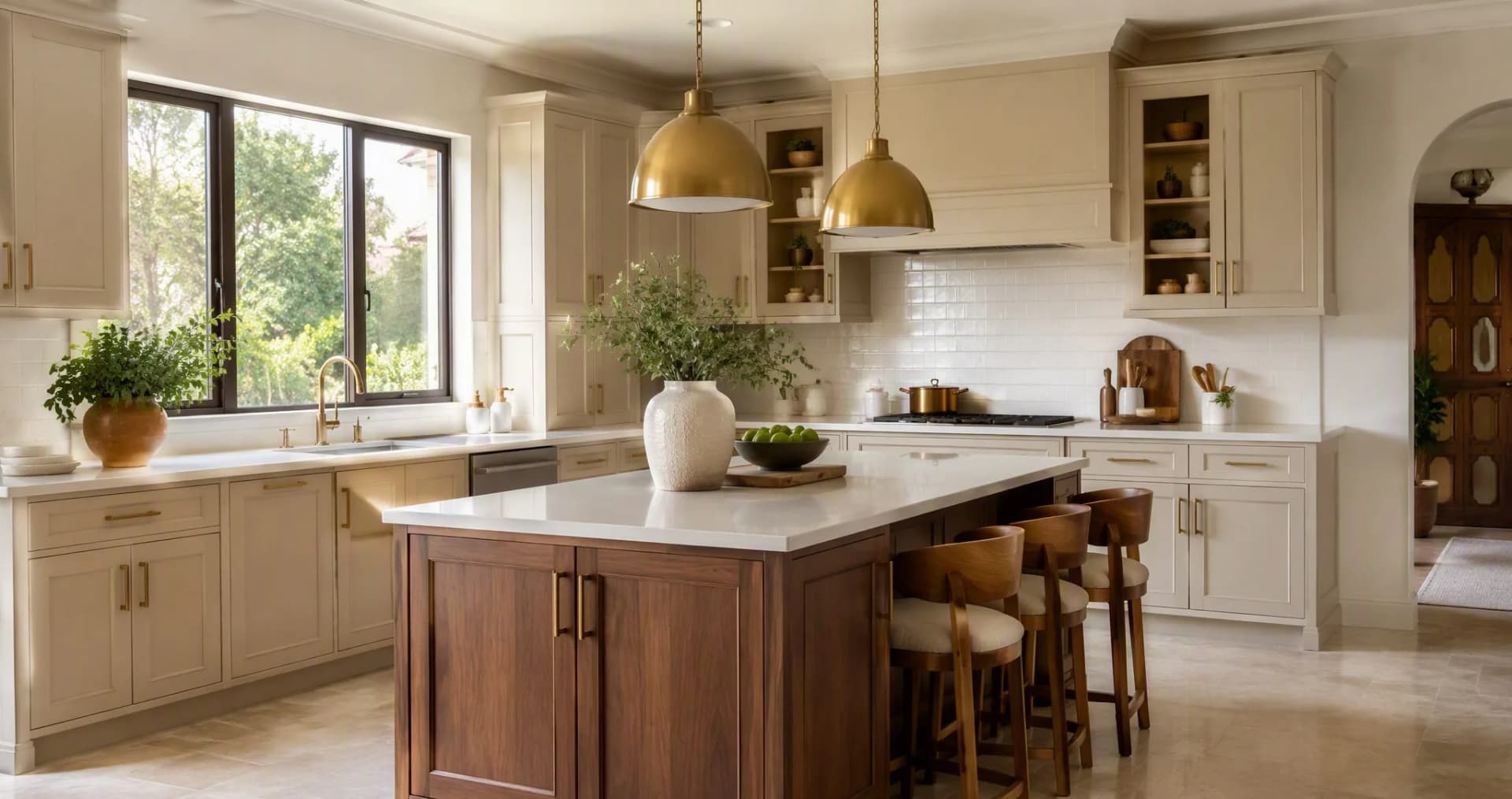
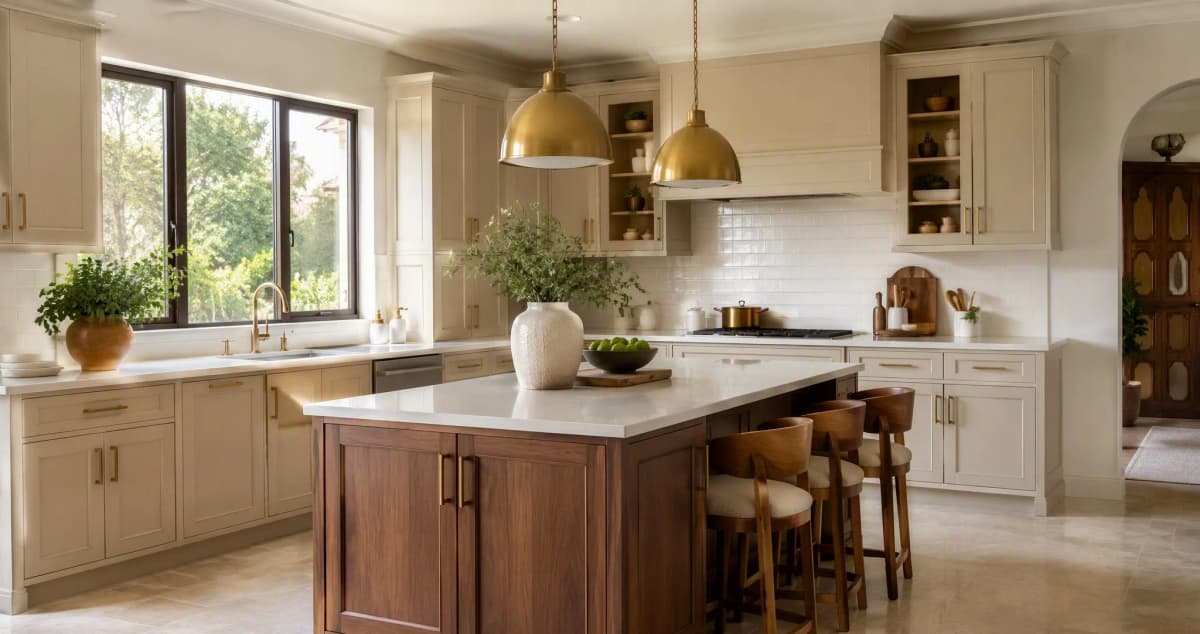
- Transitional — Shaker doors, warm neutrals, wood + stone mix. The safest, most timeless choice; suits almost every Indian home; ₹1,500–₹2,500/sq ft.
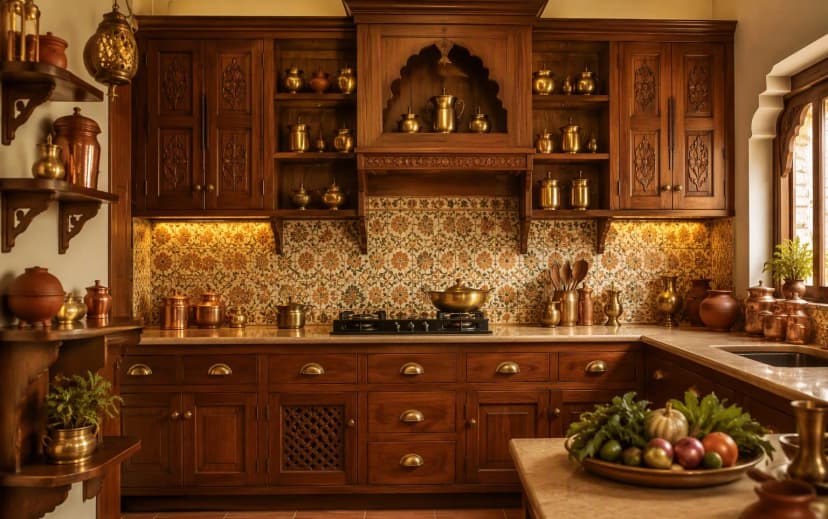
- Traditional Indian — carved wood, brass, patterned tiles. Rich and personal; needs space and maintenance; ₹2,500–₹3,500+/sq ft.
- Industrial — exposed brick, metal, concrete. Bold but high-effort; suits lofts and open-plan bachelor pads; ₹1,800–₹3,000/sq ft.
- The rule: pick the style that matches your cooking and cleaning reality, not just your mood board.
1. Contemporary — the sleek minimalist
Contemporary is what most people mean when they say "modern kitchen." It's the current, of-the-moment style — and India, that means flat-panel handleless shutters, push-to-open or groove-cut channels, matte or high-gloss finishes in charcoal, sage, beige or white, and surfaces so clean you could land a plane on them.
Defining features
- Frameless, flat-panel cabinetry — no moulding, no raised panels, no visible hinges
- Handleless or integrated pulls — push-to-open mechanisms, J-profile or channel grooves
- Monochromatic or two-tone palettes — charcoal + white, sage + wood, all-beige
- Hidden everything — appliances behind panels, concealed storage, no visible clutter
- Recessed lighting — LED strips under cabinets, cove lighting, no pendant drama
Materials that make it
Matte or gloss laminates (₹50–₹250/sq ft), acrylic (₹300–₹500/sq ft), lacquered glass, and PU paint. Carcass in BWP plywood below and MR above — see our cabinet plywood guide. Countertops in quartz or pale granite. The style is 80% about what you remove — ornament, handles, visible stuff.
The Indian reality check
Contemporary is the easiest style to clean — flat surfaces wipe down in one pass, no grooves for grease to hide in. Matte finishes are more forgiving than gloss (fingerprints, oil smears). But handleless push-to-open doors need premium hardware (₹600–₹1,200 per mechanism), and oily hands will find them annoying within a week. Many Indian homeowners end up with a hybrid: handleless uppers, slim-profile handles on base units.
trend check: Handleless everything, warm neutrals replacing stark white, matte finishes overtaking gloss, and concealed storage zones are all trending in Indian contemporary kitchens this year. What isn't trending anymore: all-white kitchens (too clinical, shows every stain) and fully open shelving (grease trap in a tadka kitchen).
2. Transitional — the best of both worlds
If contemporary is a minimalist apartment and traditional is your grandmother's kitchen, transitional is where most Indian families actually want to live. It blends the warmth and detail of traditional with the clean lines of contemporary — and it's been the most popular kitchen style globally and in India for the better part of a decade.
Defining features
- Shaker-style or simple panel doors — a recessed centre panel with a clean frame; the quintessential transitional profile
- Neutral, warm palettes — cream, taupe, greige, sage; painted finishes paired with stained wood
- Mixed materials — wood + quartz + brass; matte + gloss; painted + stained in the same kitchen
- Classic-but-simple hardware — cup pulls, bar handles in brushed brass or matte black, not ornate but not invisible
- Subway or simple tile backsplash — pattern kept quiet so the cabinetry carries the look
Why it works so well in India
Transitional kitchens don't fight the architecture. In an older Bangalore apartment with arched doorways or in a new tower with builder-grade finishes, a transitional kitchen slides in without clashing. It also ages beautifully — the style has been "in" for 15 years and shows no signs of dating, which matters when a kitchen is a 15-year commitment. For resale, it's the safest bet: it offends no one and appeals to almost everyone.
Material-wise, transitional is flexible: laminate or acrylic shutters with a Shaker-profile frame, quartz or granite counters, brass or matte-black hardware. The look sits comfortably at ₹1,500–₹2,500 per sq ft — the mid-range sweet spot. For more on the material layers, see our interior materials guide.
3. Traditional Indian — the heritage kitchen
This is the style that needs no introduction in India — it's the kitchen of carved teak cabinets, brass handles, Athangudi or Moroccan-pattern tiles, and open shelves lined with copper and brass utensils. Done well, it's the warmest, most personal kitchen you can build. Done carelessly, it's a dark, heavy room that traps grease in every carving.
Defining features
- Carved or panelled wood cabinetry — teak, sheesham or mango wood with traditional mouldings, jali work or brass inlay
- Brass and copper everywhere — handles, faucets, utensil displays, pendant lights
- Patterned tile backsplash — hand-painted Athangudi tiles, Moroccan zellige, or printed ceramic
- Open shelving — for the spice tins, copper lotas and brass vessels that double as decor
- Warm, rich colour palette — deep wood tones, terracotta, mustard, deep greens
Where it works (and where it doesn't)
Traditional Indian style needs space and light. In a large independent-house kitchen with big windows, it's stunning. In a compact apartment kitchen with one small window, all that dark wood and busy tile closes in fast. If your kitchen is under 80 sq ft, consider transitional with Indian accents instead: clean Shaker shutters, but in a warm wood tone with brass handles and one patterned tile wall. You get the heritage warmth without the visual weight.
Maintenance is the other honest trade-off. Carved panels and open shelves in a tadka kitchen mean weekly deep-cleaning. If that sounds like a labour of love, this is your style. If it sounds like a chore, it's not.
Cost reality: A true traditional Indian kitchen in teak or sheesham with carved panels starts at ₹2,500–₹3,500 per sq ft and climbs well past ₹5,000 for custom carving. The wood itself, the skilled artisan labour, and the hand-finished detailing all cost more than factory-made flat-panel work. Budget for it, or pick transitional with Indian accents for a fraction of the cost.
4. Industrial — the raw, urban look
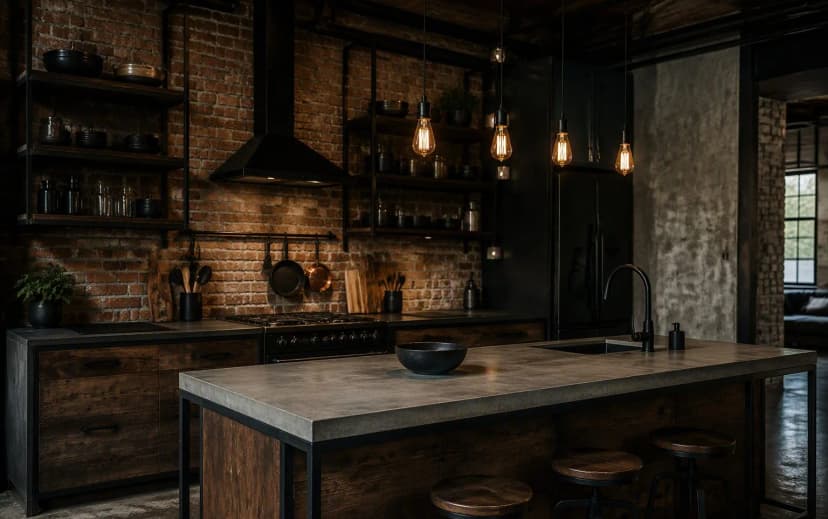
Industrial style borrows from converted warehouses and factory lofts: exposed brick, raw concrete, black metal frames, Edison bulbs, and a deliberate "unfinished" finish. It's the most dramatic style on this list — and the hardest to pull off in a typical Indian apartment.
Defining features
- Exposed brick or concrete-effect walls — real brick or brick-look tiles
- Black metal framing — open shelving, island legs, window frames in matte black steel
- Concrete or concrete-look countertops — raw, honed, or micro-topped
- Edison bulb pendants — exposed filament, no shade, often on cloth-wrapped cord
- Dark wood + metal mix — reclaimed-look wood paired with matte black hardware
The Indian reality check
Industrial looks incredible in photographs and in large loft-style spaces. In a standard Indian apartment kitchen — 60–100 sq ft, one window, heavy daily cooking — it can feel like cooking in a garage. Open shelving collects grease within a week of tadka cooking, and exposed brick is porous and hard to clean. Concrete counters stain with turmeric and need regular sealing.
If you love the look, the practical Indian adaptation is industrial accents in a transitional or contemporary shell: black metal open shelf brackets (with closed cabinets, not open shelves), matte black hardware, a concrete-look quartz countertop, and one exposed-brick-look tile wall away from the cooking zone. You get the edge without the maintenance nightmare.
5. Five more styles worth knowing
These are less common in India but growing — worth knowing so you can identify what you like when you see it:
- Scandinavian — light wood, white cabinets, minimal clutter, maximum natural light. Popular in compact urban apartments for its airy feel. The light palette shows stains faster in an Indian kitchen; works best in homes with lighter cooking.
- Farmhouse / Country — apron-front sink, open shelving, beadboard panels, warm wood. The Indian equivalent leans rustic: terracotta tiles, brass taps, wooden counters. High charm, high maintenance.
- Mediterranean — terracotta floors, hand-painted tiles, arched niches, warm yellows and blues. Shares DNA with traditional Indian; works in Goa-style villas and south-facing kitchens with strong light.
- Japandi — Japanese minimalism meets Scandinavian warmth: light wood, matte black accents, clean lines, muted tones. Very. Suits small Indian kitchens that want calm without going all-white.
- Bohemian / Eclectic — mixed patterns, bold colour, open shelving packed with personality. Fun but chaotic; in a kitchen it reads as cluttered fast unless ruthlessly curated.
6. Head-to-head: the four main styles compared
| Factor | Contemporary | Transitional | Traditional Indian | Industrial |
|---|---|---|---|---|
| Cost (per sq ft) | ₹1,200–₹2,000 | ₹1,500–₹2,500 | ₹2,500–₹5,000+ | ₹1,800–₹3,000 |
| Ease of cleaning | Easiest — flat surfaces | Easy — simple profiles | Hard — carvings trap grease | Hard — open shelves, porous brick |
| Suits small kitchens | Yes — light + clean | Yes — most forgiving | No — needs space | No — dark and heavy |
| Resale appeal | Broad | Broadest — timeless | Polarising | Niche |
| Trend risk | Moderate — dates in ~10 yrs | Low — hasn't dated in 15 yrs | None — it's heritage | High — very now |
| Handles Indian cooking | Yes — matte finish | Yes — wipeable panels | With effort | Poorly — grease + open shelves |
| Key materials | Laminate, acrylic, quartz | Shaker laminate/veneer, quartz, brass | Teak/sheesham, brass, hand-painted tile | Metal, concrete, brick-look tile |
7. How to pick yours — five honest questions
Forget the quiz format. These five questions, answered honestly, will tell you which style your kitchen should be:
- How much do you actually cook? Heavy daily Indian cooking (tadka, frying, pressure cooker steam) rules out industrial open shelving and high-gloss contemporary. Transitional or contemporary in matte laminate handles it best. Light cooking opens every style up.
- How big is your kitchen? Under 80 sq ft → contemporary or transitional in light tones. Over 120 sq ft with good natural light → any style, including traditional and industrial.
- How do you feel about cleaning? If the answer is "I wipe the counter and I'm done" → contemporary flat-panel. If you'll deep-clean carved panels and brass weekly without resentment → traditional Indian. Be honest; your future self will thank you.
- What's the rest of your home doing? The kitchen shouldn't fight the living room. A contemporary kitchen in a home full of traditional carved furniture feels like two different houses. Transitional is the diplomatic middle ground that blends with almost any interior.
- Are you staying or selling in 5 years? Staying → pick what you love, resale be damned. Selling → transitional or contemporary in neutrals; keep personality in hardware, lighting and decor that a buyer can swap without renovation.
The 80/20 rule: The most successful Indian kitchens we've seen follow 80/20: one dominant style for 80% of the surfaces (cabinets, counters, backsplash), with 20% borrowed accents from a second style (hardware, lighting, decor). Mixing three or more styles equally usually reads as indecision, not design.
The style-lock checklist
Before you commit to a kitchen style
- Style picked for your cooking reality, not just your mood board — matte and flat if you cook heavy daily
- Kitchen size measured — under 80 sq ft rules out heavy traditional and industrial
- Cleaning commitment assessed honestly — carved panels and open shelves need weekly deep cleaning
- Style checked against the rest of the home — the kitchen shouldn't fight the living room
- Resale horizon considered — transitional and contemporary neutrals for the broadest appeal
- 80/20 rule applied — one dominant style, accents from a second, no three-way mixing
- Materials confirmed at your price point — laminate vs acrylic vs veneer vs solid wood
- Hardware and lighting chosen to match the style — they carry 30% of the visual identity
- Countertop and backsplash locked — they anchor the palette
- Samples viewed in your kitchen's actual light — showroom lighting lies
Frequently asked questions
What is the most popular kitchen style in India?
What is the difference between contemporary and transitional kitchens?
Is a traditional Indian kitchen practical for a modern apartment?
Which kitchen style is easiest to maintain in an Indian home?
Can I mix two kitchen styles?
Which kitchen style adds the most resale value?
How much more does a traditional Indian kitchen cost than a contemporary one?
What kitchen style suits a small apartment kitchen?
Found your style — or still torn?
Bring your kitchen measurements and your mood board to the Evospace studio. We'll show you material samples in your actual light, walk you through the style options at your budget, and help you commit with confidence.
Get a Free Material Consultation




