
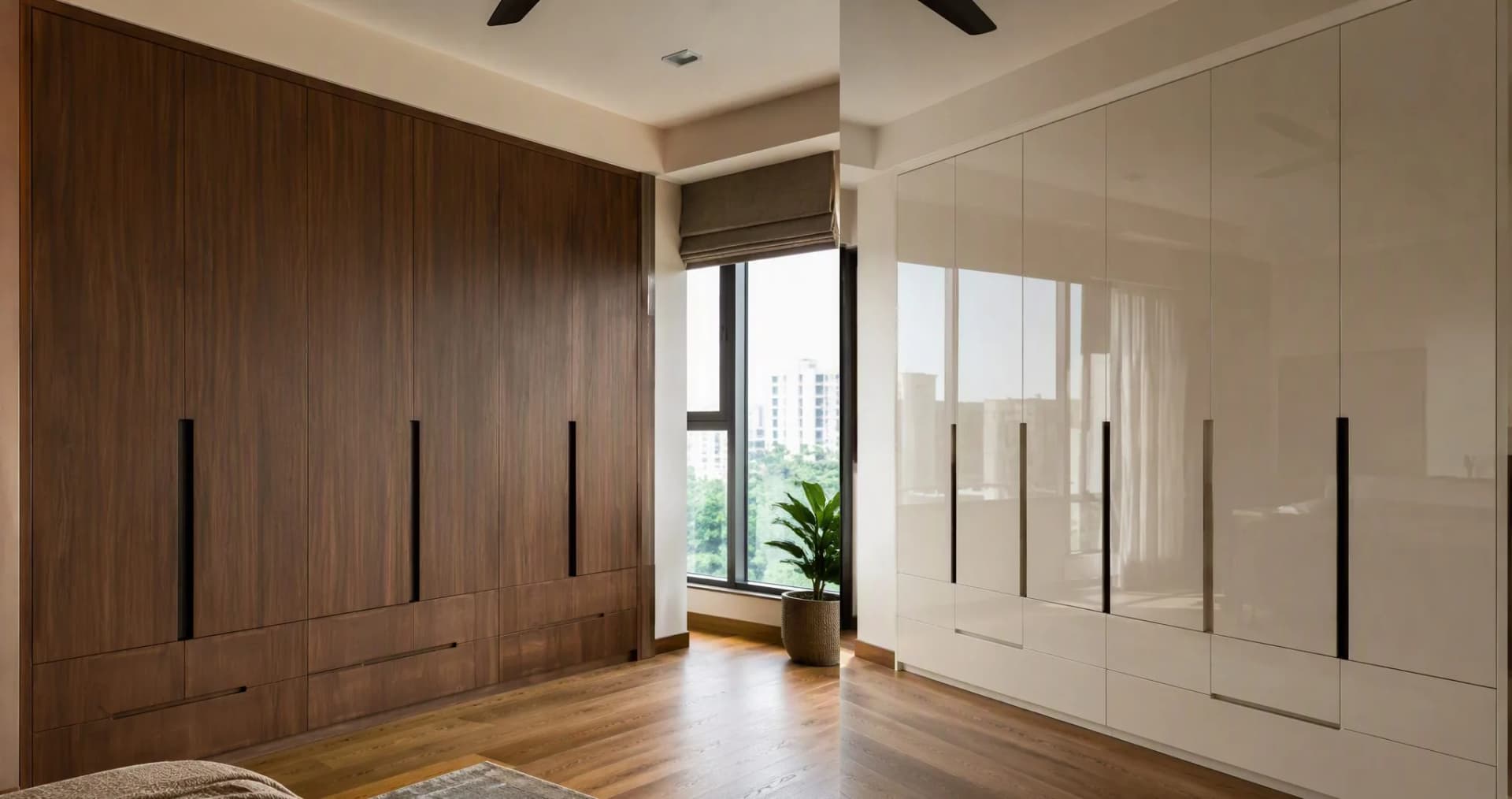
Matte vs Glossy Laminates: Which Works Better for Modern Indian Homes?
Every homeowner hits this fork at the laminate catalogue: the calm, velvety matte page or the mirror-bright glossy one. Here is what actually separates them — fingerprints, scratches, light, price — and a room-by-room answer that lets you stop guessing.
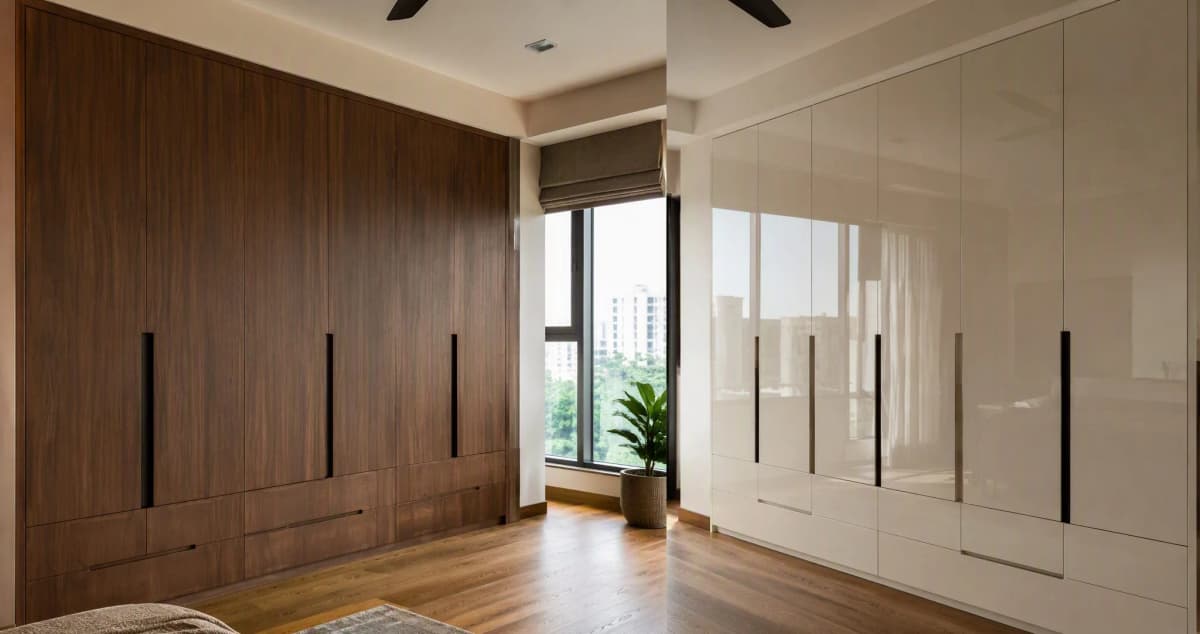
Matte for what you touch, gloss for what you look at. Matte and super-matte laminates hide fingerprints, smudges and fine scratches — the right call for wardrobes, kitchen base cabinets, study desks and kids' rooms. High-gloss reflects light and visually expands small or dim rooms — ideal for upper kitchen cabinets, TV units and compact apartment shutters. The best-looking Indian homes rarely pick one: they run matte on the big, high-touch surfaces and gloss on accents, all in the same colour family. Budget-wise, standard matte starts around ₹1,000–₹2,200 per 8×4 sheet, high-gloss ₹1,500–₹3,200, and super-matte ₹2,000–₹3,000.
Section 01 · The fundamentals
What actually separates matte from glossy
Here is the fact that settles half the debate: matte and glossy laminates are the same material underneath. Both are high-pressure laminates — kraft paper layers and a printed decorative sheet fused under heat and pressure, topped with a melamine overlay. The only difference is that final overlay's sheen.
Sheen is measured in gloss units (GU). Standard matte laminates sit below 10 GU; super-matte and anti-fingerprint finishes go under 5; high-gloss runs at 60 GU and above. Because the core is identical, scratch hardness, moisture resistance and lifespan are effectively the same — a good laminate of either finish lasts 10–15 years with normal care. What changes is how visible daily life is on the surface.
A matte surface scatters light, so fine scratches, fingerprints, dust and water spots blend in. A glossy surface acts like a weak mirror — every smudge and hairline scratch catches the light and announces itself. That's the whole trade: gloss gives you brightness and drama; matte gives you forgiveness.
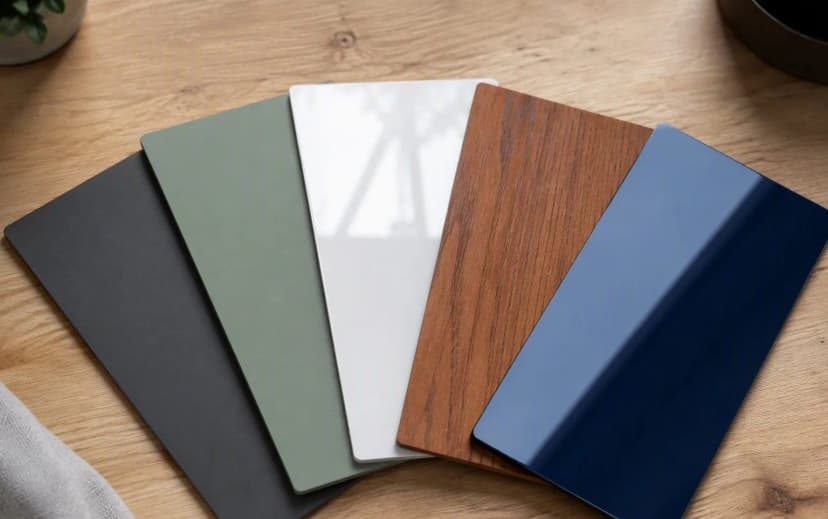
| Factor | Matte / Super-matte | Glossy / High-gloss | Edge |
|---|---|---|---|
| Look | Soft, velvety, understated; colours read deeper | Bright, reflective, dramatic; colours read more vivid | — |
| Sheen level | Under 10 GU (super-matte under 5) | 60+ GU, near-mirror | — |
| Fingerprints & smudges | Barely visible; super-matte actively resists them | Show every touch, especially on dark colours | Matte |
| Scratch visibility | Fine scratches disappear into the texture | Hairlines catch the light and show | Matte |
| Cleaning | Damp cloth, less often; stubborn grease needs a little more effort | Wipes clean easily — but needs wiping constantly to stay streak-free | — |
| Light & space | Absorbs light; calm, grounded, cosy | Bounces light; small and dim rooms feel bigger and brighter | Gloss |
| Durability & moisture | Identical — same HPL core, 10–15 year lifespan; moisture performance depends on the substrate, not the finish | Tie | |
| Ageing | Ages gracefully; wear blends in | Micro-scratches accumulate; gloss can look tired in high-use zones | Matte |
One more finish deserves a mention before we move on: textured laminate — embossed to feel like real wood grain, stone or linen. It sits in the matte family visually, hides wear even better than flat matte, and is the default recommendation for wood-look wardrobes. If you love the warmth of veneer but not its maintenance, textured laminate is the practical stand-in (we compared all the trending finishes for Bangalore homes separately).
Section 02 · The money
What each finish costs in India
The finish itself is a smaller part of the bill than most people expect. The sheet price difference between matte and gloss is modest — the real cost drivers are the substrate, adhesive, edge banding and labour, which are identical for both.
| Finish (1 mm, 8×4 ft sheet) | Approx. sheet price | Where it earns its premium |
|---|---|---|
| Standard matte / suede / textured | ₹1,000 – ₹2,200 | The workhorse. Best value for wardrobes, furniture and most shutters |
| High-gloss laminate | ₹1,500 – ₹3,200 | Extra polishing steps in production; the acrylic look without the acrylic price |
| Super-matte / anti-fingerprint | ₹2,000 – ₹3,000 | Special soft-touch coating; the current premium favourite for kitchens and wardrobes |
| Acrylic / charcoal / fluted panels | ₹3,000 – ₹5,500+ | Not laminate — a different material class (see the note below) |
At the installed level — laminate pressed on 18mm plywood with adhesive and edge banding — expect laminate-finish shutters to land around ₹800–₹1,400 per sq ft in metro markets, with the finish choice moving the number by perhaps 10–20%. Choosing high-gloss over matte on a full kitchen rarely changes the total by more than ₹10,000–₹20,000. So decide on lifestyle first, budget second.
Section 03 · The decisions
Room by room: which finish where
Stop asking "matte or glossy?" for the whole house. Ask it surface by surface, using one criterion: how often will hands touch this, and how much light does the room get?
Matte or super-matte
Indian cooking means oil, turmeric, steam and constant handling. Base shutters are touched with wet, greasy hands dozens of times a day. Matte hides the evidence; super-matte's anti-fingerprint coating is genuinely worth the premium here. Dark glossy base cabinets are the single most regretted finish choice we see.
Choose: super-matte solid or textured matte woodgrain on BWR/BWP ply carcass
Glossy is fair game
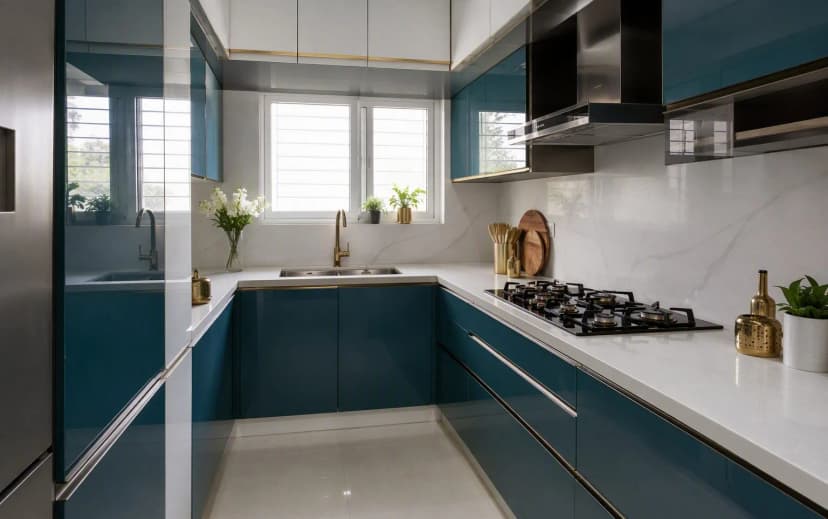
Uppers sit above elbow height, get touched less, and face the window — perfect territory for gloss. High-gloss uppers bounce light down onto the counter and make compact kitchens feel twice as open. A two-tone kitchen (matte below, gloss above, or vice versa) is the most popular combination in Bangalore right now.
Choose: high-gloss light colour (white, ivory, pastel) for maximum light bounce
Matte or textured
Wardrobe shutters are the most-touched surface in any bedroom, and bedrooms are lit softly — where gloss has nothing to reflect and just shows smudges. Matte and textured finishes look richer in low light and forgive hanger scratches, ring marks and daily handling. Reserve gloss for one accent panel or a mirrored dressing strip.
Choose: textured woodgrain for warmth; super-matte solid for a contemporary look
Glossy accents
These are look-at zones, not touch zones — exactly where gloss shines. A high-gloss back panel behind the TV or glossy display-shelf fronts add polish and reflect evening lighting beautifully. Keep the flanking storage matte so the unit doesn't become a fingerprint museum.
Choose: gloss on panels and niches; matte on the cabinets you open daily
Matte, always
A desk surface in gloss creates screen glare — genuinely fatiguing over a workday. Matte is anti-glare, comfortable to lean on, and hides the coffee rings and pen marks of daily work. This one isn't close.
Choose: standard matte — no need for super-matte pricing on a desk
Glossy, strategically
In a small bedroom or an interior room with one modest window, glossy shutters on the largest surface (usually the wardrobe) act like an extra light source, doubling the perceived space. Pair with light colours — gloss in dark shades shows dust and smudges worst of all.
Choose: light-coloured high-gloss on the big surface only; matte everywhere else
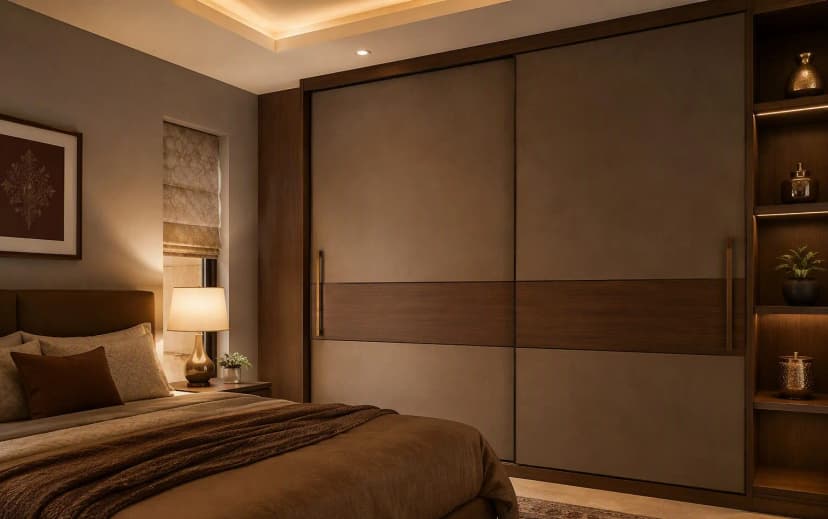
Kids' rooms deserve a special mention: matte, without debate. Crayon-adjacent hands, toy impacts and constant touching make gloss a losing battle, and matte's glare-free surface is easier on young eyes during study time. The same logic covers pooja units and crockery cabinets that see oily hands — matte or textured, with the gloss reserved for any glass-backed display section.
Rental and resale angle: if the home is headed for the rental market, matte and textured finishes are the safer bet — they photograph well enough and survive tenants. If you're staging for sale, glossy kitchens photograph spectacularly in listing photos, which is why so many show flats use them.
Section 04 · The strategy
The mixing strategy designers actually use
The best-looking Indian interiors rarely commit to one finish. They run a deliberate split — and once you see the formula, you'll spot it in every good portfolio.
The 70/30 rule: roughly 70% of visible laminate surface in matte or textured finishes (the big, touched things — wardrobes, base cabinets, desks), and 30% in gloss (the accents — uppers, niches, panels). This gives you matte's liveability where life happens and gloss's sparkle where eyes land, without the room tipping into either monotony or mirror-maze.
Three rules keep the mix intentional:
- Same colour family. Matte walnut with glossy walnut reads as designed. Matte walnut with glossy red reads as an accident. Contrast should come from sheen and tone, not clashing hues.
- Repeat each finish at least twice per room. One glossy panel among matte cabinets looks like a mistake. A glossy TV panel plus a glossy display niche looks like a plan.
- Gloss goes above the hand line, matte below it. Anything below shoulder height gets touched constantly; anything above gets looked at. Let physics assign the finishes.
And whichever finish wins, don't forget the unglamorous partner that decides how it ages: edge banding matched to the laminate, pressed with proper adhesive. A ₹2,500 super-matte sheet with peeling 5-rupee banding looks worse in a year than a ₹1,200 matte sheet finished properly. Finish quality is a system, not a sheet — the renovation materials checklist shows where laminates sit in the bigger purchase order.
Section 05 · Before you buy
The pre-purchase checklist
Run through this before you finalise the laminate order. Ten minutes here saves years of wiping.
Matte vs glossy — final checks
- Touch test done: you've pressed a fingertip onto both finishes at the dealer and seen what your household's hands will do to each.
- Room-by-room map made: every surface assigned matte, textured or gloss based on touch frequency and room light — not a blanket choice for the whole house.
- Dark gloss avoided below eye level: charcoal, navy and black gloss on base cabinets and wardrobes is a full-time cleaning job.
- Samples seen at home: swatches checked against your actual walls in morning and evening light, not just under showroom LEDs.
- "Acrylic" claims verified: if the quote says acrylic, you've confirmed whether it's a true PMMA sheet or high-gloss laminate — and priced accordingly.
- Shade codes recorded: brand, collection and code for every sheet written into the invoice — essential for replacing a damaged shutter years later.
- Edge banding matched: banding colour and thickness specified to match each laminate, included in the quote.
- Substrate not forgotten: the finish is only as durable as what's under it — BWR/BWP ply in kitchens, and the right thickness per component.
Section 06 · FAQ
Frequently asked questions
Which is better for Indian kitchens — matte or glossy laminates?
For kitchens that see heavy daily cooking, matte or super-matte is the practical pick for base cabinets — they hide fingerprints, oil smudges and fine scratches. High-gloss works well on upper cabinets and in compact or dim kitchens where reflectivity adds brightness. The most popular Bangalore approach right now is a two-tone mix: matte below, gloss above.
Do glossy laminates scratch more easily than matte?
No — same-grade matte and glossy laminates have identical surface hardness, since both are high-pressure laminates with a melamine overlay. What differs is visibility: scratches and smudges catch the light on gloss and disappear into matte. Gloss also needs more frequent wiping to stay streak-free.
What is super-matte or anti-fingerprint laminate?
A premium finish with ultra-low reflectivity (under 5 gloss units) and a soft-touch coating that actively resists fingerprints. It delivers the velvety designer-kitchen look with far less maintenance than gloss, and in India typically costs ₹2,000–₹3,000 per 8×4 sheet — about double standard matte. Worth the premium on kitchen shutters and wardrobes.
Is acrylic the same as high-gloss laminate?
No. Acrylic is a 1 mm PMMA sheet bonded to MDF/HDHMR with a deeper, mirror-like gloss; high-gloss laminate is a decorative sheet pressed onto plywood or MDF. Acrylic costs roughly 1.5–2× more, shows scratches more, and tolerates less heat near the hob. High-gloss laminate delivers a very similar look for less money with a harder surface.
Which finish is best for wardrobes?
Matte or textured. Wardrobe shutters are the most-touched surfaces in a bedroom, and matte hides fingerprints and hanger scratches while looking richer in soft bedroom lighting. Use gloss only as an accent — a single panel or mirrored strip — or in very compact rooms where the reflection helps. Full component specs are in our wardrobe material guide.
Do glossy laminates really make a small room look bigger?
Yes. Glossy surfaces reflect natural and artificial light, visually expanding compact rooms and brightening spaces with small windows. That's why high-gloss is popular in small modular kitchens and apartment wardrobes. Stick to light colours — dark gloss shows dust and smudges the most.
How much more does glossy laminate cost than matte?
In: standard matte ₹1,000–₹2,200 per 8×4 sheet, high-gloss ₹1,500–₹3,200, super-matte ₹2,000–₹3,000. On a full kitchen the finish choice typically moves the total by just ₹10,000–₹20,000, because substrate, adhesive, banding and labour dominate the cost. Decide on lifestyle, not price. See our Bangalore material price guide for the full picture.
Can I mix matte and glossy in the same room?
Yes — most well-designed homes do. Follow the 70/30 rule (matte on large touched surfaces, gloss on accents), keep both finishes in the same colour family, repeat each finish at least twice, and put gloss above the hand line. Done this way the mix looks deliberate and gives you the best qualities of both.
Still torn between the two finishes?
Bring your floor plan. We'll lay matte, super-matte, textured and high-gloss swatches side by side under honest light — and tell you which rooms deserve which finish, before a single sheet is ordered.
Visit the Studio




