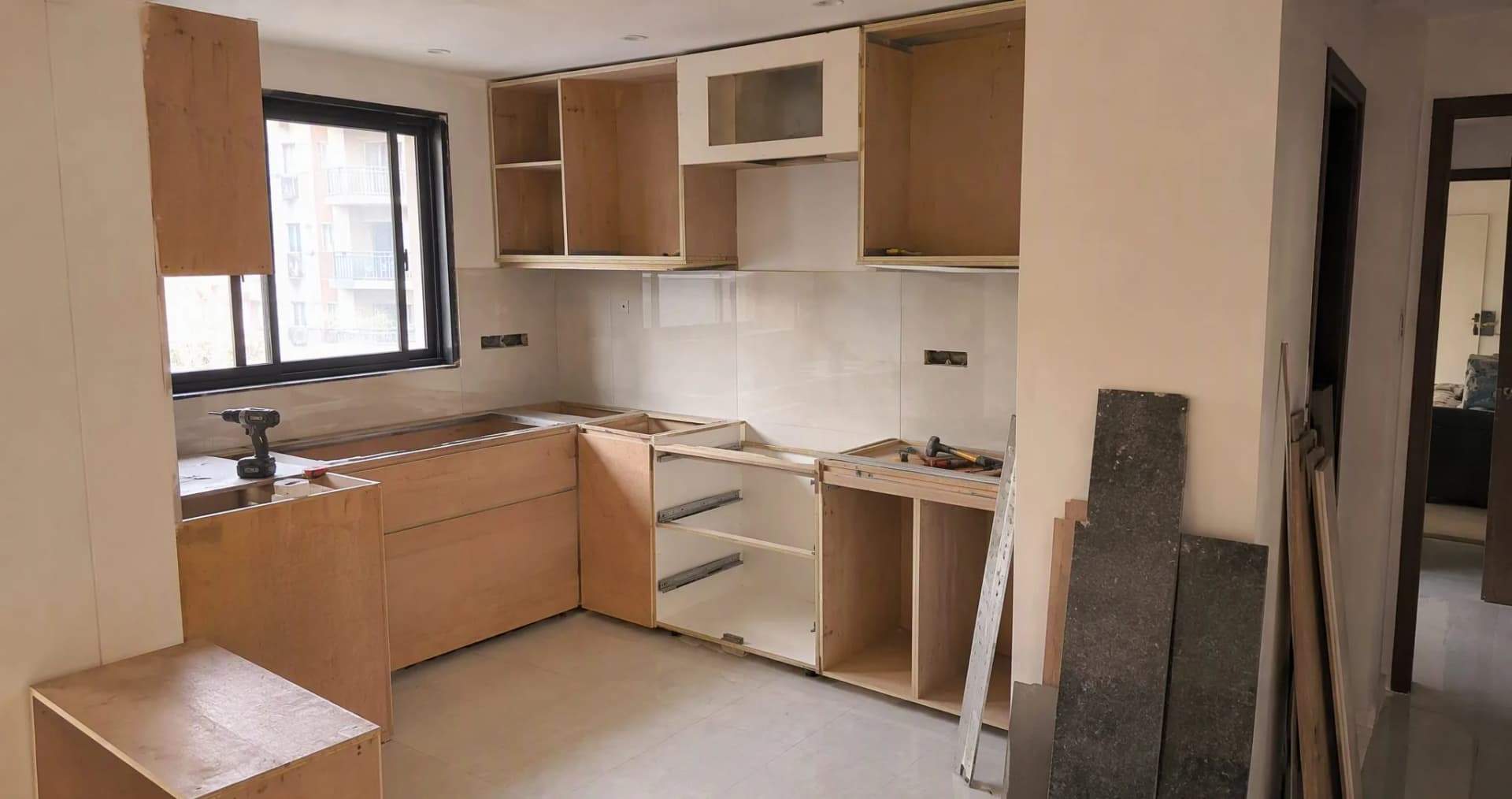
Best Plywood for Modular Kitchens: A Complete Buying Guide
The laminate gets the compliments; the carcass underneath decides whether your kitchen lasts five years or twenty. This guide specs the right plywood for every kitchen zone, pairs it with the right shutter finish, and shows what a smart spec costs.
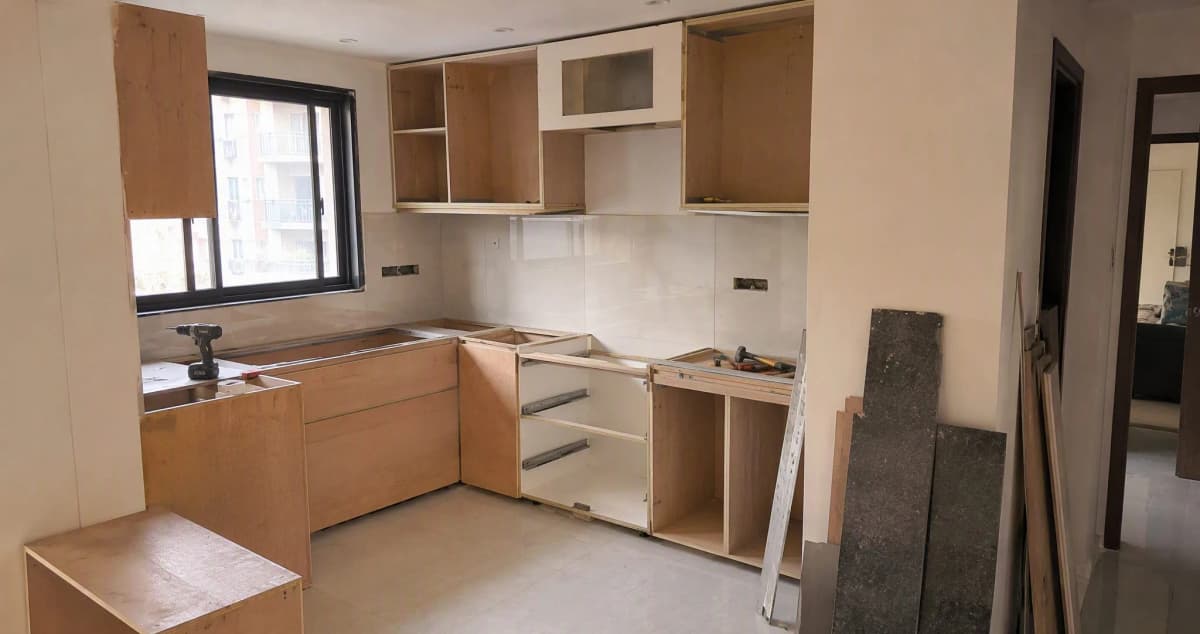
BWP marine plywood (IS 710), 18 mm, calibrated for sink units, base cabinets and anything near water or heavy loads. BWR plywood (IS 303) is the cost-smart choice for wall units and dry tall units. Skip MR/commercial ply in kitchens entirely, and don't let anyone sell you MDF or HDHMR for base-unit carcasses. On shutters, plywood or HDHMR both work — choose by finish, not fear. Expect roughly ₹110–160 per sq ft for BWR and ₹150–280 for BWP (18 mm).
1. Why the carcass matters more than the finish
A modular kitchen is a system of boxes — the carcass — wearing pretty doors. The doors get touched, admired and photographed. The carcass gets the water, the steam, the dal stains, the daily slamming and the 20 kg pressure cooker dropped onto a shelf at 7 am. When a kitchen "fails", it's almost never the laminate that fails. It's the board underneath: swelled edges near the sink, hinge screws pulling out of soft core, shelves bowing under utensils.
That's why the material question splits cleanly into two decisions:
- The carcass (the box): needs moisture resistance, screw-holding and load strength. This is plywood territory — specifically BWP and BWR. Fibreboards (MDF, particle board, HDHMR) lose here on every metric that matters in a wet, hard-working zone.
- The shutters (the face): need surface quality and finish compatibility. Here MDF and HDHMR are legitimate — sometimes superior — choices, because their grain-free surface takes paint, membrane and acrylic better than plywood.
If you want the full fibreboard-vs-veneer argument, our MDF vs plywood comparison covers it factor by factor. This guide stays in the kitchen.
2. Zone-wise plywood specs
"Which plywood for the kitchen?" is really four questions. Spec by zone and you stop overpaying for dry cabinets and stop under-specifying wet ones.
BWP marine plywood (IS 710), 18 mm
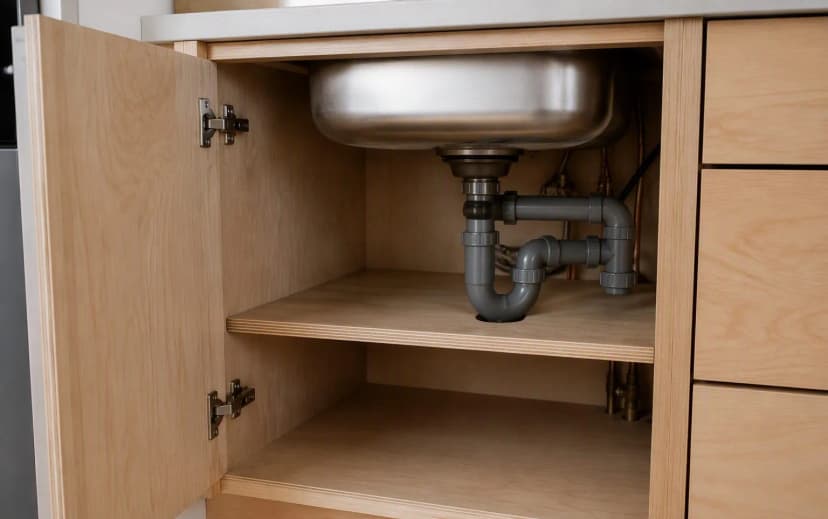
The sink base takes the worst of everything: daily mopping water, plumbing drips, sponge storage, dishwasher adjacency. Base units carry the heaviest loads — grain bins, stacked cookware, the mixer grinder. This is non-negotiable BWP territory. The boiling-water-proof bond (72-hour test) is the only rating that shrugs off a slow pipe leak you don't notice for a month.
Spec: BWP / marine ply, IS 710, 18 mm, calibrated; every cut edge sealed; unit raised on PVC/steel legs, never floor-standing.
BWR plywood (IS 303), 18 mm
Wall units live with steam and humidity but rarely touch standing water. BWR's boiling-water-resistant bond is engineered for exactly this — and it saves you ₹40–120 per sq ft over BWP across the largest cabinet area in most kitchens. Keep hinges and the chimney-adjacent cabinet in mind: those need the same screw-holding quality, so stick to hardwood-core BWR, not softwood or mixed.
Spec: BWR, IS 303, 18 mm calibrated, hardwood core; BWP if the wall unit sits directly above the hob or in a coastal city.
BWR or BWP by proximity to water
Tall units are dry-zone storage with one exception: the pull-out pantry next to the sink, and any unit housing a water purifier or fridge defrost line. Map the plumbing before you spec — the unit that looks dry on the drawing is often one pipe-joint away from a slow drip.
Spec: BWR 18 mm for dry tall units; BWP for anything adjacent to plumbing. 25 mm shelves for spans over 60 cm.
BWR, or BWP in utility-adjacent runs
Overhead lofts in dry areas are the one place a good commercial ply can survive — but the saving over BWR is small, and kitchen lofts still breathe cooking steam. Utility-area runs (washing machine, wet-grinder counter) face splash and humidity: treat them as BWP zones.
Spec: BWR as the kitchen minimum; BWP wherever water or washing machines share the wall.
3. Thickness, calibration and edge banding
Thickness: 18 mm is the kitchen standard for a reason
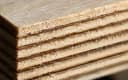
18–19 mm gives hinges, channels and drawer runners the screw depth they need, and shelves the stiffness for utensil loads. Some budget quotes drop carcass sides to 16 mm to save money — the hinge-holding difference shows up in year two. Use 6 mm for back panels (nailed, not load-bearing) and 25 mm for long unsupported shelves like open plate racks or heavy appliance counters.
Calibration: the modular-factory requirement
Modular factories cut and edge-band on machines that assume uniform thickness. Uncalibrated ply varies 0.5 mm or more across a sheet, which produces shutters that rock, doors that don't align and edge banding that peels. If your kitchen is factory-made — and most "modular" kitchens are — spec calibrated ply and confirm it on the quote. For site carpentry it matters less, but consistent thickness still pays off at assembly.
Edge banding: the seal that makes the board work
Every cut edge of a kitchen cabinet is an open door to moisture. Machine-applied PVC or ABS edge banding, 1–2 mm, on every exposed edge is what separates a 15-year carcass from a 5-year one — the board grade alone doesn't protect a raw cut edge. On quotes, "machine edge banding" should be a line item, not an assumption. Our renovation materials guide covers where edge banding sits in the full materials list.
Spec sheet to hand your vendor: Carcass: 18 mm calibrated BWP (IS 710) for base/sink, BWR (IS 303) for wall units · Shutters: 18 mm ply or HDHMR by finish · Back panels: 6 mm · Edge banding: 1 mm machine-applied PVC/ABS on all four edges · Hardware: soft-close hinges and channels rated for the shutter weight.
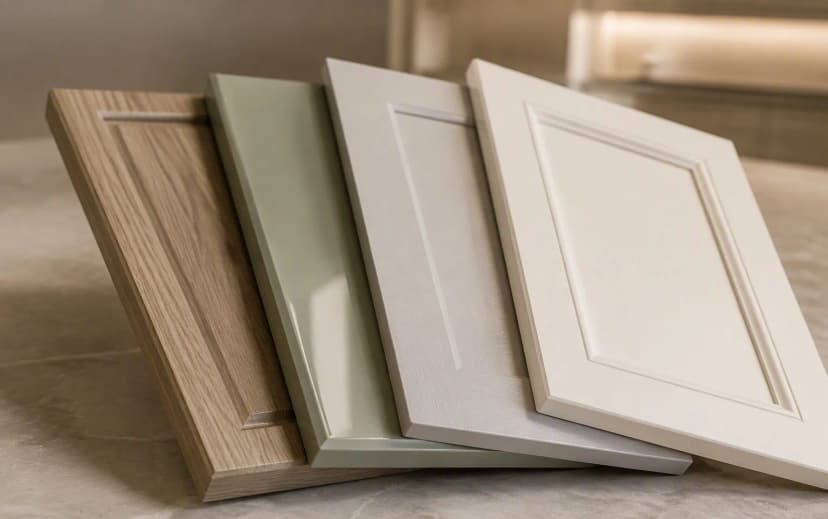
4. Shutter finishes: what pairs with what
The shutter is a substrate plus a surface. Choose the surface for the look and cleaning behaviour you want, then pick the substrate that surface needs. This is where MDF/HDHMR legitimately enter a plywood kitchen.
| Finish | Best substrate | cost / sq ft (shutter) | Kitchen reality |
|---|---|---|---|
| 1 mm HPL laminate | BWR/BWP ply or HDHMR | ₹800–1,400 | The workhorse: matte hides fingerprints and scratches; 12–18 yr life |
| Acrylic (1 mm PMMA) | HDHMR preferred | ₹1,400–2,200 | Mirror gloss, never fades — but every fingerprint shows; keep 300 mm from the hob |
| PU paint | HDHMR | ₹1,600–2,800 | Any RAL colour, flawless on fibreboard; scratches chip visibly |
| Membrane (PVC foil) | HDHMR | ₹650–1,000 | Shaker profiles, classic look; heat-sensitive — avoid near the hob |
| Veneer + polish | BWR plywood | ₹1,200–2,000 | Real-wood warmth on display units; avoid over the hob and sink |
The hybrid most designers quietly spec: laminate on the utility runs (hob, sink, under-counter pull-outs — it hides the daily abuse) and acrylic or PU on the display side (the island, the dining-facing wall) where the kitchen is being looked at, not worked in.
5. prices and the kitchen budget split
Board prices are per sq ft of material; kitchens get quoted per sq ft of cabinetry, which bundles board, finish, hardware, edge banding and labour. Keep the two straight when comparing quotes.
| Grade | Price / sq ft | 8×4 sheet (approx) | Kitchen role |
|---|---|---|---|
| MR / commercial | ₹85–130 | ₹2,800–4,200 | Not recommended anywhere in a kitchen |
| BWR (IS 303) | ₹110–160 | ₹4,000–5,500 | Wall units, dry tall units |
| BWP / marine (IS 710) | ₹150–280 | ₹5,500–7,500+ | Sink base, base cabinets, utility runs |
On a typical L-shaped 10–12 ft kitchen (roughly 80 sq ft of shutter face), the material budget shakes out roughly like this:
- Carcass (BWP base + BWR wall): ₹65,000–95,000 — the line item that decides lifespan
- Shutters (laminate on ply/HDHMR): ₹50,000–80,000; acrylic or PU pushes this to ₹1,00,000–1,80,000
- Hardware (soft-close hinges, channels, pull-outs): ₹40,000–65,000 for a Hettich-class spec
- Edge banding and adhesives: ₹5,000–8,000 — small number, outsized impact
- Countertop (granite/quartz): ₹8,000–25,000 depending on stone
All-in, a sensibly specced mid-range kitchen lands around ₹3.5–5.8 lakh installed in most Indian metros. The carcass upgrade from MDF to BWP ply — typically ₹25,000–40,000 — is routinely the best money in the entire project. The plywood price factors guide explains why these bands move between cities and dealers.
6. Five spec mistakes that kill kitchens early
- "Marine ply throughout" as a badge, not a spec: BWP everywhere wastes ₹20,000–40,000 on dry wall units that will never see water. Spend it on hardware or edge banding instead.
- MDF or particle board base cabinets: the cheapest way to build a 5-year kitchen. Any quote that hides the carcass material behind "engineered wood" deserves a direct question. Our plywood buying mistakes guide has the full pattern.
- Sixteen-millimetre carcass sides: a quiet downgrade that shows up as loose hinges and sagging drawer fronts by year two. Eighteen millimetres is the kitchen minimum.
- Hand-glued laminate edges: factory edge banding is a machine process; site-glued laminate on raw edges is a moisture path. Insist on machine-banded shutters and sealed cut-outs.
- No leg detail on the sink base: even BWP loses a decade when the cabinet sits in mopping water. PVC or steel legs under every base unit is a ₹2,000 detail that protects a ₹1,00,000 carcass.
- Sink base + base cabinets: 18 mm calibrated BWP (IS 710), hardwood core, on legs
- Wall units: 18 mm calibrated BWR (IS 303); BWP if above the hob or coastal
- Shutters: laminate on ply/HDHMR for utility runs; acrylic/PU on HDHMR for display runs
- Back panels: 6 mm; long shelves: 25 mm
- Edge banding: machine-applied 1 mm PVC/ABS on every edge, on the quote
- IS stamp + CM/L verified on the BIS portal before delivery is accepted
- Invoice names grade, brand, thickness and edge banding — no "marine-type" language
The kitchen plywood checklist
Hand this list to your vendor before the carcass is cut.
Frequently asked questions
Which plywood is best for a modular kitchen in India?
BWP marine plywood (IS 710) for sink units, base cabinets and any wet zone; BWR plywood (IS 303) for wall cabinets and dry tall units. Spec 18 mm calibrated sheets for carcasses, hardwood core, with machine edge banding on every cut edge. MR/commercial plywood and MDF do not belong in kitchen carcasses.
Is BWR or BWP better for kitchen cabinets?
Both, by zone. BWP (boiling-water-proof, 72-hour bond test) is for the sink base and wet zones where water contact is likely. BWR (boiling-water-resistant) handles steam and humidity on wall units at roughly ₹40–120 less per sq ft. An all-BWP kitchen is over-spec; an all-BWR kitchen is under-spec at the sink.
Can MDF or HDHMR be used for kitchen cabinets?
For carcasses in wet and load zones, no — fibreboard swells irreversibly at cut edges and its screw-holding fails under daily hardware cycles. HDHMR is legitimate for shutters and dry wall-unit panels, where its smooth surface takes paint, membrane and acrylic finishes better than plywood. Never accept MDF or HDHMR for the sink base.
What thickness of plywood should a modular kitchen use?
18–19 mm for carcasses and shutters — it's the minimum for hinge and channel screw depth. 6 mm for back panels. 25 mm for long unsupported shelves and heavy appliance counters. Calibrated sheets (uniform thickness, ±0.2–0.3 mm) matter for factory-made kitchens, where machines assume an exact board thickness.
How much does kitchen plywood cost?
Indicative 18 mm prices: MR/commercial ₹85–130 per sq ft, BWR ₹110–160, BWP/marine ₹150–280. A mid-range L-shaped kitchen typically puts ₹65,000–95,000 into the carcass, ₹50,000–80,000 into laminate shutters, and ₹40,000–65,000 into hardware — roughly ₹3.5–5.8 lakh installed all-in.
Is marine plywood worth it for kitchens?
Yes for the sink base, base cabinets and utility runs — the 72-hour waterproof bond is the only rating that survives a slow plumbing leak. No for wall units and dry lofts, where BWR does the job for less. "Marine ply throughout" is a selling line, not a specification; the extra ₹20,000–40,000 is better spent on hardware and edge banding.
What finish is best for kitchen shutters — laminate or acrylic?
Laminate (1 mm HPL) is the workhorse: matte finishes hide fingerprints and scratches, tolerate hob heat, and last 12–18 years. Acrylic gives a mirror-gloss, never-fading look but shows every fingerprint and costs roughly twice as much. The common smart spec: laminate on the working runs, acrylic on the display-facing modules.
How do I verify my vendor used the plywood grade they quoted?
Check the printed edge stamp on delivered sheets before cutting: it must show the IS code (303 or 710), a CM/L licence number you can verify on manakonline.in or the BIS Care app, and the brand name matching your invoice. Scan the brand's QR authentication where available, and reject any delivery that arrives pre-cut with the stamps removed.
Getting a kitchen quote you don't fully trust?
Share the BOQ — board grades, shutter finishes, hardware lines — and we'll flag what's under-specified, what's over-sold, and what it should cost.
Get a free material consultation